Highgate Vampire affair
A History of the Vampire in Popular CultureThe Highgate Vampire affair was a long-running controversy centred on Highgate Cemetery in north London, where a reported apparition became, through publicity and competing claims, an alleged Eastern European vampire. The episode shows how Gothic spaces can convert uncertainty into spectacle: a quiet cemetery supplied the setting, David Farrant supplied an initial ghost story, Sean Manchester supplied a more definite supernatural interpretation, and the press supplied the audience that turned rumour into a mass event.
Setting and Cultural Background
Highgate Cemetery occupies a beautiful, peaceful site on Highgate Hill, an atmosphere at odds with the tens of thousands of bodies buried there. Swains Lane divides its East and West plots, while the older West Cemetery preserves the Gothic decay of ageing tombs and cloisters. That decline had already made the site suitable for horror cinema, including Taste the Blood of Dracula, starring Christopher Lee. The cemetery therefore offered more than a location: its architecture and accumulated dead made an apparently empty night landscape feel charged with hidden history.
The affair also emerged from a broader culture unusually receptive to supernatural explanations and Gothic imagery. The nineteenth century had combined rapid technological change with persistent belief in witchcraft and spiritualism; the second Industrial Revolution could appear magical even as older beliefs remained a psychological safety net. Earlier vampire panics show the same mechanism in more lethal form. In New England, tuberculosis was interpreted as the dead stealing the life force of surviving relatives, while the eighteenth-century vampire craze led villages in eastern Europe to exhume and stake suspected corpses. In 1731, Serbian villagers rejected a doctor’s explanation of deaths through malnutrition, and in the Mercy Brown case in Exeter, Rhode Island, relatives burned the organs of a tuberculosis victim in an unsuccessful attempt to save her brother. Highgate transferred that older pattern of fear into a modern city, where newspapers and television could amplify it almost instantly.
The Apparition Becomes a Vampire
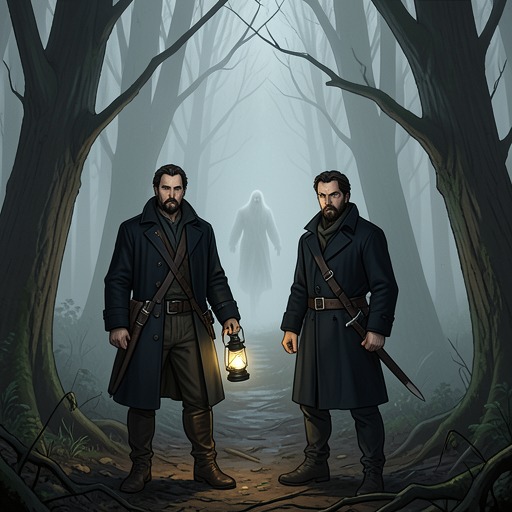
In February 1970, David Farrant of Muswell Hill wrote to the Hampstead and Highgate Express claiming that he had seen a grey, ghost-like figure through the gates on Swains Lane on three separate occasions. Other readers reported similar sightings, adding details such as floating movement and glowing red eyes. At this stage the alleged being remained a vague apparition, sustained by testimony and the cemetery’s suggestive environment rather than by any demonstrated physical evidence.
Sean Manchester, who described himself as a vampire hunter and as president of the British Occult Society, gave the story its more sensational identity. He declared that the apparition was an Eastern European vampire and announced his intention to exorcise it publicly. The Hampstead and Highgate Express presented the claim in a front-page headline asking, “Does a wampyr walk in Highgate?” The change from ghost to vampire was decisive. A shadowy sighting could remain ambiguous; a vampire supplied a recognizable mythology, a threat, and a role for anyone willing to join the hunt.
The Public Hunt of March 1970
Manchester appeared on ITV’s nationally broadcast Today programme on Friday 13 March 1970 and claimed that he would exorcise the Highgate vampire later that night. Public interest had already become so intense that hundreds of would-be vampire hunters climbed the walls of the dilapidated cemetery and swarmed through the grounds. Police attempted to restore order, turning an alleged supernatural investigation into a conspicuous public disturbance.
The event’s drama depended on the tension between the cemetery’s physical stillness and the crowd’s restless intervention. Coffins and catacombs made the dead materially present, while the reported figure remained elusive. The absence of a confirmed apparition did not weaken the spectacle; it allowed expectation, fear, and performance to occupy the vacant space. In Gothic terms, the cemetery functioned as an architectural container for the unknown, making the threat feel larger precisely because it could not be securely located or examined.
Rivalry, Publicity, and Mythmaking
The affair developed into a bitter rivalry between Farrant and Manchester. Their disagreement was not merely personal but interpretive. Farrant generally described the entity as a ghost or spirit, preserving the uncertainty of his original account. Manchester insisted that it was unquestionably a vampire, replacing an open-ended haunting with a fixed supernatural diagnosis and positioning himself as the authority capable of confronting it.
The rivalry generated further publicity even when no decisive encounter occurred. The two men once announced a “magician’s duel” on Parliament Hill for Friday 13 April 1973, but the duel never happened. Farrant expressed his hostility through a satirical comic strip, The Adventures of Bishop Bonkers, in which Manchester appeared as a paranoid maniac whose plans were defeated by Farrant. In 2011, Farrant filmed himself raising a toast to an effigy of Manchester’s head displayed ceremonially on a silver platter. These gestures turned occult investigation into theatrical antagonism: the supposed vampire receded while the investigators, their claims, and their mutual mockery became the visible drama.
Aftermath and Significance
With hindsight, the book presents much of the Highgate myth as something Manchester himself enlarged from very thin material. Media attention transformed scattered reports into a lasting urban legend, and the controversy continued long after the original night hunt. The feud lasted until Farrant’s death in 2019, while Highgate Cemetery remained identified with the conflict between the two rival occultists. Its association with the affair survives as part of the site’s cultural identity, alongside its tombs, catacombs, Gothic atmosphere, and film history.
The episode also illustrates how modern vampire folklore is produced. Unlike the eighteenth-century panics, it did not depend on a village’s attempt to explain a sequence of unexplained deaths, nor did it require a medical crisis such as tuberculosis. Unlike the literary vampire established by Varney, Carmilla, and Dracula, it had no stable fictional plot or fully developed character. Its vampire was assembled through fragments: a nocturnal cemetery, a grey figure, red eyes, a newspaper headline, a television appearance, a promised exorcism, and a crowd climbing cemetery walls.
That assembly makes the affair significant as an example of Gothic culture’s enduring glamour. The goth subculture later emerged from post-punk clubs in Britain during the political unrest and economic depression of the early 1980s, turning the imagery of death, mourning, and the undead into a durable musical and fashion culture. Highgate belongs to the same cultural history, but in a more unstable form: it shows the moment when Gothic atmosphere escaped fiction and invited people to behave as though a vampire might be physically present among London’s graves. The lasting power of the affair lies not in a verified monster but in the social process that made an unverifiable presence feel publicly real.