Lilith Silver
A History of the Vampire in Popular CultureLilith Silver is the vampiric hit-woman of Razor Blade Smile (1998), presented as a lethal figure who hunts human prey between displays of deliberately stylized seduction. Her significance lies less in a developed biography than in the tension she embodies: the film wants her to be both a straightforward vampire and an erotic spectacle, yet its performance repeatedly exposes the artificiality of that design. Lilith therefore becomes an accidental measure of how vampire cinema can confuse sexual display with dramatic power.
Identity and Introduction
Lilith appears as a leather-clad assassin whose vampirism is expressed through the conventional signs of fangs, predation, and undead violence. The film places her between acts of hunting, hair-flicking, and baring her teeth, making her body and mannerisms part of the performance through which the character is meant to appear seductive. Her role as a hit-woman gives her a practical function within the story: she is not merely a passive supernatural presence but an active killer who seeks out victims.
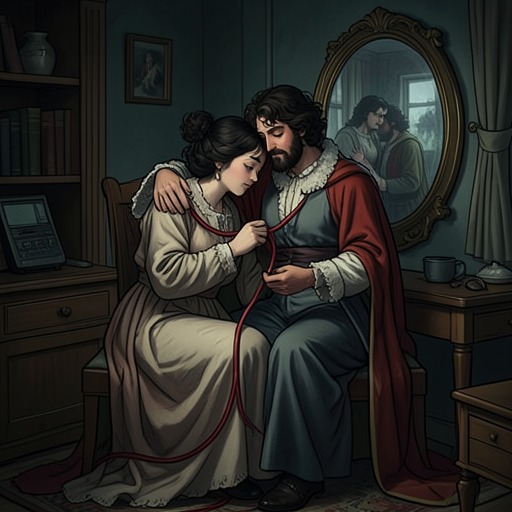
The character’s introduction reaches back to a nineteenth-century duel. That encounter ends with the death of Lilith’s lover and her subsequent transformation into an undead killer, establishing grief, romantic loss, and vampiric violence as the basic elements of her origin. The sequence is played with such extreme slowness that it seems close to becoming a comedy sketch, although the film itself treats the material seriously. This mismatch immediately makes Lilith a figure caught between melodrama and unintended parody.
Actions and Vampiric Persona
Lilith hunts her prey while the film repeatedly emphasizes her supposed erotic appeal. Her fangs and gestures are not incidental details; they are used as a recurring visual vocabulary of vampiric sexuality. Yet the repeated shots of her flicking her hair and baring her teeth make the seduction feel demonstrative rather than dangerous. The more insistently the film asks the viewer to read Lilith as alluring, the more clearly its construction of allure becomes visible.
Her violence is consequently inseparable from the film’s uncertain tone. Razor Blade Smile appears unable to decide whether it is a conventional vampire film or an extended sequence of leather-clad soft pornography. Lilith’s intended identity as a deadly and sexually compelling predator is therefore weakened by the very devices meant to establish it. The character remains an undead killer, but the presentation turns her into an unstable mixture of threat, erotic pose, and camp spectacle.
Relationships and Transformation
Lilith’s most clearly defined relationship is with the lover whose death precedes her transformation. The duel makes that loss the decisive hinge of her life: she enters the story as a woman connected to romantic attachment and emerges from it as an undead killer. The evidence does not provide a sustained account of their relationship, but it does make the causal sequence unmistakable. The lover’s death is followed by Lilith’s conversion, so vampirism functions as the afterlife of bereavement as well as the source of her murderous identity.
This origin also places Lilith within a familiar vampire pattern in which intimacy and death are bound together. Her later role as a hit-woman turns the personal wound of the opening sequence into a continuing practice of violence. The film does not show her recovering the lost relationship or escaping the consequences of the transformation; instead, the dead lover remains the explanation for the killer she becomes.
Genre Failure and Accidental Comedy
Lilith’s characterization cannot be separated from the production’s roughness. The opening duel and transformation are performed so slowly that their intended solemnity becomes unintentionally comic. The film continues to play the story straight through the ending, including its poor accents, so the humor arises not from an announced parody but from the distance between the film’s ambitions and its execution.
The same distance appears in the visual design. The costumes seem to rely heavily on end-of-line latex catsuits, while the camera sometimes appears to follow instructions different from those guiding the rest of the production. The result resembles a project made by high school drama students for an end-of-term performance. Lilith is meant to anchor a polished fantasy of erotic supernatural violence, but the surrounding craft instead makes her performance conspicuously naive. That naivety is precisely what makes the film worth seeking out: the character’s failure as conventional seduction becomes the source of the work’s unplanned charm.
Narrative and Cultural Significance
Lilith belongs to a later phase of vampire representation in which the creature can be reshaped into almost any desired form. Earlier landmarks establish different possibilities: Varney helps popularize sharpened, fang-like teeth while making the vampire unexpectedly sympathetic; Carmilla develops the elegant, nocturnal, emotionally and physically predatory vampire; Count Orlok in Nosferatu rejects later beauty and erotic glamour altogether. Against those precedents, Lilith represents an overtly sexualized and modernized killer, but one whose presentation is unstable enough to expose the conventions it uses.
Her place in vampire culture also reflects the broader movement by which vampires became increasingly adaptable figures rather than fixed monsters. The genre can produce sympathetic vampires, openly sexual predators, comic figures, and characters embedded in contemporary subcultures. The goth subculture that emerged from post-punk clubs in northern England during the early 1980s likewise made the undead available as a living musical and fashion identity. Lilith’s leather, fangs, and theatrical sensuality draw on that enlarged cultural vocabulary, even as Razor Blade Smile handles it clumsily. She is thus memorable not because the film gives her a fully rounded inner life, but because her failed seduction reveals how vampire cinema repeatedly negotiates the boundary between danger, desire, performance, and camp.