London
A History of the Vampire in Popular CultureLondon functions as one of the central cultural landscapes of vampire history: the place where older revenant beliefs are transformed into literary convention, where the nineteenth-century vampire acquires elegance and erotic danger, and where later audiences continue to remake the creature. Its significance lies not in a single documented haunting, but in the city's role as a meeting point between folklore, publishing, theatre, social anxiety, and modern entertainment.
Victorian Literary Setting
London's importance becomes especially clear in the career of Bram Stoker. In 1897, Stoker was working in the city as business manager to Henry Irving, the renowned actor and theatre impresario, while also writing fiction. He had married Florence Balcombe, who had previously been Oscar Wilde's childhood sweetheart, and his professional and personal connections placed him within the theatrical and literary world that shaped late-Victorian culture. Against this background, Dracula emerged as his most successful work, although it did not bring Stoker substantial financial reward until after his death.
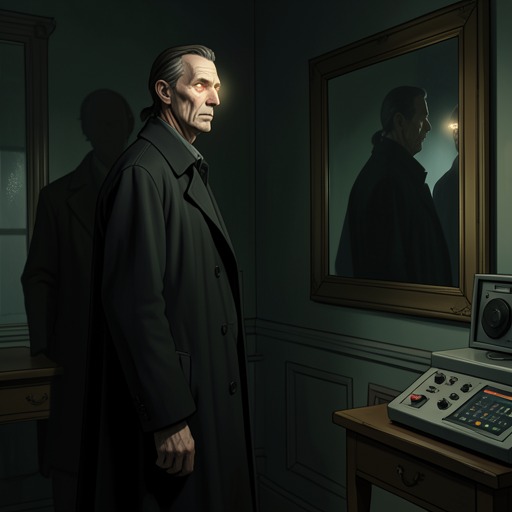
The city also represents the social world that Dracula enters and threatens. Stoker's novel presents vampirism almost as a communicable disease, particularly after Count Dracula reaches Victorian Britain. London is therefore not merely a backdrop for supernatural action: it is the urban environment in which an old, foreign, aristocratic menace encounters a society already unsettled by rapid change, sexual double standards, and anxieties about moral boundaries. The vampire's arrival turns the modern city into a place where progress and contamination exist side by side.
A City of Modern Anxiety
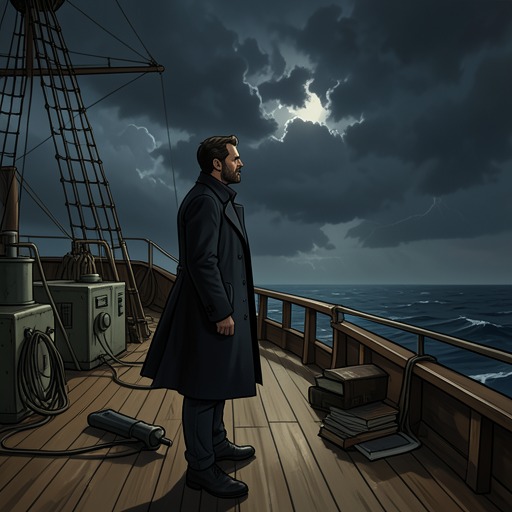
The London associated with Dracula belongs to a wider nineteenth-century culture that was both technologically confident and unusually credulous. The second Industrial Revolution changed society at high speed, sometimes making new technologies appear almost magical, while spiritualism attracted even pragmatic people to seances and newspapers could still report witchcraft as fact. London thus embodies the Victorian contradiction between industrial development and fascination with the supernatural: an advanced metropolis that remained willing to interpret unexplained events through older beliefs.
That contradiction gives the city's vampire stories their particular force. The Victorian world combined glory and guilt, prim delicacy and delight in the macabre. In such a setting, the vampire could express fears that medicine, technology, religion, and social convention had not resolved. Disease, death, sexual transgression, and foreignness could be concentrated in one figure and then circulated through the city's institutions of print and performance.
Literary and Theatrical Circulation
London was also a decisive publishing and performance environment for the emerging vampire genre. James Malcolm Rymer's Varney the Vampire began appearing in 1845 as a series of pamphlets in the commercially successful Penny Dreadful tradition. The work helped establish familiar features such as sharpened, fang-like teeth, and its enormous length reflected the fact that the author was paid by the line. By its 1847 book publication, Varney exceeded 650,000 words, while modern reissues run to more than 800 pages.
Sheridan Le Fanu's Carmilla was serialised in the London literary magazine The Dark Blue from late 1871 to March 1872. Its central vampire is emotionally and physically predatory, moves through the night, and appears to sleep during the day. The story helped consolidate the modern image of the vampire as a nocturnal creature who selects victims with increasing discrimination and feeds through increasingly elegant methods. London publishing culture therefore did more than preserve vampire folklore: it helped standardise the genre's physical signs, rhythms, and emotional register.
Stoker's Dracula carried this development further. The novel's vampire is a fully rounded personality with plans, agency, and a moral character of his own. Beneath its simple structure of threatened love and murderous rivalry, the book gathers together immortals, wolves, bats, disease, sexual danger, and social judgement. Its epistolary form can be clumsy and overwrought, and the narrative is uneven in places, but the Count became the foundation on which much subsequent vampire storytelling was built. London is the city in which that foundation acquires its modern cultural power.
Wealth, Desire, and the Urban Vampire
Later representations retain London's association with the vampire as a figure of freedom from ordinary modern pressures. Modern audiences are often invited to imagine immortality as an escape from bills and employment: the vampire has either accumulated wealth over centuries or inherited it through successive mortal companions. Vampires are consequently portrayed as wealthy, charismatic, and impeccably dressed, circulating through houses and fantasies rather than being confined to graves or ruins.
This image connects the urban vampire to intimacy and desire. Blood is the essential life force, and giving it away is an act of selflessness, while allowing another person to draw it becomes an act of trust and bodily vulnerability. The movement from a clinical blood-donation centre to an intimate encounter with an attractive predator transforms the vampire bite into a charged image of sexuality, power, and surrender. London's supposedly civilised social world makes that transformation especially potent: beneath manners and respectability lies a fascination with the body, danger, and forbidden appetite.
From Gothic City to Living Subculture
The city's cultural influence extends beyond novels and films into the modern goth movement. The goth subculture emerged in Britain in the early 1980s during political unrest and economic depression, growing from post-punk clubs in northern England into a broad culture of music, fashion, and identity. Although its origins were not limited to London, the movement belongs to the same national cultural field in which Victorian mourning-wear, supernatural imagery, and vampire aesthetics could be brought into daylight and made deliberately public.
This transformation reverses the older logic of concealment. The vampire once represented the hidden danger inside the respectable city; goth culture openly displays the clothing, music, and symbols associated with darkness and death. The result is not the disappearance of fear but its conversion into style, community, and enduring cultural attachment. London consequently stands at the centre of a long process in which the vampire moves from folklore into print, from print into theatre and film, and from fictional monster into a visible modern aesthetic.