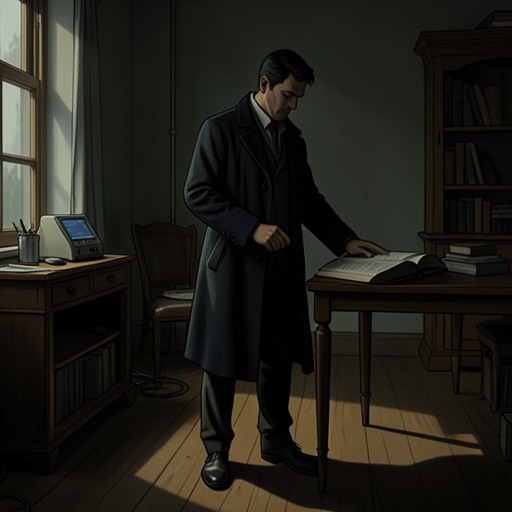
Mitchell–George–Annie friendship
A History of the Vampire in Popular CultureThe Mitchell–George–Annie friendship brings together three people who cannot belong comfortably to the human world: Mitchell, a vampire born in 1893 who appears to be in his late twenties; George Sands, an unusually unassuming werewolf; and Annie Sawyer, a dead woman whose ghost remains visible and tangible to them. Their friendship is the central domestic arrangement of Being Human, built not on shared origins but on a shared struggle to pass through everyday life while carrying supernatural identities that cannot be made entirely harmless.
Identity and Formation
Mitchell and George first establish the household in Bristol, where they rent a house together while attempting to negotiate the pressures of the outside world. Their pairing is deliberately unlikely. Mitchell possesses the charisma, danger, and historical burden associated with the vampire, whereas George is presented as awkward and unassuming, far removed from the swaggering image often attached to supernatural predators. What binds them is not similarity of temperament but mutual recognition: each understands what it means to be marked as different and to need practical companionship in order to remain connected to ordinary society.
Annie enters the arrangement as the house’s unexpected third occupant. She is of a similar age to Mitchell and George, but unlike them she is actually dead. The vampire and the werewolf are the only people able both to see and to interact with her ghost, giving their shared domestic life a supernatural logic that is also a social one. Annie’s presence turns a two-person refuge into a three-way friendship, and the house becomes a place where forms of existence excluded from normal human recognition can nevertheless coexist.
A Friendship Against Isolation
Mitchell’s need for the household is especially intense because his vampirism is not an identity he chose. During the First World War, he was forced to allow himself to be changed when his men were attacked, and he has resented his existence ever since, even while benefiting from the powers and privileges it provides. His life is therefore divided between the predatory history of a vampire and his desire to remain recognisably human. Working as a hospital porter, he tries to maintain that balance through disciplined contact with human routines.
George supplies a form of stability that Mitchell cannot create alone. Their friendship gives Mitchell an ordinary framework—shared rent, shared space, and the obligations of domestic life—without pretending that either man is ordinary. George, in turn, is not required to conceal his supernatural condition from the only people who can understand it. The arrangement is less a cure for their otherness than a method of living with it. Their home does not erase the boundary between human and supernatural; it makes that boundary negotiable.
Annie deepens this structure by embodying a different kind of exclusion. As a ghost, she is physically present within the house but socially absent from the world that once contained her. Mitchell and George’s ability to perceive her makes friendship possible after death, while Annie’s dependence on their recognition reveals how fragile ordinary social existence can be. The three are therefore connected by a practical form of care: they make one another visible, and visibility becomes the first condition of belonging.
Contradiction, Secrecy, and Trust
The friendship is tested by Mitchell’s divided nature. Later flashbacks show him acting with the cold cruelty expected of a vampire, yet the same account preserves a persistent thread of compassion. He clings to that remnant of humanity because he fears becoming a fully fledged monster. His concern is not merely that strangers might condemn him; he believes that George and Annie, the people whose affection gives his life security, might despise him if they saw everything he has done.
This fear makes intimacy inseparable from secrecy. Mitchell cannot show his flatmates every part of his vampire life, because the friendship is the one secure element he feels unable to lose. The household therefore contains an unresolved tension between acceptance and concealment. George and Annie offer care without demanding that Mitchell become human, but Mitchell himself cannot fully accept that he may be worthy of care while remaining what he is. His attachment to them is consequently both sustaining and painful: it gives him a reason to resist his instincts, while reminding him that he can never become identical with them.
Mitchell’s relationship with Josie illustrates the moral capacity that the household protects but does not guarantee. In the present, he recognises Josie as a hospital patient who should have been one of his victims forty years earlier. Flashbacks reveal that he fell in love with her and chose not to kill her, sustaining an almost human relationship despite his bloodlust. The episode does not imply that Mitchell stopped killing altogether; its force lies in the narrower fact that he could exercise choice in relation to one person. His friendship with George and Annie belongs to the same ethical struggle. It does not make him innocent, but it gives his remaining humanity a social form.
The Meaning of the Household
The trio’s domestic life revises familiar vampire conventions. Earlier literary and cinematic vampires often function as predators, elegant outsiders, or embodiments of erotic and social danger: Varney becomes a sympathetic figure by fighting his instincts, Carmilla makes predation intimate and sexually charged, and Count Orlok in Nosferatu is presented as an unmistakably threatening creature without the later glamour of the genre. Mitchell inherits the danger of these figures but is placed inside a friendship that requires accountability, restraint, and emotional reciprocity.
That revision belongs to the broader modern freedom to make vampires almost anything. Contemporary portrayals can treat them as villains, antiheroes, or people trying to live ethically alongside humans. Mitchell, George, and Annie extend that transformation beyond the individual vampire. Their bond makes supernatural identity collective rather than solitary: a shared household becomes an experiment in coexistence, where friendship performs the work that folklore once assigned to exorcism or segregation.
The arrangement remains tragic because it cannot finally remove the conditions that created it. Mitchell wants to be human, but he can never be entirely human; George must still confront the nature of the werewolf; Annie remains dead even while participating in the rhythms of domestic friendship. Their closeness does not resolve these contradictions. Instead, it allows them to endure them together, making the friendship significant precisely because it offers belonging without promising transformation.