Revenant
A History of the Vampire in Popular CultureRevenant names one of the oldest forms of the undead in European supernatural tradition: a dead person who returns to the world of the living. Before Gothic literature consolidated the modern vampire, revenants were commonly imagined as physically alarming corpses or restless dead who rose from their graves to torment former neighbours, seek revenge, or disturb the boundary between death and life. Their importance lies in that transitional position. They belong to the history of the vampire, but they are not identical with the later aristocratic, erotic, and highly codified vampire figure.
Identity and Early Meaning
The term revenant is presented as a straightforward description of the undead rather than as a single universally consistent species. Medieval writers used it for the dead who returned, while different cultures supplied their own explanations, bodily signs, prohibitions, and methods of disposal. In older stories, the creature was often feared and loathed and was frequently ugly, lacking the seductive refinement that nineteenth-century fiction would later give to blood-drinking monsters. The distinction matters because modern expectations of vampirism are historically recent: the relatively modern world gradually honed a much clearer definition from a large field of life-sucking and death-defying beings.
The wider family of these beings included Lamia, who in Greek mythology was punished after Hera discovered her connection with Zeus and killed her children, then became associated with the blood of sleeping children. In later versions, Lamia shifted toward the figure of a deadly seductress who enticed and devoured young men, approaching the role of a succubus. A Jewish account in Sefer Hasidim, written around the turn of the thirteenth century, describes Astryiah, an elderly female vampire who drew blood through her hair and was assumed to resemble an estrie, a creature able to fly and change form. The impundulu of the eastern Cape likewise occupied an unstable place between vampire, familiar, bird, and witchcraft: it could appear as a large black-and-white lightning bird or, in some accounts, as a beautiful young man, and it was passed from a witch to her daughter if it had not already consumed her.
Medieval Revenants and the Grave
Walter Map provides one of the clearest medieval literary records of revenant tradition. An associate of Thomas Becket and a collector of folk stories and historical anecdotes, Map wrote De Nugis Curialium, or Courtier’s Trifles, around 1181–92. He recorded tales of dead people rising from the grave to wreak revenge on those who had wronged them in life. The accounts were gathered as stories of uncertain veracity, but their very circulation shows how the restless dead could be placed within a recognisable explanatory world rather than treated merely as decorative monsters.
One story concerns William Laudun, an English knight who sought advice from Gilbert Foliot, the Bishop of Hereford, about a Welshman of evil life who refused to remain dead. The man rose from his grave each night and cursed his former fellow villagers. Foliot attributed the movement to an evil angel acting through the corpse, then prescribed a practical religious remedy: the body was to be exhumed, its neck cut through with a spade, and both corpse and grave sprinkled with holy water before being replaced. The procedure joins clerical interpretation to physical intervention. The corpse is not simply exorcised or prayed over; it is mechanically prevented from rising again.
Map also recounts the case of a man who, despite being firmly buried after an unchristian death, wandered about in his shroud for more than a month and terrified the local population. Roger, Bishop of Worcester, ordered a cross to be placed on the grave. This time the measure apparently worked: the deceased sank into the soil and remained there. The episode turns a religious object into a restraining device and gives the revenant a lesson-like narrative structure, in which improper death produces public disorder and ecclesiastical authority restores the corpse to its place.
William of Newburgh continued this medieval record in Historia Rerum Anglicarum, or History of the Affairs of the English, written in the late 1100s. Newburgh claimed impartiality about supernatural happenings and did not insist that every story was true, yet he accepted the possibility of life after death in a way characteristic of his period. Together, Map and Newburgh preserve a stage in which revenants were neither fully separated from religious history nor absorbed into the later literary category of the vampire.
Bodies, Death, and Explanation
The revenant tradition is also tied to uncertainty about what death actually meant. Taphophobia, the fear of being buried alive, was not irrational in periods when medicine lacked reliable ways to distinguish death from deep unconsciousness. Accounts of people who appeared to rise after burial could therefore preserve a distorted memory of premature burial as well as a supernatural belief. A report published by the Dundee Courier on 6 December 1877 described a woman buried while in a trance rather than dead. When the grave was later opened for another body, the clothes covering her had been torn apart and her limbs were broken from attempts to escape the living tomb.
This uncertainty helps explain why the revenant could be understood through both bodily evidence and supernatural causation. A disturbed grave, a corpse apparently altered after burial, or a report of nocturnal wandering could be interpreted as proof that the dead had returned. The story did not require a modern vampire’s fangs, glamour, or carefully defined feeding habits. It required only a corpse that had crossed back into social space and threatened the living order.
The same logic appears in accounts of old vampire legends involving women who killed babies and children. High infant mortality, sudden infant death syndrome, malnutrition, and limited medical knowledge made unexpected deaths difficult to explain. Because most babies were breastfed by their mothers or wet nurses, blame could fall upon the woman caring for the child when something went wrong. Religious explanations often supplied an agent from beyond the visible world, transforming grief and uncertainty into the image of a life-sucking female creature. Revenant and vampire traditions thus gave social form to deaths that families could not otherwise account for.
Separation from the Modern Vampire
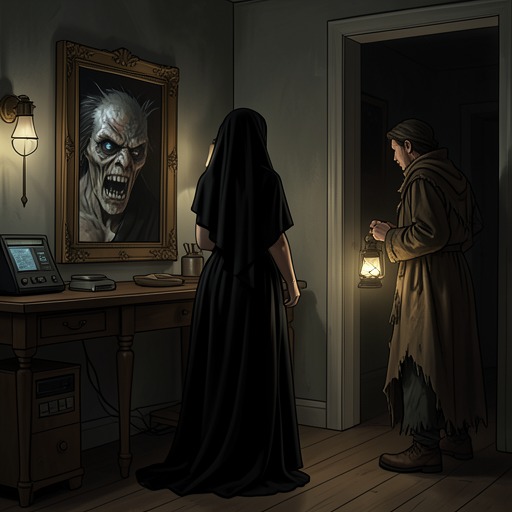
By the sixteenth century, the myths of the undead were beginning to distinguish revenants from what would later be recognised as vampires. Demonological discussions of the incubus imagined demons possessing corpses and using them as costumes in order to walk among humans while appearing alive. The connection between an animated corpse, supernatural power, and sexual seduction helped establish foundations for later vampire mythology, but it did not yet produce the fully formed modern creature.
The nineteenth century increasingly supplied that form. James Malcolm Rymer’s Varney the Vampire, first issued in instalments in 1845 and published as a single book in 1847, introduced or strengthened features now associated with vampires, including sharpened, fang-like teeth. Its enormous length resulted from the penny-dreadful system, under which the author was paid by the line; the complete tale exceeded 650,000 words and later editions ran to more than 800 pages. Varney could even be reanimated through galvanism, linking the vampire story to Mary Shelley’s Frankenstein. Yet the character retained an important revenant quality: despite murderous instincts, Varney became sympathetic, struggled against his nature, and eventually killed himself to escape an eternal fate.
Carmilla, serialised from late 1871 to March 1872 and published in book form in 1872, moved the tradition further toward the modern night creature. Its central figure slept by day, prowled at night, and selected victims through an emotionally and physically predatory intimacy. The story’s vampire was no longer simply an ugly corpse returning to terrify a village. She was elegant, selective, and seductive, even while remaining deadly. The same transformation appears in The Vampyre, which replaced ragged shrouds and repulsive features with the handsome, upper-class male figure in formal clothing and a sharp smile.
Legacy in Fiction and Culture
Dracula gave the transformation its most influential literary expression. Bram Stoker published the novel in 1897 while working as business manager to Henry Irving, and the character became the most infamous of vampire figures. Unlike a largely anonymous revenant, Count Dracula appears as a rounded personality with plans, strategies, and a moral character of his own. The basic conflict is simple but powerful: a man must resist another, possibly murderous man’s attentions to the woman he loves. Stoker turned that structure into a richly detailed novel whose Count would shape nearly every later representation of the vampire.
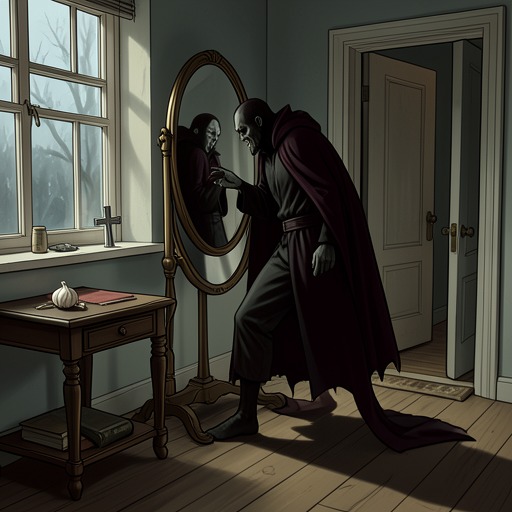
Film made the distinction even more visible. F. W. Murnau’s Nosferatu, produced in the context of postwar German Expressionism, retained a far older image of the undead. Count Orlok, played by Max Schreck, is threatening in both attitude and appearance, without the erotic overtones later associated with vampires. Although the film was effectively an unauthorised version of Dracula, its creature looks closer to a revenant than to the polished aristocrat of subsequent adaptations. The film’s advanced effects, including stop-motion movement used for Orlok’s coffin lid, gave an archaic corpse a new cinematic force. Court action ordered Prana-Film to destroy all copies, but one copy had already escaped overseas, allowing the film and its revenant-like monster to survive.
Later portrayals released the vampire from fixed rules. Modern vampires could be villains, heroes, comic figures, musical characters, or beings living openly alongside humans. In True Blood, vampires emerge from hiding in small-town Louisiana, while Tru Blood synthetic blood is presented as a possible route to coexistence and equality. The question is no longer only whether the dead can return, but whether an immortal predator can enter society without repeating the habits of eternal violence.
The revenant therefore survives less as a single stable monster than as a recurring narrative function. It marks the return of what a community has buried, denied, or failed to understand: a corpse that refuses its assigned place, a death that demands explanation, or a social fear that takes bodily form. From medieval tales of nightly walkers and cursed villagers to modern vampires who step visibly into public life, the movement is from the unquiet dead toward a flexible cultural figure. The revenant remains the buried root beneath the many later branches of vampire mythology.