Sookie Stackhouse
A History of the Vampire in Popular CultureSookie Stackhouse is the human protagonist of True Blood, a telepathic waitress whose encounter with Bill Compton turns a small Louisiana town into a meeting place between ordinary human life and a vampire society emerging from centuries of secrecy. Her decisive significance lies in the contrast between her apparently modest manner and her unusual moral and physical resolve: Sookie is not merely a mortal caught among predators, but an outsider who recognizes danger, chooses her risks, and refuses to become anyone’s victim or possession.
Identity and Background
Sookie lives with the burden of hearing other people’s thoughts. The ability has made ordinary social life difficult, since the minds around her are not private in the way human relationships normally require. Rather than making her socially powerful, telepathy has left her isolated and accustomed to keeping herself apart. She does not expect to meet a man who can tolerate the intrusive nature of her gift, which helps explain why Bill Compton immediately appears exceptional to her.
Her outsider status is therefore double. She is separated from other humans by an ability she cannot simply switch off, and she is separated from vampires by her mortality and lack of familiarity with their world. Yet the same experience that has made her wary also gives her a disciplined suspicion of other people’s motives. Sookie is not dazzled into trust by novelty. She listens, notices contradictions, and treats apparent charm as something that must be tested.
Encounter with Bill Compton
The arrival of Bill Compton, the new vampire in town, creates the central opening in Sookie’s life. In the television version of True Blood, the relationship is framed by a society in which vampires have begun living openly after centuries of hiding. The invention of synthetic Tru Blood means that humans can, at least in theory, feel safe in vampire company, while the language of “coming out of the coffin” connects vampire visibility with the public struggle for LGBT+ equality.
Sookie’s response to Bill is more active than the role of an intrigued human companion might suggest. She is not frightened when she meets her first vampire; if anything, the encounter excites her, partly because Bill’s mind is inaccessible to her in the way human minds are not. That relief does not become gullibility. Sookie is sufficiently confident in herself to take calculated risks, and her attraction to Bill exists alongside a clear awareness that vampires have spent millennia feeding, killing, and concealing themselves from human retaliation.
Her independence is also emphasized by her immunity to glamour. Because supernatural influence cannot simply redirect her judgment, Bill and other vampires cannot rely on the easy control they may expect to exercise over humans. Sookie’s reserve is not passivity. It is a method of survival, and it prevents romantic fascination from erasing the unequal power between a mortal woman and an undead predator.
Courage and the Rattray Attack
Sookie’s moral character becomes concrete when she saves Bill from Denise and Mack Rattray in the first episode of the first series. After reading their thoughts in the diner, she realizes that the Rattrays intend to steal Bill’s blood and sell it on the black market. Vampire blood, known as V, has valuable effects on humans, including heightened sensation and sexual intensity, so the Rattrays treat Bill’s body as a commodity rather than as a person.
Sookie decides that she has no option but to intervene. Her preparation reveals the practical intelligence beneath her seemingly quiet manners: she wraps a silver chain around her neck before entering the confrontation. The gesture shows that curiosity has not made her careless. She understands that Bill is dangerous and that vampire lore may contain enough truth to matter, even in a world where many traditional rules are fabrications.
The ensuing fight is bloody, and Sookie survives only after drinking some of Bill’s blood for its healing properties. She is initially repulsed, but Bill insists, and her disgust changes into eagerness as the blood enters her body. The scene reverses the familiar image of the vampire as the sole hunter. Here, Sookie risks herself to protect a vampire, while human predators attempt to harvest the vampire’s vital essence for profit.
The immediate consequence is a transformation in Sookie’s perception of her own mortality. The following day, her strength, sight, hearing, and sense of smell are unnaturally heightened. She can detect a tiny crumb of food trapped beneath furniture in her grandmother’s immaculate house. Bill also makes clear that continuing to drink his blood could affect her sex life, revealing why V is so tempting to mortals who are otherwise vulnerable and physically limited. The experience gives Sookie access to power, but it also exposes the danger of addiction: supernatural strength arrives not as a free gift, but as an intoxicating dependency.
Boundaries, Desire, and Self-Protection
Sookie’s attraction to vampires never cancels her boundaries. She is not prepared to be treated as a walking buffet by the animalistic vampires around her, however attractive her fanged suitor may be. Her self-description as “a lady” and her quiet manners can make her appear conventionally delicate, but the narrative repeatedly places those manners beside a core of steel. Kindness does not mean surrender, and politeness does not grant others permission to exploit her.
That distinction becomes especially important because blood and sex are closely intertwined in Sookie’s world. Vampire blood is not presented only as contamination or disease; it can function positively, as an aphrodisiac and a source of enhanced sensation. The arrangement makes intimacy materially dangerous even when it is desired. Sookie must therefore navigate a field in which care, erotic attraction, healing, addiction, and predation can occupy the same exchange.
Her resistance to glamour strengthens this negotiation. A vampire may be beautiful, persuasive, and apparently protective, but Sookie cannot be safely reduced to the passive object of his desire. Her attraction remains a choice only because she retains the capacity to question motives and refuse manipulation. In that sense, her romance with Bill is also a continuing contest over whether intimacy can exist without possession.
Narrative and Thematic Role
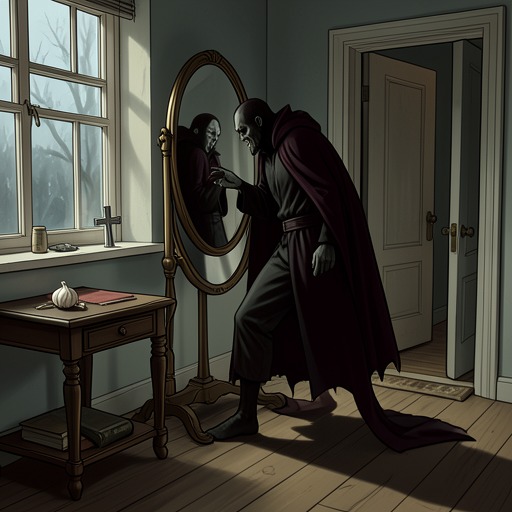
Sookie embodies True Blood’s reworking of old vampire conventions. Bill explains that vampires deliberately invented false myths about themselves so humans would dismiss or misidentify them. Reflections, holy water, and crucifixes are not reliable tests: the mirror rule was created to help vampires remain hidden, holy water is merely water, and crucifixes are dismissed as “Geometry.” Garlic has only a limited effect, irritating vampires rather than functioning as an absolute defense. Sookie’s questions allow this compact dismantling of vampire folklore to occur, while her inability to be glamoured makes her an unusually difficult observer to deceive.
The result is a world in which the familiar signs of monstrosity no longer provide moral certainty. Until a vampire shows fangs, it may be impossible to distinguish the undead from the human. Sookie’s telepathy does not solve that problem, because it marks her as an outsider rather than giving her complete knowledge. Instead, it forces her to judge people through action, consequence, and the credibility of their choices.
Her character also anchors the series’ minority-rights metaphor. Vampires publicly seek equality after centuries of concealment, and expressions such as “coming out of the coffin” and “God Hates Fangs” echo the language used in struggles over gay rights. Sookie stands at the boundary between communities: human enough to be threatened by vampires, unusual enough to understand exclusion, and independent enough to resist the demand that she identify wholly with either side. Her position makes the social allegory personal rather than abstract.
Sookie’s lasting power comes from the tension between the unassuming and the formidable. She has the manners of someone who has learned not to draw attention, yet her choices repeatedly expose courage that louder characters lack. She saves Bill because she recognizes the Rattrays’ intentions, accepts danger without pretending it is harmless, and survives the seductive effects of vampire blood while learning their cost. Those qualities make her irresistible both to characters who would seduce her and to those who would kill her, but the narrative’s central point is that neither desire nor violence can fully define her. Sookie remains compelling because she converts vulnerability into judgment, and judgment into action.