The New York World
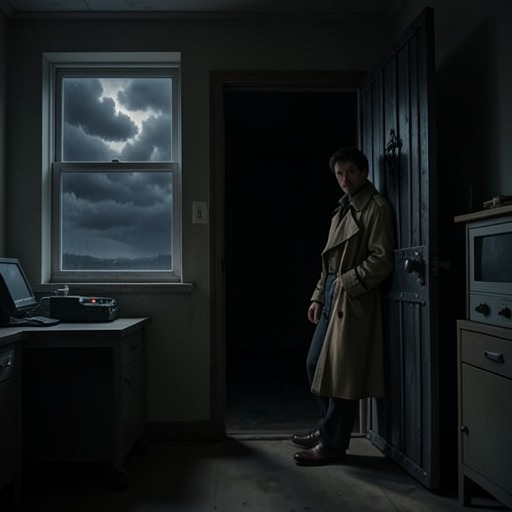
A History of the Vampire in Popular CultureThe New York World appears in the book as the newspaper whose reporter supplied the source for a sensational vampire story later reprinted by the Daily Alta California on 24 July 1870. The report claimed that the journalist, travelling in Hungary, had awakened in terror to find “some horrible thing, cold as death” pinning him to his bed and trying to fasten its mouth onto his throat. After the creature escaped through a window, the reporter was examined for marks and reportedly relieved to find “no trace of puncture there”. The episode presents the newspaper simultaneously as witness, investigator, and storyteller: it begins with an alleged personal experience, then expands into a dramatic account of local belief, corpse exhumation, and supernatural violence.
Investigation and Sensational Expansion
The reporter did not stop at his own alleged encounter. After learning from his landlord that similar attacks had supposedly occurred, he investigated the claim that three villagers had died the previous night after having their blood sucked by the Devil. He went to the local churchyard, where men were preparing to open the grave of Peter Dickowitz, a villager who had died three weeks earlier but was said to have continued harassing residents. The story connected Dickowitz’s alleged return to his earlier claim that he had survived a vampire attack, presenting his death as the eventual fulfilment of that history. According to the villagers, only the disinterment and staking of suspect corpses could stop the supposed vampire and its victims.
A Manufactured Spectacle
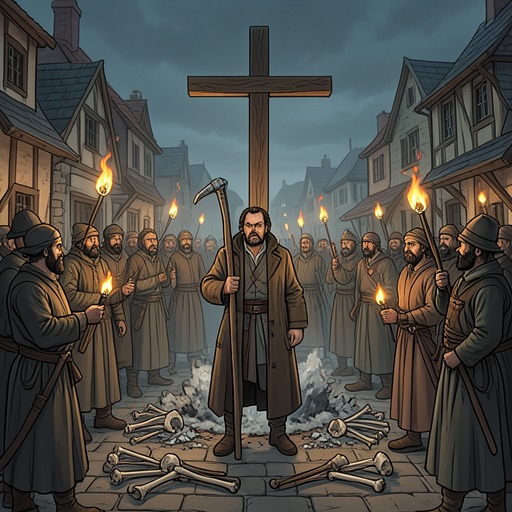
The report reached its most theatrical point when three coffins were opened. The journalist claimed that the bodies were not dead but “horrible beyond expression,” with blood-covered bodies, leering mouths, and staring eyes. He described them as “the living dead” and asserted that, when the villagers staked them, each corpse produced a wailing cry. Yet the book identifies a fundamental problem with the account: it closely reproduces details associated with the earlier Arnold Paole story, including Peter Dickowitz’s alleged method of curing himself while alive by eating soil from his attacker’s grave and covering himself with blood. The newspaper’s apparent eyewitness authority therefore collapses into probable fabrication. Its foreign setting, graphic corpses, terrified villagers, and emphatic language transformed borrowed vampire lore into a marketable spectacle, illustrating how nineteenth-century journalism could present sensational invention as on-the-spot evidence.
Cultural Context and Editorial Logic
The New York World’s report belongs to a nineteenth-century information culture in which curiosity, spiritualism, religious uncertainty, and rapid technological change made supernatural explanations unusually persuasive. The wider period combined industrial development with continued newspaper reporting of witchcraft as fact, while outbreaks of disease and unexplained deaths encouraged communities to interpret mortality through stories of returning dead. Against this background, the paper’s account converted local fears into a readable drama of foreign superstition and physical horror. Its apparent immediacy gave inherited folklore the authority of journalism, even though the close resemblance to the Arnold Paole narrative suggests that the report recycled an established template rather than documenting an independent event.
Afterlife in Print
The newspaper’s importance extends beyond the doubtful truth of the Hungarian episode. By presenting a borrowed or embellished legend as witnessed fact, The New York World helped demonstrate how vampire belief could move between village testimony, medical uncertainty, religious imagination, and mass media. The same historical environment produced the eighteenth-century vampire craze, when communities exhumed corpses in response to successive deaths, and later encouraged learned figures such as Augustin Calmet to collect and assess reports of revenants and vampires. In this chain of transmission, journalism did not merely record superstition: it selected vivid details, arranged them as evidence, and circulated them to readers who were already receptive to supernatural explanations. The report therefore belongs to the history of vampire folklore as an example of how print could manufacture cultural authority while preserving the appearance of investigation.
Print Authority and Cultural Transmission
The New York World’s significance lies in the way its report converted inherited folklore into apparent firsthand knowledge. Its journalist’s supposed journey through Hungary, inspection for puncture marks, conversation with a landlord, visit to a churchyard, and observation of the exhumations gave the story the outward structure of investigation, while its lurid descriptions supplied the emotional force of sensational fiction. The account consequently occupied an unstable middle ground between testimony and entertainment: it appeared to document local belief, yet its close resemblance to the Arnold Paole narrative indicates that established vampire motifs had been repackaged as news. In a period when rapid industrial change coexisted with spiritualism, credulity, and reports of witchcraft treated as fact, the newspaper’s authority could make borrowed supernatural material seem newly verified. Its lasting importance is therefore not that it proved vampires existed, but that it shows how print media selected, dramatized, and circulated fear, allowing a doubtful story from abroad to participate in the continuing cultural history of vampire belief.
Print Authority and Cultural Transmission
The New York World’s significance lies in the way its report converted inherited folklore into apparent firsthand knowledge. The journalist’s supposed journey through Hungary, examination for puncture marks, conversation with a landlord, visit to a churchyard, and observation of the exhumations gave the narrative the outward structure of an investigation, while its lurid descriptions supplied the emotional force of sensational fiction. The account consequently occupied an unstable middle ground between testimony and entertainment: it appeared to document local belief, yet its close resemblance to the Arnold Paole narrative indicates that established vampire motifs had been repackaged as news. In a period when rapid industrial change coexisted with spiritualism, credulity, and newspaper reports of witchcraft treated as fact, the newspaper’s authority could make borrowed supernatural material seem newly verified. Its lasting importance is therefore not that it proved vampires existed, but that it shows how print media selected, dramatized, and circulated fear, allowing a doubtful story from abroad to participate in the continuing cultural history of vampire belief.
Print Authority and Cultural Transmission
The New York World’s importance lies in the way its report converted inherited folklore into apparent firsthand knowledge. The journalist’s supposed journey through Hungary, examination for puncture marks, conversation with a landlord, visit to a churchyard, and observation of the exhumations gave the narrative the outward structure of an investigation, while its lurid descriptions supplied the emotional force of sensational fiction. The account consequently occupied an unstable middle ground between testimony and entertainment: it appeared to document local belief, yet its close resemblance to the Arnold Paole narrative indicates that established vampire motifs had been repackaged as news. In a period when rapid industrial change coexisted with spiritualism, credulity, and newspaper reports of witchcraft treated as fact, the newspaper’s authority could make borrowed supernatural material seem newly verified. Its lasting importance is therefore not that it proved vampires existed, but that it shows how print media selected, dramatized, and circulated fear, allowing a doubtful story from abroad to participate in the continuing cultural history of vampire belief.
The New York World’s report also belongs to a broader history in which print, medicine, religion, and popular fear continually reshaped one another. The nineteenth century combined rapid technological change with spiritualism and continued newspaper treatment of witchcraft as fact, while outbreaks of tuberculosis and other unexplained deaths encouraged communities to imagine that the dead were stealing life from the living. Earlier episodes such as the eighteenth-century vampire craze had already established the pattern of communal suspicion, corpse exhumation, and supposed physical proof. Learned writers participated in the same circulation of material: Augustin Calmet collected accounts of apparitions, revenants, and vampires in The Phantom World, quoting reports transmitted through Lettres Juives. Against this background, The New York World’s narrative did more than repeat a village rumour. By arranging hearsay, bodily inspection, foreign travel, and a spectacular exhumation as the stages of an investigation, it gave inherited folklore the appearance of verified knowledge. Its probable borrowing from the Arnold Paole story reveals the process from the opposite direction: journalism could preserve an old narrative by disguising repetition as fresh eyewitness testimony.
Print Authority and Cultural Transmission
The New York World’s importance lies in the way its report converted inherited folklore into apparent firsthand knowledge. The journalist’s supposed journey through Hungary, examination for puncture marks, conversation with a landlord, visit to a churchyard, and observation of the exhumations gave the narrative the outward structure of an investigation, while its lurid descriptions supplied the emotional force of sensational fiction. The account consequently occupied an unstable middle ground between testimony and entertainment: it appeared to document local belief, yet its close resemblance to the Arnold Paole narrative indicates that established vampire motifs had been repackaged as news. In a period when rapid industrial change coexisted with spiritualism, credulity, and newspaper reports of witchcraft treated as fact, the newspaper’s authority could make borrowed supernatural material seem newly verified. Its lasting importance is therefore not that it proved vampires existed, but that it shows how print media selected, dramatized, and circulated fear, allowing a doubtful story from abroad to participate in the continuing cultural history of vampire belief.
Print Authority and Cultural Transmission
The New York World’s report also belongs to a broader history in which print, medicine, religion, and popular fear continually reshaped one another. The nineteenth century combined rapid technological change with spiritualism and continued newspaper treatment of witchcraft as fact, while outbreaks of tuberculosis and other unexplained deaths encouraged communities to imagine that the dead were stealing life from the living. Earlier episodes such as the eighteenth-century vampire craze had already established the pattern of communal suspicion, corpse exhumation, and supposed physical proof. Learned writers participated in the same circulation of material: Augustin Calmet collected accounts of apparitions, revenants, and vampires in The Phantom World, quoting reports transmitted through Lettres Juives. Against this background, The New York World’s narrative did more than repeat a village rumour. By arranging hearsay, bodily inspection, foreign travel, and a spectacular exhumation as the stages of an investigation, it gave inherited folklore the appearance of verified knowledge. Its probable borrowing from the Arnold Paole story reveals the process from the opposite direction: journalism could preserve an old narrative by disguising repetition as fresh eyewitness testimony.
Print Authority and Cultural Transmission
The New York World’s report also belongs to a broader history in which print, medicine, religion, and popular fear continually reshaped one another. The nineteenth century combined rapid technological change with spiritualism and continued newspaper treatment of witchcraft as fact, while outbreaks of tuberculosis and other unexplained deaths encouraged communities to imagine that the dead were stealing life from the living. Earlier episodes such as the eighteenth-century vampire craze had already established the pattern of communal suspicion, corpse exhumation, and supposed physical proof. Learned writers participated in the same circulation of material: Augustin Calmet collected accounts of apparitions, revenants, and vampires in The Phantom World, quoting reports transmitted through Lettres Juives. Against this background, The New York World’s narrative did more than repeat a village rumour. By arranging hearsay, bodily inspection, foreign travel, and a spectacular exhumation as the stages of an investigation, it gave inherited folklore the appearance of verified knowledge. Its probable borrowing from the Arnold Paole story reveals the process from the opposite direction: journalism could preserve an old narrative by disguising repetition as fresh eyewitness testimony.