What choice do we have
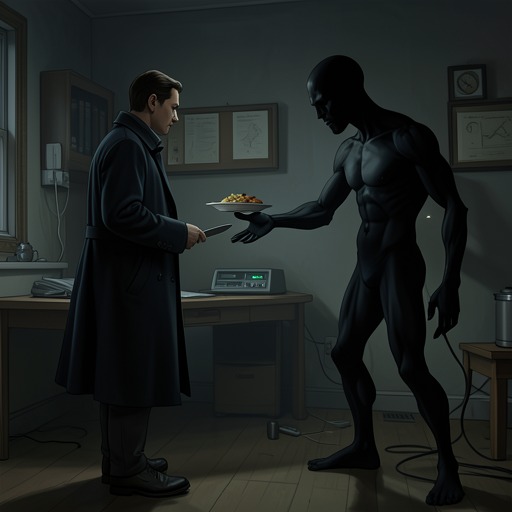
A History of the Vampire in Popular Culture“What choice do we have?” is an expression of forced necessity whose most revealing use comes in Only Lovers Left Alive. Adam and Eve have lost both their beloved friend Christopher Marlowe and the “special supplies” that allowed them to live with minimal killing. On the brink of genuine death, they encounter two young lovers and approach them amiably before baring their fangs. Their final words, “Well, what choice do we have?”, frame the killing as unavoidable survival rather than deliberate cruelty. The phrase therefore carries the book’s recurring tension between romanticized immortality and the bodily violence required to sustain it.
The Expression in Its Immediate Scene
Marlowe’s death changes Adam and Eve’s situation in two ways at once: they lose someone they love, and they lose the source that has made their relatively restrained lifestyle possible. Their hunger is not abstract. Without the special supplies, the couple’s minimally murderous way of living is doomed, and they face the prospect of final death. The young lovers appear at precisely this point of extremity, transforming an apparently chance encounter into a stark test of whether the older vampires will preserve their ethical preference or satisfy their physical need.
The scene’s irony lies in its manner as much as in its outcome. Adam and Eve retain a wistful, empathic air and approach the young couple in a friendly fashion, yet the friendliness ends with exposed fangs. “Well, what choice do we have?” functions as a verbal threshold between social contact and predation. It acknowledges the couple’s hunger while refusing to grant the victims an equivalent moral position. The young people are not presented as enemies, threats, or willing participants; they are simply available bodies with their entire human lives ahead of them.
Necessity and Responsibility
The question sounds as though circumstances have removed agency, but the narrative does not erase the consequences of the choice. Adam and Eve kill two people because they are hungry. Their need explains the act without making it harmless, and the phrase’s power comes from that unresolved distinction. The vampires do not claim innocence; instead, they treat the occasional emergency snack as collateral damage produced by their superior, predatory condition.
This separates them sharply from the Cullens. The Cullens struggle to avoid human blood and adopt an animal-based diet, even though Jasper Hale finds his instincts difficult to control around humans. Adam and Eve do not waste time on the moral concerns that govern the Cullen family. They accept that they are animals at heart and act accordingly. “What choice do we have?” consequently expresses not a successful ethical compromise but the collapse of restraint when survival becomes urgent.
A Recurrent Logic of Vampire Survival
Across the book’s history of vampire representations, the expression belongs to a larger logic in which immortality never abolishes dependence on bodies. Earlier literary vampires make blood the condition of continued existence, while later versions modify the means of feeding, the appearance of the predator, or the degree of sympathy offered to it. The phrase condenses that continuity: however elegant, modern, self-aware, or emotionally complex vampires become, hunger can return them to the basic fact of the bloodsucker’s life.
That logic also contrasts with more socially adaptive versions of vampirism. In True Blood, synthetic “Tru Blood” is meant to let vampires live openly and allow humans, in theory, to feel safe in their company. Vampire blood itself becomes a prized commodity because it intensifies human sexual experience and can produce heightened senses, strength, and other benefits; its exchange links bodily survival, pleasure, addiction, and commerce. Adam and Eve occupy the darker end of this spectrum. They lack a substitute supply at the decisive moment, so the human body remains the only immediately available resource.
Expression, Sympathy, and the Undead Condition
The expression also belongs to a long movement in which vampires become more sympathetic without ceasing to be dangerous. Varney the Vampire, first published in instalments in 1845, helped establish familiar features such as sharpened, fang-like teeth. Although Varney is murderous, he becomes a sympathetic figure because he did not choose to become a creature of the night, fights his animal instincts, and eventually kills himself to escape his eternal fate. Later vampires are likewise granted psychological depth, erotic appeal, political claims, or ordinary social identities.
Yet sympathy does not necessarily produce moral transformation. The book notes that modern portrayals can make vampires heroes as well as villains and can imagine them living unnoticed among humans. It also emphasizes how often immortality is paired with wealth, charisma, glamour, and freedom from ordinary worries. The attraction is a simpler world in which the central concern is life and death rather than bills or employment. Adam and Eve reveal the cost hidden beneath that fantasy. Their refined, empathic presentation cannot prevent the old economy of hunger from reasserting itself.
From Fatal Question to Cultural Motif
“What choice do we have?” is thus less an answer than a compressed justification. It preserves the appearance of deliberation while presenting the outcome as predetermined. In existential terms, the vampires face an extreme condition in which survival imposes a burden of choice, but they respond by treating necessity as sufficient absolution. The victims’ deaths expose the weakness of that position: the vampires have a choice in the broad moral sense, even if refusing to kill may mean their own end.
The expression resonates with the book’s broader history of the vampire as a figure who can absorb changing cultural fears and desires. Nineteenth-century tales connected blood loss, sexuality, temptation, and punishment; later works made vampires beautiful, wealthy, comic, political, or openly integrated into society. The goth subculture that emerged from post-punk clubs in Britain in the early 1980s further transformed undead imagery into music, fashion, and identity, while fake fangs, skull ornaments, and spiderweb earrings made the imagery available for purchase. Against that expanding cultural play, the line returns the vampire to a blunt material fact: survival still demands a body, and someone else may be made to pay for it.