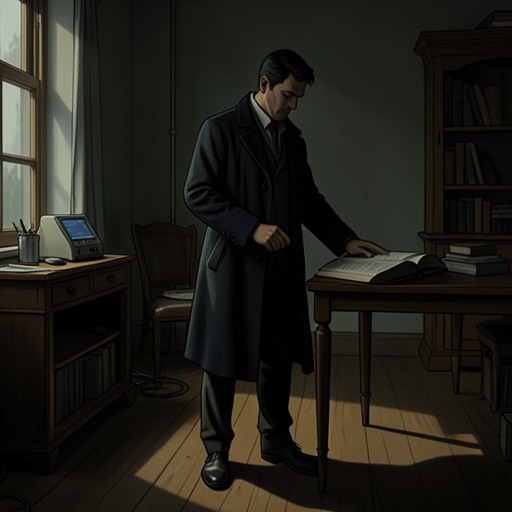
You're a shark. Be a shark.
A History of the Vampire in Popular Culture"You're a shark. Be a shark." is a line spoken by Herrick to John Mitchell in the first episode of Being Human. Its force comes from its blunt biological analogy: a shark is not asked to apologize for being a predator, and Mitchell is told to understand vampirism in the same way. Within the series, however, the expression becomes more than advice. It names the temptation to treat violence as destiny, against which Mitchell’s attempt to reclaim a human moral life is measured.
Speaker and Immediate Context
The expression belongs to Herrick’s argument with John Mitchell, whose history includes years of killing and feeding on humans. The line appears in the context of Mitchell’s struggle to prevent other vampires from feeding, including his attempt to stop Seth from preying on patients at the hospital where Mitchell works. Herrick’s formulation reduces that struggle to a simple proposition: predation is what vampires are, so resistance appears futile or self-deceiving.
The phrase is therefore both encouragement and accusation. Herrick does not present Mitchell’s conduct as an isolated moral failure; he presents it as the natural expression of a vampire’s identity. The shark image strips away romance and excuses alike. It replaces questions of choice with the language of instinct, making the acceptance of violence sound like honesty.
Addiction, Instinct, and Moral Resistance
Being Human treats Mitchell’s blood-drinking less as an abstract immoral indulgence than as an addiction. Mitchell wants to be good, but the animal instinct associated with his vampire blood repeatedly threatens that aim. His afterlife is organized around an unsteady struggle between the desire to preserve human moral boundaries and the easier option of giving in to the beast within.
The expression crystallizes the pressure exerted by the latter option. If Mitchell is simply a shark, then feeding is not a decision that can be judged; it is merely what he does. Yet the series refuses to let that explanation settle the matter. Mitchell’s repeated attempts to restrain himself demonstrate that vampirism does not erase the ethical problem of action. His resistance may ebb and flow, but it remains the basis of his claim to humanity.
The Line Within Vampire Tradition
The expression also contrasts with the historical and literary development of the vampire. Earlier traditions often imagined revenants as the cause of unexplained deaths, while later works progressively shaped the vampire into a recognizable night creature. Varney the Vampire helped establish familiar features such as sharpened, fang-like teeth, and its central figure became unexpectedly sympathetic despite murderous tendencies, fighting his instincts and ultimately killing himself to escape an eternal fate.
Carmilla further developed the image of the nocturnal, selective, and increasingly elegant predator. Count Orlok in Nosferatu instead returned the vampire to a threatening, non-erotic form, while later portrayals made vampires more varied, including sympathetic figures and characters who could live openly among humans. Against this broad history of transformation, Herrick’s words insist on an older and harsher principle: beneath elegance, romance, tragedy, or social integration, the vampire remains a predator.
Extension Into Modern Vampire Culture
The expression’s logic can be set against newer portrayals in which vampires are allowed to be almost anything. In True Blood, vampires live openly in Louisiana, and the synthetic Tru Blood substitute supposedly makes coexistence with humans possible. Those vampires seek equality after centuries of hiding, feeding, killing, and fearing persecution. The arrangement raises the same problem that Mitchell embodies: whether a change in diet can overcome habits formed across eternal lifetimes.
Other modern works similarly turn vampirism into a question of belonging and self-definition. The Radleys presents a family whose denial of its true nature leaves it unable to find genuine happiness, while Being Human makes the opposite danger visible: accepting the vampire identity too completely can become an excuse for surrendering moral responsibility. The shark metaphor belongs to this debate because it offers an uncompromising identity, but the series’ drama depends on Mitchell’s refusal to let that identity be final.
Significance
As an expression, "You're a shark. Be a shark." is memorable because it compresses a complete philosophy into six words. Herrick’s philosophy is one of essential nature: the predator should stop pretending to be anything else. Mitchell’s story supplies the counterargument. His friendships with George Sands and Annie Sawyer become his link to humanity, even though both companions are themselves paranormal, and together they attempt to learn how to live as human beings.
The line therefore functions as a recurring conceptual pressure point rather than a neutral description. It makes the conflict between instinct and choice vivid, turns blood-drinking into a problem resembling addiction, and exposes the moral danger of calling violence natural. In the world of Being Human, the decisive question is not whether Mitchell is a shark, but whether being a vampire exhausts the meaning of what he can choose to become.