
Harry Barry’s Search for a Story
A Killer’s MindThis thread follows Harry Barry’s shift from chasing sensational angles to recognizing that Zoe Bentley’s history offers a more consequential story than a headline about an unknown killer.
increasing Bearing strength in each event
 decreasing
Bearing strength in each eventdecreasingA Reporter Shut Out

The Wrong Kind of Crime Story
Dissatisfaction with the coverage
Harry Barry reads an article about the Strangling Undertaker and considers it poor journalism. Its expert commentary and vague police statements, in his view, fail to give readers a human angle. He wants to write about how ordinary Chicago residents respond to the killings rather than repeat the official hunt narrative.
A clash with his editor
Harry pitches a story involving public reactions and celebrity opinion, then argues with his editor when the idea is rejected. The editor insists that readers want fear, violence, and the pursuit of a killer. Harry believes this is exactly the predictable framing that makes the coverage uninteresting.
A personal challenge
When Harry’s editor retaliates by assigning him a piece about Justin Bieber, Harry resolves to find a stronger story on his own. His ambition is a subplot with professional stakes: he wants not only a publishable article but an angle that proves his instincts can outperform the newsroom’s usual formula.
The Memorial Envelopes
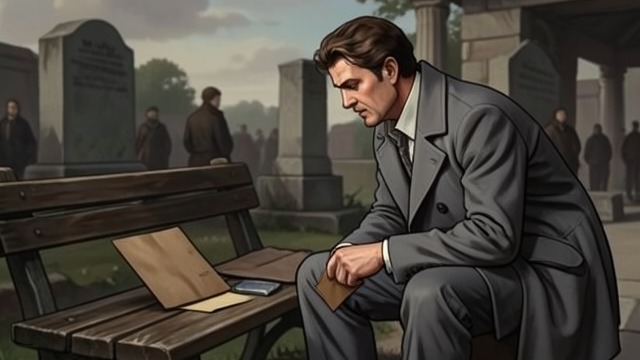
An Unexpected Lead
Reporting at the memorial
Harry visits the place where Monique Silva’s body was found, hoping to write about the public’s response to the murders. He speaks with a flower vendor and shapes the encounter into a story about community solidarity, a more humane angle than sensational crime coverage.
The brown envelope
As Harry approaches the memorial, he finds a brown envelope that has blown from the shrine. It is addressed to a woman rather than the dead victim, and he recognizes the recipient’s name. The discovery suggests that the memorial has been used as a delivery point for a private message.
Curiosity becomes a pursuit
Harry learns there are other envelopes at the earlier memorial sites and seeks them out. He does not initially know what they mean, but he recognizes that their placement turns the public memorials into part of a larger, intimate pattern. His reporting has unexpectedly brought him into contact with Zoe’s hidden history.
A Bargain for the Truth
The Source Who Will Not Explain
A meeting at the station
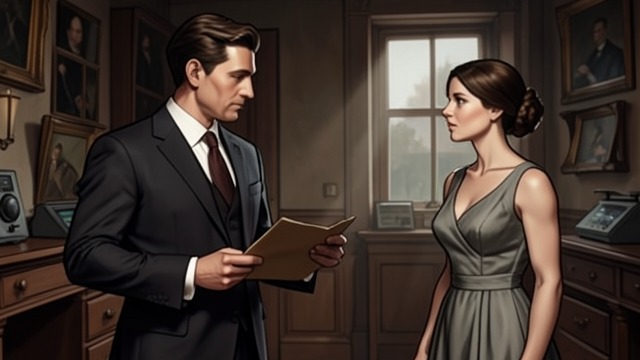
Harry brings three recovered envelopes to Zoe at the police station. She recognizes their handwriting and immediately understands that they connect to messages she has received for years. Her response tells Harry that he has found a story much larger than evidence left at crime scenes.
A reporter presses
Harry admits that he opened the envelopes before bringing them in, saying he wanted to make sure they were safe. Zoe refuses to explain their contents and warns that publication could harm the investigation. Harry says he needs a story he can use, while making clear that he controls the reporting deadline.
A conditional exchange
Rather than surrender the story, Zoe challenges Harry to wait for an account that will be both more complete and more important. She gives him a day to hold publication, buying time without offering him full access. The encounter establishes an uneasy bargain in which Harry’s professional appetite can either expose the truth prematurely or help bring it into public view on better terms.
A Larger Story Emerges
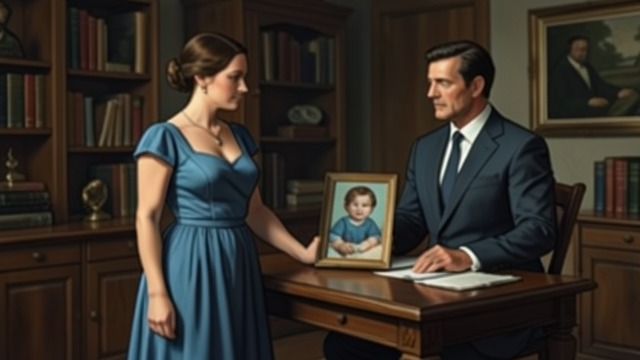
From Killer to Witness
Harry asks for more
Harry meets Zoe at Wilma’s expecting her to explain why the envelopes matter. He negotiates for a story and a deadline, conscious that a set of mysterious messages would not be enough to sustain public interest. Zoe, however, is judging him as carefully as he is judging her.
The Maynard connection
Zoe tells him that she believes the killer now operating in Chicago is linked to the serial killings in her hometown. She recalls being fourteen when the murders occurred and explains that a suspect died in custody without a trial. Harry’s attention sharpens as he realizes this is not just a case update: the profiler herself was present at the beginning of the story.
Control over publication
When Harry demands the full explanation, Zoe refuses and tells him to research what she has already said. She promises more in a few days but warns that the partial account will not make a strong story. Harry chooses not to publish immediately. He begins to see that the central subject may be Zoe’s long struggle with the killer, not merely a sequence of murders.
A Story That Changes Its Subject

The Journalist’s Choice
Publication and omission
Harry’s article about the arrest gives Zoe prominent attention, describing her as an everyday hero while largely omitting Tatum’s role. Zoe objects that parts of the piece distort or simplify her professional identity. Harry defends his choices as a response to what readers will follow, revealing the continuing gap between a compelling narrative and a complete account.
The offer of a book
Harry tells Zoe that he has received a book deal and asks her to collaborate. He also points out that he has withheld details that could embarrass her, including the uncertain connection between the Chicago and Maynard killers and her state of dress during the hostage confrontation.
A new threat in the mail
Zoe rejects his offer and ends the call. Soon afterward, another envelope arrives with a photograph of Andrea beside Rod Glover. The timing turns Harry’s proposed book into a secondary concern: the story he hoped to tell has not ended, and the killer is still shaping events beyond the public arrest of another man.
Wednesday, July 20, 2016, after Harry reads coverage of the case
Thursday, July 21, 2016, at the Ohio Street Beach memorial
Thursday, July 21, 2016, at the Chicago Police Department
Friday, July 22, 2016, at Wilma’s
August 1, 2016, after the arrest of Jeffrey Alston
