
Maynard’s Wrongful Suspect
A Killer’s MindThis thread traces how fear and institutional pressure turn Manny Anderson into the accepted suspect in Maynard, while the unresolved evidence leaves Zoe Bentley and Tatum Gray questioning the town’s version of closure.
increasing Bearing strength in each event
 decreasing
Bearing strength in each eventdecreasingA Town Wants an Answer

Fear Creates a Demand for Certainty
A community under strain
The murders of Beth Hartley and Jackie Teller transform Maynard into a fearful town. Parents restrict their children’s movements, residents avoid the streets after dark, and ordinary places such as the river and pond become associated with danger.
Rumors fill the gaps
Public information is sparse, and stories about the victims’ injuries spread through school and neighborhood conversations. Zoe Bentley is drawn to the killings and begins collecting news reports, trying to impose order on facts that the authorities have not made clear.
The pressure to identify someone
As fear grows, the community wants a suspect who can explain what happened and promise that it has ended. That demand creates conditions in which an early theory can acquire the force of certainty before it has survived careful testing. The later treatment of Manny Anderson begins in this climate of urgency.
Zoe’s Warning Dismissed

A Young Witness Is Ignored
A private investigation
After suspecting that Rod Glover may be connected to the murders, fourteen-year-old Zoe searches his home and finds disturbing material, including women’s underwear and gray ties. She tries to turn those observations into a warning before the evidence can disappear.
The police response
At the Maynard Police Department, Officer Will Shepherd listens but treats her account as adolescent overreaction. He tells her that Glover has an alibi: he was part of the search party looking for Clara Smith. The explanation seems decisive, and Zoe leaves feeling humiliated and unsure of what she believes.
Authority replaces scrutiny
The officer’s dismissal shows how an adult’s confident judgment can close an investigation rather than test a lead. Zoe’s suspicion may be difficult to prove, but the police do not carefully examine it; they rely on the alibi as presented. The episode establishes the imbalance that will shape the town’s next decision: a young witness’s detailed concern is discounted while official assumptions gain authority.
Manny Becomes the Answer

A Case Built Around One Person
The suspect’s apparent fit
Manny Anderson is a high-school student who followed Beth Hartley and once asked Clara Smith out. He is also known as quiet and socially isolated, details that the police treat as suspicious when combined with his access to gray ties belonging to his father.
A theory made to add up
The traits offered against Manny are suggestive but not conclusive. The police have not established a direct link to the murders, yet his habits, drawings, and social life are assembled into a portrait that sounds persuasive within an anxious town. Meanwhile, the possibility that another man could have used gray ties is not properly weighed.
Suspicion becomes public truth
When Zoe hears the theory, she recognizes that the police may be doing what they accused her of: selecting a person who seems to fit and arranging the facts around him. Her own earlier suspicion has been discredited, leaving her with no standing to challenge the new conclusion. The case moves toward a resolution that appears satisfying but remains fragile.
A Changed Time of Death
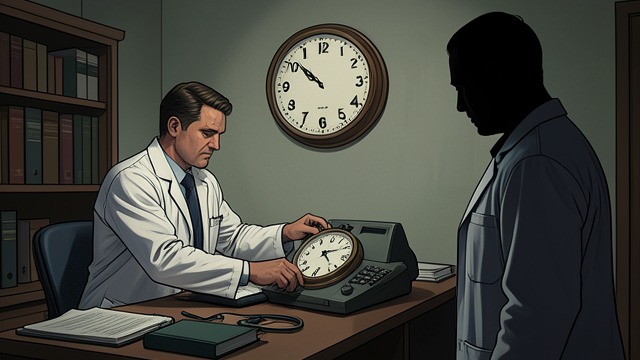
The Alibi That Closes a Door
A shifting estimate
Tatum Gray later discovers that Dr. Foster initially estimated Clara Smith died around noon or early afternoon. That window conflicts with Manny Anderson’s presence in the library. Two days later, the official estimate changes to between six and seven in the evening, after the search party has already provided Rod Glover with an apparent alibi.
Institutional pressure
When Tatum questions the former medical examiner years later, she admits that her first estimate was earlier and that police pressure may have shaped her revised conclusion. The shift is framed as uncertainty in a difficult case, but it has a concrete effect: it removes the contradiction that could have weakened the case against Manny.
What the paperwork concealed
The delay between the initial examination and the final report becomes more significant than the town’s accepted account. A time-of-death estimate is not a minor administrative detail when it determines who could have committed the murder. The thread exposes how fear and a desire to close the case can bend an uncertain fact into an alibi for one person and an accusation against another.
Closure Without Justice
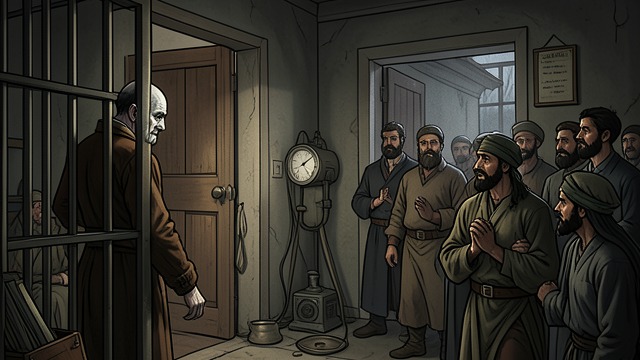
A Case Declared Finished
Arrest and death in custody
Manny Anderson is arrested as the suspected Maynard killer and later dies by suicide in his cell. The killings stop, and the town takes that sequence as confirmation of his guilt. There is no trial in which the evidence can be tested or his innocence defended.
The community moves on
For residents, Manny’s death provides a usable ending: the danger has a name, the suspect is gone, and the town can sleep again. Zoe is left with a different conclusion. She continues to believe Rod Glover was responsible, but her account has been rejected, and Glover disappears from the area.
Tatum reopens the certainty
Nearly two decades later, Tatum’s questions reveal that the time-of-death estimate was changed and that the original case may have been shaped to support the wrong suspect. Manny’s story thus remains more than a historical error: it shows how a community can confuse the disappearance of danger with proof of justice. The apparent ending protects the town’s assumptions while leaving the victims’ actual killer free.
Autumn 1997, after the deaths of Beth Hartley and Jackie Teller
Monday, December 15, 1997, after Clara disappears
December 15, 1997, after the police discuss their leading suspect
December 1997, during the investigation of Clara Smith’s murder
Late 1997 through the following months, after Manny is arrested
