Marvin
A Killer’s MindMarvin, Tatum Gray’s eighty-seven-year-old grandfather, is an irrepressibly independent presence whose antics turn family concern into an ongoing negotiation. He is introduced through an encounter with police after wandering from home, and later episodes show him buying drugs, hosting a noisy gathering, and resisting a doctor’s prescription. Beneath the comedy, his stubbornness creates a real caregiving problem: Tatum must decide how to protect Marvin without being able to make him cooperate.
Identity and Character
Marvin is identified as Tatum’s grandfather when a uniformed officer brings him to Tatum’s door. The officer has found him wandering around Logan Park, and Marvin asks where Molly is in a frail voice. The scene initially presents him as confused and vulnerable. Yet after the officer leaves, the confusion fades, and Marvin answers Tatum’s anger with a pointed explanation: he could not run as fast as the younger people, and would rather be brought home than call to say he had been arrested for buying drugs. The shift from apparent bewilderment to quick-witted self-defense makes his helplessness difficult to take at face value. The episode suggests that Marvin can use other people’s assumptions about his age to get himself out of trouble, even as his wandering gives Tatum reason to worry.
Marvin’s age is not incidental to their conflict. Tatum stresses that he is eighty-seven when demanding to know why he is buying drugs at all. Marvin does not respond by denying the activity; instead, he treats Tatum’s outrage as another intrusion into his choices. His conduct establishes a recurring tension between the limits Tatum believes age and health impose and the autonomy Marvin insists on retaining. The evidence does not resolve that tension in favor of either man: Marvin’s independence is lively and resourceful, but it also exposes him to consequences that his grandson feels responsible for preventing.
A Household That Resists Control
Marvin’s unruly energy recurs in a later phone call, when Tatum suspects that his grandfather is having a party at their house. The music is loud enough that Tatum has to hold the phone away from his ear, while Marvin cannot hear what Tatum is saying. The exchange makes their disagreement audible before they can even discuss it: Tatum calls to check on a situation he suspects is out of hand, but the noise prevents him from directing it.
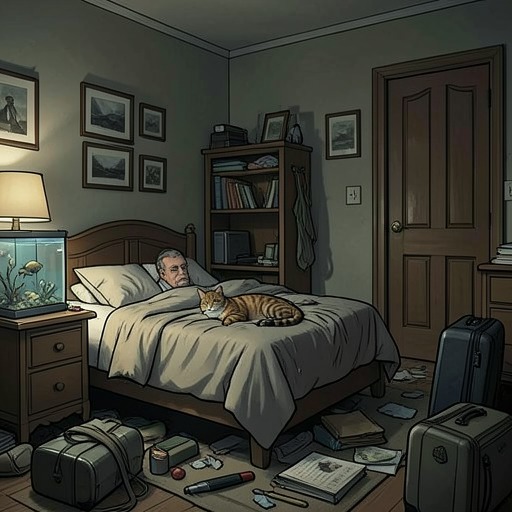
During another call, Marvin complains about a cat and refuses to let it get near his lap. He emphatically insists on protecting his personal space and tells Tatum to deal with the serial killer before coming back to manage the cat. The complaint is comic, but it also reverses the expected roles. Tatum is occupied with an urgent investigation, while Marvin demands attention for a domestic nuisance he considers immediate. His bluntness and insistence make him more than a passive relative to be cared for; he actively sets the terms of each conversation, even when Tatum would rather focus elsewhere.
Tatum’s Concern and Marvin’s Resistance
The most explicit evidence of Marvin’s health needs comes through a call from Dr. Nassar, his doctor. The doctor tells Tatum that Marvin has been to see him and that Tatum’s intervention is needed for his grandfather’s health. He cannot discuss Marvin’s medical condition, but he reports that Marvin is not taking one of the pills prescribed to him. Marvin has explained that the pill makes his throat itchy and is instead taking a pill prescribed by someone else. The available account does not identify the other medication or explain the medical consequences, but it makes clear that the disagreement is not simply a matter of household rules: a physician believes Marvin’s choices require family intervention.
Tatum responds by trying to find a way Marvin will accept. After ending the call, he counts to ten, then continues to thirty-nine because the first effort has not calmed him. He expects the conversation to be difficult, describing Marvin in his thoughts as stubborn and suspecting that his grandfather regards high blood pressure as a problem for weaker people. Rather than relying only on admonishment, Tatum searches online for the symptoms of high blood pressure, hoping to find a persuasive argument, and calls Marvin. That sequence shows care expressed as practical preparation: Tatum is frustrated, but he is also trying to translate a medical concern into terms that might reach someone who resists being told what to do.
Narrative Role and Unresolved Change
Marvin’s scenes repeatedly interrupt the pressures of Tatum’s work with domestic problems that are funny in their particulars but serious in their implications. The contrast is clearest when Tatum is dealing with a serial-killer investigation and Marvin redirects their call to his dispute with the cat; elsewhere, the threat is less comic, as a doctor asks Tatum to intervene over medication. These episodes give Marvin a distinct presence without making him part of the investigation itself. His interruptions reveal the competing demands on Tatum’s attention and the limits of concern when the person being cared for remains determined to choose for himself.
The supplied episodes do not show whether Marvin eventually takes the prescribed pill, changes his drug-buying behavior, or accepts more help from Tatum. The final glimpse instead leaves them at the start of another difficult conversation: Tatum has gathered information about high blood pressure and called, while Marvin answers sleepily and asks whether Tatum knows what time it is. The unresolved exchange preserves the pattern that defines their relationship in these scenes. Tatum prepares to intervene; Marvin meets that effort on his own terms.