
Principles Under Pressure
A Man Called OveThis thread traces how Ove’s inherited code of fairness and responsibility moves from private discipline to a more humane defense of other people.
increasing Bearing strength in each event
 decreasing
Bearing strength in each eventdecreasingThe Returned Wallet

The Returned Wallet
A lesson in choice
When Ove finds a wallet full of money in a railway carriage, Tom tries to claim it under the blunt rule of finders keepers. Ove is tempted by the fortune, but recognizes that taking it would make him unlike his father.
Ove’s father does not dictate the answer. He places the decision in Ove’s hands, turning honesty from an order into a choice that Ove must own.
A private standard
Ove returns the wallet to lost property, and his father explains that many people lack decency without naming Tom to the railway staff. The incident establishes a moral code grounded in doing what is right without seeking credit or exposing another person for advantage.
That standard later hardens into Ove’s refusal to compromise, but its origin is not self-righteousness. It begins as an act of trust between a father and son.
Silence as Loyalty

Silence as Loyalty
The accusation
At eighteen, Ove is accused of stealing money from a railway carriage. He knows Tom took it, but refuses to identify him, repeating the family principle that they are not the sort of people who tell tales about what others do.
His silence costs him his job and allows Tom’s accusation to stand. Ove accepts the consequence rather than trade his father’s teaching for self-protection.
What action proves
The director eventually recognizes that Ove’s refusal is not evidence of guilt. Ove’s conduct, including his earlier return of the wallet, gives the director reason to protect him and find him work elsewhere.
The episode sharpens the distinction between speech and character. Ove believes a person is defined by what he does, even when that choice leaves him misunderstood.
The Watch and the Limit

The Watch and the Limit
An injury to memory
After Ove loses his childhood home to fire and is mocked by Tom, his father’s old watch disappears from the changing room. The watch carries the weight of Ove’s remaining connection to his father, so its theft feels more intimate than an ordinary loss.
Ove searches for it and finds it in Tom’s clothing. For once, the principle of not telling on others does not mean standing aside while a direct wrong goes unanswered.
Force and restraint
Ove demands the watch back and knocks Tom down with a single blow. The act is forceful, but narrowly directed: he retrieves what was taken and leaves, rather than turning the encounter into a continuing campaign of revenge.
The episode complicates Ove’s moral code. Loyalty and restraint remain central, yet he learns that refusing to be exploited can also be part of living with dignity.
Rules Meet Mercy
Rules Meet Mercy
Order as protection
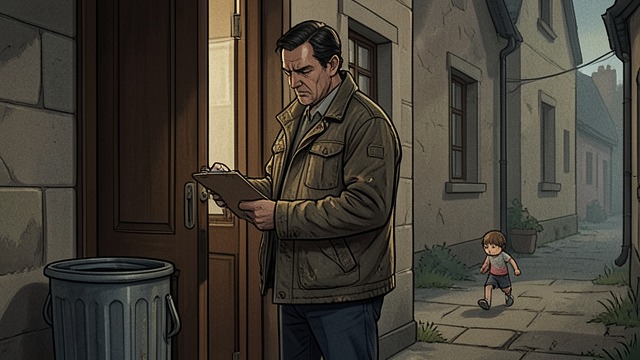
After Sonja dies, Ove continues patrolling the neighborhood, checking doors, sorting rubbish, and enforcing the residents’ rules. These tasks express a conviction that shared life depends on people keeping their word and accepting responsibility for common spaces.
His attachment to rules also keeps grief at a distance. Inspection gives his days a sequence when the loss of Sonja has made ordinary time feel empty and unmanageable.
The limits of enforcement
When Ove repeatedly plans to die, his neighbors interrupt him through practical needs: a failed radiator, an injured husband, a stranded family, and a freezing cat. He complains about each interruption, but acts because he cannot make himself abandon people who need help.
The contrast reveals a change in his understanding of duty. Rules still matter to Ove, but they are no longer the final measure of what is right; compassion sometimes requires him to respond before he can retreat into principle.
Principles Become Solidarity
Principles Become Solidarity
A familiar powerlessness
When Social Services moves to place Rune in a care facility, Ove recognizes the pattern of impersonal authority that once blocked his efforts to support Sonja. He first assumes that appeals will take years, but learns that Anita has already spent two years fighting the decision.
That knowledge forces Ove to confront the cost of treating another family’s struggle as someone else’s business. His old faith in doing one’s duty now demands more than keeping the neighborhood orderly.
A shared defense
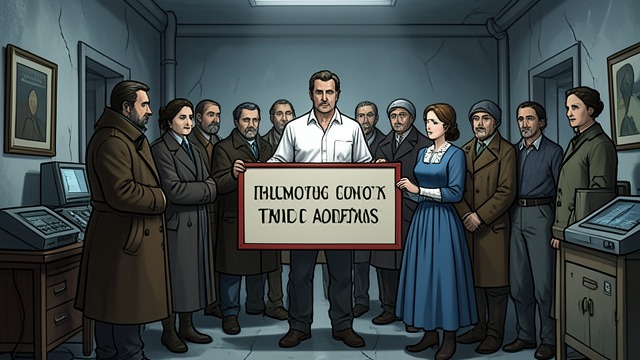
Ove organizes resistance, recruits help, and uses the neighbors’ collective knowledge to delay the officials. When the man in the white shirt returns, Ove stands with Anita, Parvaneh, and the others rather than confronting the system alone.
The principle that once made Ove solitary becomes a basis for solidarity. His insistence that people should be treated fairly finally draws a community around him, making responsibility reciprocal rather than private.
When Ove is nine
Two years after Ove’s father dies
After the house fire, during Ove’s railway years
During Ove’s first weeks as a widower
Near the end of Ove’s confrontation over Rune
