
From the Childhood House to a Life’s Work
A Man Called OveOve’s relationship with houses and repair evolves from a means of survival into a vocation and, finally, a way of giving others practical support.
increasing Bearing strength in each event
 decreasing
Bearing strength in each eventdecreasingA House Left Behind
Repair as Self-Reliance
The threat of demolition
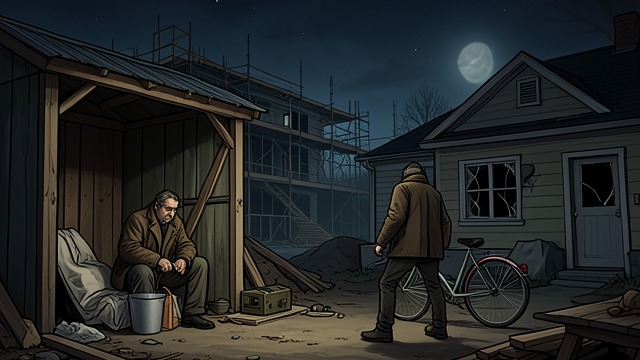
After his father’s death, Ove lives in the deteriorating family house while the council seeks to acquire the land for new construction. The house is both his remaining inheritance and a tangible link to his parents, so he refuses to sell.
Learning through labor
Ove takes work at a nearby building site to learn how to repair what he cannot yet build. He works nights on the railway and spends his days carrying materials, studying construction, and rebuilding the house piece by piece. The labor gives him a purpose that school had not.
A Home Built by Hand
Competence Earned Slowly
Help from the workers
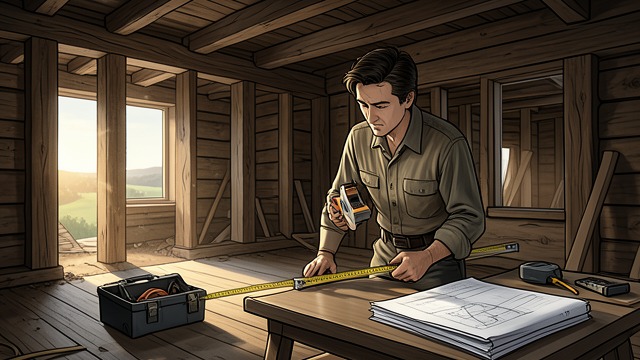
Construction workers teach Ove to calculate loads, measure floors, and use the tools he lacks. A toolbox appears beside his clothes with a note calling him “the puppy,” an understated acknowledgment from people who have come to respect his effort.
A fair structure
Ove finishes the house and discovers that he likes buildings because they respond predictably to sound work: support them properly and they stand. His view of houses as fair contrasts with his growing suspicion that people and institutions often do not reward effort or honesty.
A Home Adapted for Sonja
Construction as Care
Making return possible
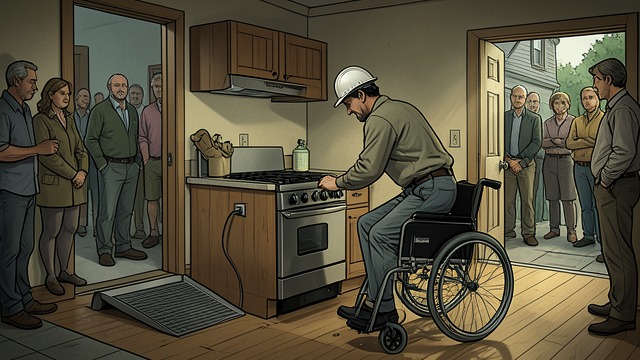
The bus crash leaves Sonja unable to walk and ends the child they had expected. Ove rebuilds their house for wheelchair access, lowering the counter and stove, altering doorframes, and adding ramps over thresholds.
Independence beyond the home
When the school where Sonja teaches refuses to build an accessible ramp, Ove constructs one himself. His work allows her to return to teaching. Construction becomes the clearest language through which he can defend Sonja’s independence and the life she wants.
Repairs Give Ove a Role Again
Useful Work Restores Connection
The reluctant expert
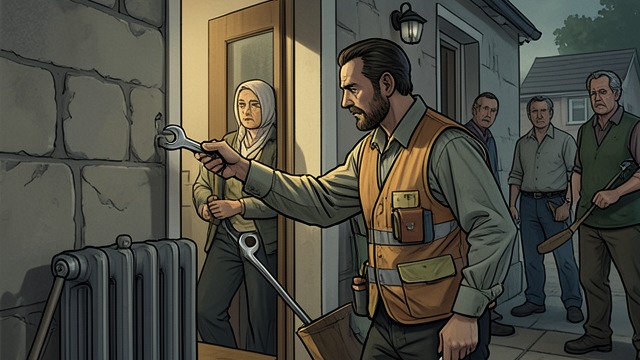
Ove helps Anita with her radiators, repairs Adrian’s bicycle, and provides guidance to neighbors dealing with houses and equipment. Each intervention begins with complaint, but his knowledge makes him useful in a community where fewer people know how to fix things themselves.
Work expands into the day
After retirement, Ove had seen empty days as proof that he no longer mattered. As neighbors seek him out, he begins fixing problems across several streets and admits to Sonja that it can be pleasant to have something to do during the day. His practical ability reconnects him to people without requiring him to change his blunt manner.
A Legacy in Houses and Help
Skill Passed Forward
Teaching rather than guarding
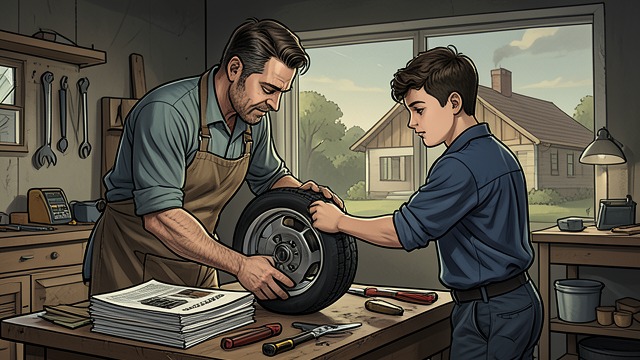
Ove teaches Adrian to change tires and helps him choose a car that, in Ove’s opinion, is less objectionable than a French model. What once marked Ove’s suspicion of modern people becomes a skill he is willing to pass to a younger neighbor.
A house kept alive
Ove continues to help residents with structural problems and repairs, while the Row House Neighborhood grows around him. His work is no longer limited to preserving his own standards: it sustains homes where other people build their futures. After his death, his carefully assembled instructions and records leave the practical order of his life in the hands of those he trusts.
Soon after Ove turns eighteen
The months after Ove begins work at the building site
After the bus accident in Spain
After Ove begins living among Parvaneh’s family and neighbors
The years after the neighborhood’s crisis, before Ove’s death
