Adrian
A Man Called OveAdrian is a young café worker whom Ove first recognizes from the bike shed, and one of the people who gradually draws the stubborn older man into a wider circle of mutual help. His story is told through modest, concrete encounters: a sandwich offered to a stranger, a bicycle that needs repairing, a request to protect Mirsad’s confidence, and, eventually, Ove’s decision to leave him a car.
Identity and Introduction
Adrian is about twenty when he appears outside a café with dark smudges around his eyes. Ove recognizes him as a youth he had seen earlier near a boy with a bicycle. Adrian smiles, while Ove can manage only a reserved nod. Their first exchange establishes the difference in their manners: Adrian approaches openly, and Ove acknowledges him without returning his warmth.
Inside, Adrian is behind the café’s polished counter, wearing a baseball cap. He calls eagerly to Ove, and introduces himself by name when Parvaneh joins the conversation. The contrast between his exuberant greeting and Ove’s cautious distance begins a pattern in their relationship: Adrian offers friendliness readily, while Ove’s care tends to arrive in practical form.
Before the introductions, Ove sees Adrian offer the sandwiches he has been concealing to a ragged, bearded man begging outside. The gesture is brief, but it gives Adrian an action of his own rather than presenting him only as the object of Ove’s later assistance. Adrian works in the café, yet he also makes room there for someone who is asking for help.
Practical Help and a Lesson
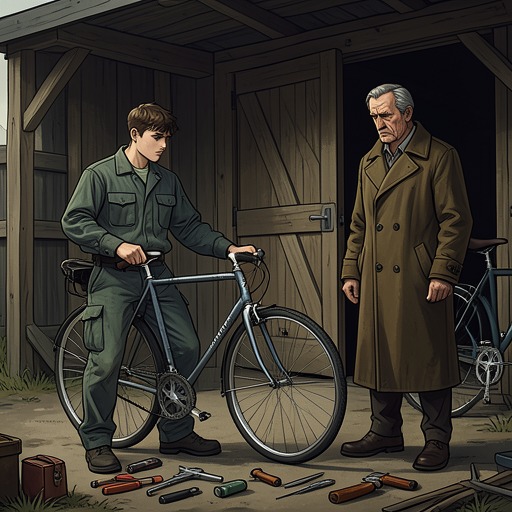
Adrian later brings a bicycle to Ove for help with a punctured tire. Asked whether his father had taught him how to repair a bicycle, Adrian answers quietly that his father is in prison. Ove pauses and studies him; the exchange interrupts the straightforward repair lesson with a glimpse of Adrian’s difficult family circumstances, though the scene does not elaborate on them.
Ove takes Adrian’s coffee, sets it aside in the young man’s hands, and turns the bicycle upside down to work on it. He opens the toolbox Adrian has brought from the café and tackles the tire himself. The lesson is not delivered as patient instruction at first: Ove takes over, while Adrian scratches at his chest and looks uncertain. The encounter nevertheless becomes part of a longer apprenticeship. In the spring, Ove teaches Adrian how to change tires, extending the original bicycle repair into a practical skill Adrian can use for himself.
The café provides another occasion for this kind of help. When Amel objects to the cat being inside, Ove looks from the fan heater to the cat, the toolbox Adrian is holding, and back to Amel. He offers to repair the heater if the cat can stay. Ove climbs up and works on it, then hands Adrian the screwdriver and adjustable wrench. Adrian is present not only as an employee but as someone Ove can equip to take part in maintaining the place. The bargain preserves the cat’s place in the café while turning a dispute into useful work.
Mirsad and the Nighttime Encounter
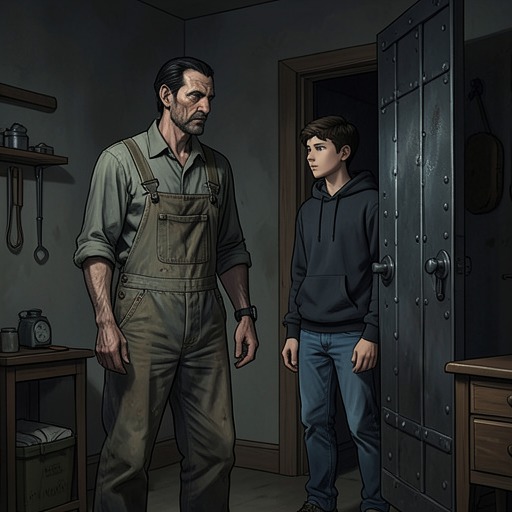
On the way back to the Saab, Adrian catches up with Ove and asks him not to say anything about Mirsad’s coming out. The request is cut short, but its concern is clear: Adrian wants Ove to keep Mirsad’s personal circumstances private. The scene connects Adrian to Mirsad at a moment when Mirsad needs discretion and support, and shows Adrian trusting Ove with that responsibility.
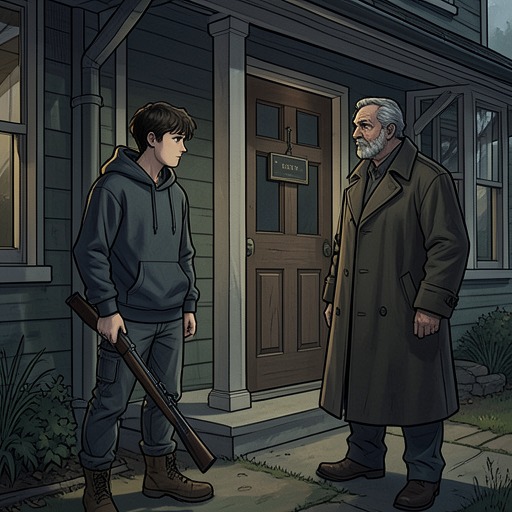
Adrian and Mirsad later arrive together at Ove’s front door at night, unaware that Ove is holding a hunting rifle while preparing to kill himself. Hearing their steps, Ove mistakes them for burglars and opens the door abruptly. Adrian panics and runs into the toolshed, where he hits his forehead. Mirsad has to explain who they are before Ove understands the mistake. The interruption is frightening and chaotic, but it also brings the two young men into Ove’s home and turns an intended act of isolation into an encounter with people who need him.
Growing Trust and the Saab
In the epilogue, Adrian buys a Toyota. Ove has accompanied him to the dealership, disapproved of the choice, and negotiated a discount of nearly eight thousand kronor along with winter tires. His resistance to Adrian’s choice of car does not keep him from helping secure a better deal. The episode continues their established dynamic: Ove criticizes, but he also shows up and uses what he knows to help.
Adrian’s practical learning continues when Ove teaches him to change tires. By then the earlier bicycle repair has become part of an ongoing relationship, not a one-time favor. Adrian remains, in Ove’s view, someone who can still be helped; the dry judgment keeps affection in Ove’s familiar idiom of criticism rather than turning their bond sentimental.
After Ove dies, Parvaneh finds his written instructions and learns that Adrian is to receive Ove’s Saab. The gift gives their connection a lasting material consequence: Ove leaves Adrian not just the benefit of the car, but a place in the arrangements of his life. Adrian’s movement from a young man asking for help with a puncture to someone trusted with Ove’s prized car marks the depth of a relationship built through work, discretion, and repeated practical acts.
Narrative Role
Adrian’s role is defined less by a narrated private history than by the relationships and tasks through which he enters the story. The café scenes bring him into contact with Ove, the bicycle repair creates a basis for instruction, and his appeal on Mirsad’s behalf shows that he also acts as a protector of another person’s confidence. The later tire lessons and the bequest of the Saab carry that connection forward beyond the first encounters.
The repeated emphasis on fixing things makes Adrian’s relationship with Ove legible without requiring either man to speak at length about affection. Ove repairs the bicycle and heater, helps Adrian buy a car, teaches him to change tires, and finally leaves him the Saab. Adrian, in turn, approaches Ove, brings him into Mirsad’s crisis, and becomes someone Ove deliberately includes in his final arrangements. Their bond takes shape through use, trust, and practical help.