Lena
A Man Called OveLena is a journalist at the local newspaper whose tenacity first makes her an unwelcome visitor to Ove and later makes her a formidable opponent of the bureaucrats seeking to control Rune’s care. She moves between two roles: reporter pursuing a story and neighbor willing to use her professional tools on behalf of people facing institutional power. Her persistence irritates Ove, but it also gives the residents a means to challenge a system whose own procedures can be turned against it.
Identity and First Approach
Lena first appears at Ove’s garage, where she introduces herself as a local newspaper journalist and offers her hand. She is about forty-five, with her hair in a ponytail, no makeup, tatty jeans, and a green windbreaker that looks too large. Her arrival is less formal than her introduction: she blunders into the garage and looks around, while The Cat steps forward and hisses at her. Ove keeps his hands in his pockets and gestures toward the door, making clear that he wants her to leave the way she came.
Her manner is conspicuously familiar and energetic, as though she is trying to sell him something while pretending otherwise. Ove tells her he wants nothing, but she is not deterred. The mismatch establishes their recurring comic friction: Lena treats access as something to pursue, while Ove treats an unwanted conversation as a practical problem to end. The scene also makes her appearance recognizable; when she turns up later with a recorder, the same jeans and oversized green windbreaker mark her as the reporter who has already refused to take a hint.
Pursuing Ove’s Story
Lena wants to interview Ove because he saved a man’s life at the train station the previous day. She calls out her reason excitedly, but Ove’s attention shifts away from her before she can continue. Her proposed subject is therefore clear even as her first attempt fails: she is seeking his account of a public act that he does not appear eager to discuss. The story’s attention to her persistence, rather than to any interview she obtains, keeps the encounter anchored in Ove’s resistance.
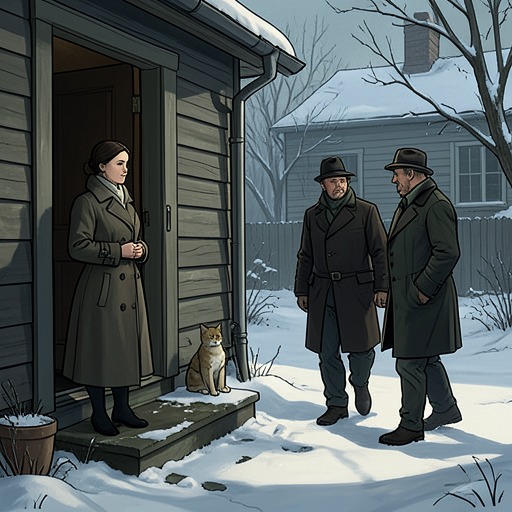
Lena continues trying to reach him. In the snow, Ove tells her to ask elsewhere and goes inside with The Cat, slamming the door in her face. She bangs on it and calls him a hero; Ove waits in the hall with The Cat for her to leave, then describes her to the cat as psychotic. The scene gives her pursuit a forceful, almost farcical edge, but it does not suggest that she is deterred by his hostility.
She also reaches him through Parvaneh. When Parvaneh presses her telephone into Ove’s hand, Lena is already on the line, greeting him loudly and asking whether he is ready to be interviewed. Ove says no and tries to work out how to hang up. Lena asks whether he has read the letter she sent or seen the newspaper, adding that she wanted him to get an impression of the paper’s journalistic style. Her methods extend beyond turning up at his garage: she has written to him, sent him the newspaper, and secured another route into a conversation he keeps refusing.
Reporting on Rune’s Care
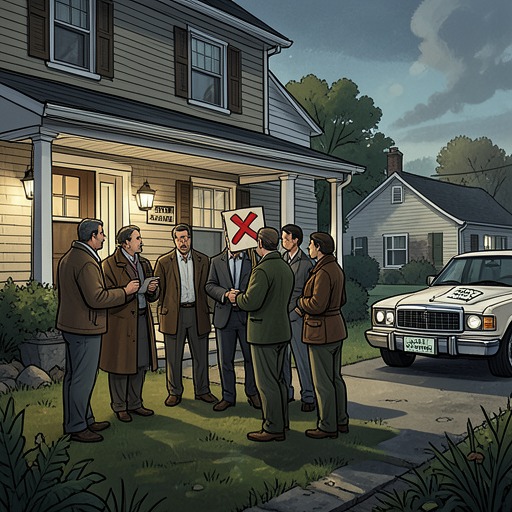
Lena’s persistence acquires a different weight when she confronts The man in the white shirt. She arrives with a voice recorder and a pile of papers, then identifies the records as evidence concerning patients under his section’s responsibility, including people like Rune who have been placed in care homes against their own and their families’ wishes. She points to irregularities in geriatric residential-care placements and to procedures that have not been followed. The papers turn her from an unwanted interviewer into a reporter presenting a documented challenge to official conduct.
Lena does not rely only on the moral force of the residents’ case. She warns that, even if the old records contain nothing illegal, media scrutiny could keep the department occupied with legal processes for months, perhaps years. She suggests that it would be easiest for everyone if The man in the white shirt left. He does so, followed by the three nurses with him. Her intervention does not resolve the larger question of care, but it changes the immediate balance of power: the official who had come to impose an institutional decision withdraws rather than risk prolonged scrutiny.
Afterward, Lena tells Ove that no one has the stomach for a fight with journalists and reminds him of a promise he made to her. The promise is not specified, but the reminder shows that her connection with Ove has moved beyond a succession of rejected interview requests. Her skill at gathering and presenting records has become consequential to the neighbors’ effort, and Ove’s earlier resistance has not prevented a working understanding from forming between them.
Life in the Neighborhood
By the time autumn arrives, Lena moves in with Anders, the neighbor Ove regards as an Audi-driving fop. Ove drives the moving van himself because he does not trust them to back it between the houses without damaging his new mailbox. The detail places Lena within the neighborhood’s everyday routines: despite calling her annoying, Ove is willing to take practical responsibility for the move and for protecting the houses around it.
Ove tells Sonja that Lena does not believe in marriage as an institution, a view he recounts with a snort that suggests the subject has been discussed along the street. The next spring, he brings Sonja another wedding invitation, but it is for Mirsad and Jimmy, not evidence of a marriage between Lena and Anders. Lena’s own relationship with Anders is presented only through their move and her stated skepticism about marriage. The contrast with the wedding invitation keeps her position distinct while showing how closely she has become woven into the lives of the other residents.
Narrative Role
Lena’s characterization rests on a productive contrast between social intrusion and public usefulness. The same persistence that makes her an unwelcome presence at Ove’s door allows her to pursue a story beyond his refusals; later, her preparation and command of records give her leverage against the officials involved in Rune’s placement. The narrative does not make her rapport with Ove smooth or sentimental. It lets practical consequences do the work: she acts, he remains gruff, and the neighborhood benefits from a skill he does not possess or care to exercise.
Her role also shifts from seeking a story about Ove to helping shape events around Rune. At first, Ove is the subject she wants to interview; in the confrontation over care, he and the other residents are among the people her reporting helps defend. That change gives her professional identity a social consequence without erasing her comic persistence. She remains the journalist Ove calls annoying, but the records she brings and the pressure she applies make that irritation part of a larger, more consequential alliance.