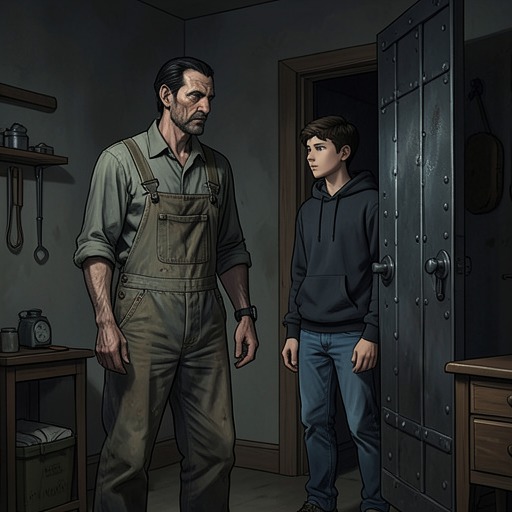
Ove takes in Mirsad after his father throws him out for coming out
A Man Called OveOve takes in Mirsad after Mirsad is rejected by his father for coming out, in an encounter that interrupts Ove’s planned suicide and gives Mirsad somewhere to stay. The scene turns on a sudden change of understanding: two young men arrive at Ove’s door, he initially sees them as intruders, and the explanation of Mirsad’s situation shifts the encounter from confrontation to shelter. By the end of the evening, Ove’s row house contains not only That Stray Cat but also Mirsad.
A suicide plan interrupted
The encounter begins in the quiet of the night, with the neighborhood asleep and Ove holding a rifle as he prepares to take his own life. His attention turns first to the cat. He worries that the sound of a shot might frighten it, and sets the rifle down to switch on the radio, hoping that if the cat wakes, the noise might seem part of the music. This consideration does not mean that he has abandoned his plan; when he returns, he picks up the rifle again.
Instead of music, the radio carries a local news bulletin. Its ordinary subjects include weather, the economy, and traffic, before it warns property owners to stay alert because burglaries are occurring around town. Ove hears the warning and grips the rifle more firmly. The bulletin gives his expectation a specific direction: when he hears footsteps approaching through the snow, he does not anticipate visitors. The scene’s dark humor rests on the distance between the news’s general warning and the very particular mistake that follows.
Mistaken intruders at the door
Adrian and Mirsad arrive without knowing that Ove is armed. Ove, dressed only in socks and underpants, opens the door with the rifle in hand. Adrian cries out and retreats in panic, running into the toolshed; the commotion leaves him with a swelling on his forehead. Ove waves the rifle while the two men try to make sense of the encounter. Their arrival has interrupted his plan, but at first it only appears to confirm the threat he has just heard about on the radio.
The danger recedes when Mirsad’s identity and purpose become clear. Adrian blurts out that Mirsad has come out, and then struggles to explain while distracted by Ove’s weapon and his own apparent injury. Mirsad straightens and tells Ove directly that he has told his father he is gay. Ove’s expression becomes less threatening, although he does not immediately lower the rifle. The pause matters: the disclosure changes what Ove understands about the two visitors, but does not instantly undo the alarm of the preceding moments.
Why Mirsad needs a place to stay
Mirsad explains that his father has called him sick and said he is not welcome at home because of his sexuality. He has no relatives in town. He had intended to stay with Adrian, but Adrian’s mother’s new boyfriend is staying there, leaving that plan unavailable. Mirsad describes the idea of asking Ove as foolish and starts to turn away. His retreat makes plain that the request is not an attempt to claim a right to Ove’s home: the two young men have run out of options, and Mirsad is prepared to leave rather than insist.
Adrian, more eager to press the case, points out that Ove has space and asks whether Mirsad can stay for the night. Ove rejects the suggestion that his home is a hotel and raises the rifle so Adrian runs into its barrel. Mirsad steps forward, puts a hand on the weapon, and gently turns it away from Adrian while explaining that they had nowhere else to go. The gesture, and Mirsad’s quiet apology, redirect the scene once more. Ove lowers the rifle to the ground. The change is practical as well as emotional: the threat is set aside, and the possibility of giving Mirsad shelter takes its place.
The household that begins that night
As Ove steps backward into the hall, he notices a photograph of Sonja on the wall. It shows her in a red dress on their bus trip to Spain, when she was pregnant. Ove had repeatedly asked her to take it down, but she had insisted that it was a memory worth as much as any other. The photograph reconnects the immediate decision to the life he shared with her: the person who is no longer present remains part of the way he understands the home and what belongs in it.
The narrative sets the night Ove expected to be his last against the household that exists by morning. Instead of dying, he wakes with both the cat and Mirsad living in his row house. The change is not presented as the result of a grand declaration; it follows from a sequence of small, concrete turns—the cat’s welfare, the radio announcement, the mistaken alarm, Mirsad’s explanation, and Ove’s lowering of the rifle. Sonja’s remembered pleasure in hotels supplies a wry final note, but the new arrival is not a guest in a hotel. Ove’s planned ending gives way to an improvised act of hospitality, and Mirsad’s immediate isolation is answered with a place under a roof.