Ove's father
A Man Called OveOve's father is present in the story chiefly through Ove's recollections and moral reasoning. Though little is established about his life, Ove imagines how his father would have judged the long waits that became part of Ove's courtship of Sonja, and invokes him as someone who would not have forgiven a choice that endangered another person. In this limited but telling role, the father helps show how Ove measures responsibility: promises matter, and personal despair does not excuse harming someone else.
Identity and Presence
The evidence identifies him as Ove's father and refers to him as an old man, but offers few details about his history or their life together. He does not appear directly in these scenes. Instead, he enters through Ove's backward-looking thoughts and through the standards Ove associates with him. The narrative keeps the father indistinct as an individual while making his imagined response meaningful to Ove.
Ove's Courtship of Sonja
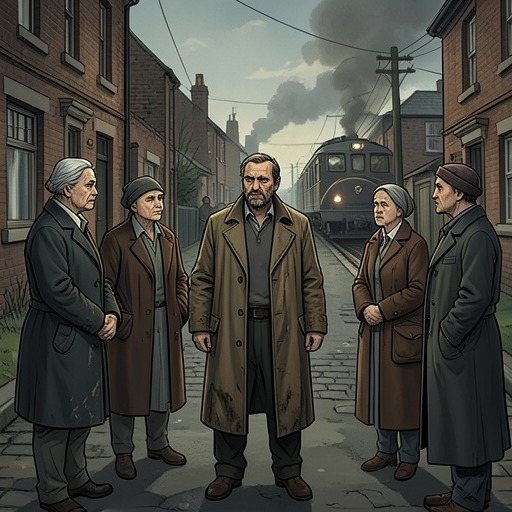
During Ove's first arranged meeting with Sonja, he waits at the station for more than fifteen minutes. As irritation gives way to anxiety and embarrassment, he considers leaving, but stays partly because he believes an agreement to meet should be kept. Looking back, the narrator notes that Ove would spend many more quarter-hours waiting for Sonja—so many, it reflects, that his father would have been astonished. The comparison places Ove's father's punctuality-minded world beside a lasting relationship in which Ove learns that lateness is not the most important thing.
Moral Influence and Narrative Role
Later, when Ove has the opportunity to end his own life on the railway tracks, he recognizes that his death could also ruin the life of the train driver who meets his eyes. He decides he is not the sort of man who would impose that harm, adding that neither his father nor Sonja would have forgiven him. The father is thus part of Ove's inner measure of right and wrong, alongside the woman he loves. The evidence does not establish that he explicitly taught Ove this principle; rather, Ove's appeal to his father's imagined judgment shows the continuing force of that relationship in a moment of decision.
Sonja later pieces together the circumstances in which Ove lost his parental home from the brief fragments he reluctantly shares, and eventually learns how he got his scars. This account situates the father within Ove's past but does not specify his role in the loss of the home. The story's emphasis remains on what Ove reveals, and on the values he carries forward, rather than on a fuller biography of his father.