Ove's Childhood Home
A Man Called OveOve's Childhood Home is the house left to Ove by his parents, a decaying building that he chooses to save when the Local Council and Administrative Authorities seek to clear it for redevelopment. He turns that refusal into years of practical work, but the house is eventually lost in a fire. Its story makes a single place carry several kinds of attachment: inheritance, self-reliance, and, in its later adapted form, the life Ove shares with Sonja.
Location, inheritance, and threat
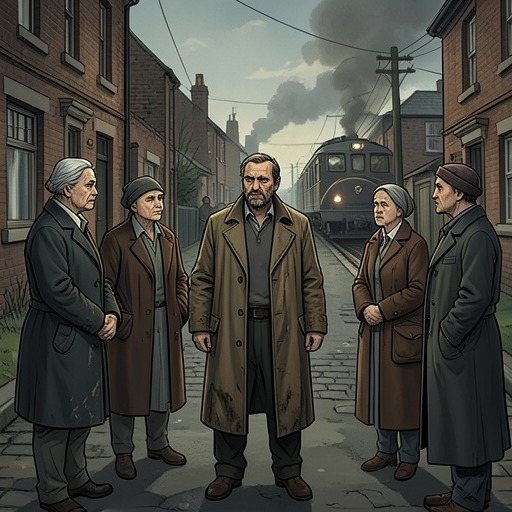
The house stands at the edge of a forest and an older, nearly vanished village, beside the newer Residential Area. Its position is literal as well as social: it lies exactly on the boundary between two municipal authorities, a line on the map that officials intend to move. The Local Council and Administrative Authorities send Ove letters about redrawing municipal boundaries and tell him they intend to force a sale of the land so the house can be demolished and replaced. He does not fully understand the paperwork, but he understands what the decision means for the building.
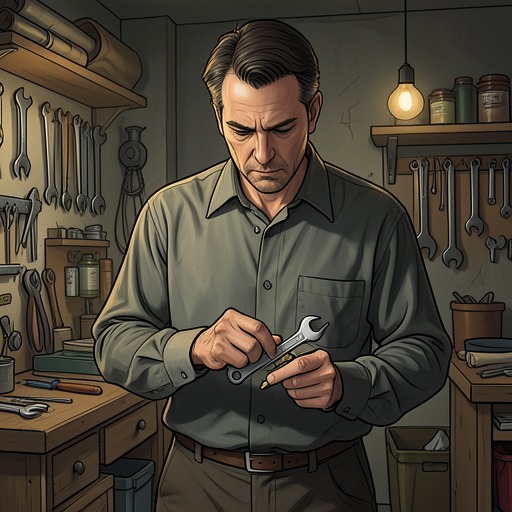
Ove’s refusal is not given a single settled explanation. Perhaps it is the tone of the letter; perhaps it is that the house is all he has left of his family. The building itself offers little comfort at first. When Ove sits in his newly purchased car and looks at it, only the kitchen and the small room beside it are in use; the upper floor is being taken over by mice. His father had been skilled with machines rather than construction, and Ove has little building knowledge of his own. The house is both a remnant he feels compelled to keep and a structure in visible need of repair.
Repair as a decision and a discipline
Ove parks his first car in the garden and spends hours watching the house, as though patience might make it repair itself. Instead, he decides to do the work himself. He has no experience with carpentry, so he takes a laboring job at a nearby construction site, where he hopes to learn by listening to the tradesmen. The foreman can offer him only manual work, but Ove accepts it as a way into the knowledge he lacks.
The repair becomes a punishing routine. Ove spends nights picking up litter along the railway line heading south out of town, sleeps for three hours, and then uses the remaining time to climb the construction-site scaffolding and listen to the workers discuss building techniques. On his one day off each week, he hauls cement sacks and wooden beams for eighteen hours. He works alone at rebuilding the house his parents left him, alongside the Saab and his father’s wristwatch. The labour changes him physically: his muscles grow, and he learns quickly. The house is not restored by a sudden windfall or an expert plan, but through repeated work undertaken in the time he can make available.
Fire and the loss of the house
The house’s location, once the reason officials want it removed, becomes a practical danger during a fire. Ove first rushes outside after hearing a stone strike, carrying a hammer, and realizes that the neighbour’s house—not his own—is burning. The elderly neighbour and his wife emerge from the smoke, but the man turns back toward the flames. Glowing embers have already set the dry grass alight between the two houses, putting Ove’s home at risk as well.
Ove assesses the danger and tries to act, but the fire crew cannot begin work until the command centre gives clearance: because his house lies exactly on the municipal boundary, permission and paperwork are required. Ove tears himself free and runs toward the water hose; by the time the firemen receive the all-clear, the house is engulfed. He watches it burn from his garden. The delay turns the boundary from an administrative abstraction into a deadly impediment, while the home he had spent months rebuilding becomes another loss in the fire.
The aftermath is stark. Ove sleeps in the Saab and tries to clear the ashes on the first morning. By the second, he has to accept that the work will not simply resolve itself: the house and all the labour he put into it are gone. He later discovers that there is no valid insurance policy. The loss is therefore not repaired by an immediate financial remedy; the record instead emphasizes Ove’s helplessness before the ruined site and the cost of starting again.
The home in Ove and Sonja's later life
The house remains present in the later account of Ove’s home with Sonja, though the evidence does not detail the intervening rebuilding. After Sonja’s accident, Ove rebuilds the kitchen himself. Its low stove and counter are noticeably below ordinary height, and the kitchen floor bears soft wheel marks from repeated journeys back and forth. These physical details show the room adapted to Sonja’s mobility needs, rather than treating the house as an unchanged relic of Ove’s childhood. When Parvaneh first sees the kitchen, she notices its unusual height; Ove has long since become accustomed to it.
The home also gathers the traces of shared domestic life. Sonja’s decorative objects remain in the window, her hair clips lie on the kitchen table, and her handwriting appears on notes on the fridge. The house that began as Ove’s family inheritance has become a space shaped around his wife and their life together. The marks of the wheelchair and the altered kitchen make that history legible in the rooms themselves: care is registered not only in memory but in changed surfaces and dimensions.
Near the end of Ove’s life, the house’s routines become visible through their absence. Almost four years after Parvaneh and Patrick backed their trailer into Ove’s mailbox, Parvaneh wakes on a cold November morning and sees that the snow outside his house has not been cleared. She hurries across the road, enters with the spare key Ove gave her, and finds him dead in bed with The Cat beside him. Earlier, Ove had brushed snow from Sonja’s gravestone, replenished the flowers, and felt ashamed that he had not followed her as he had planned. These scenes connect the house to the life that continues around it and to the routines that others notice when Ove can no longer perform them. Its significance lies not simply in being the building he once saved, but in remaining a lived-in place of work, adaptation, memory, and eventual absence.