Parvaneh
A Man Called OveParvaneh is Ove’s outspoken neighbor, the mother of two daughters and, later, a son, and the person who becomes his closest friend and chosen family. Their relationship starts with a trailer scraping Ove’s house and develops through arguments, practical favors, and acts of care that draw him back into the lives around him. When Ove dies, Parvaneh is the neighbor he has trusted with his house, his affairs, and the people and animals he leaves behind.
Identity and Introduction
Parvaneh first appears as a short, black-haired woman of about thirty, whom Ove perceives as foreign. She is standing beside a small Japanese car and trailer while her husband, Patrick, struggles to reverse. The trailer scrapes the exterior of Ove’s house and rolls into his flowerbed. Parvaneh directs Patrick emphatically; when he backs the wrong way, she continues in a rapid Arabic reprimand that Ove can only guess at. Patrick responds with a cheerful apology, while Ove’s first response is anger at the damage and at what he considers an avoidable failure of practical competence.
The exchange establishes a pattern that will govern their friendship: Ove takes offense, Parvaneh does not retreat, and the dispute opens into further contact. When Ove tries to end their first encounter by closing his door, she puts a foot across the threshold and insists on giving him her name. Her refusal to accept his abrupt dismissal is not a one-time breach of politeness. She repeatedly confronts him directly, treating his irritation as something to answer rather than a reason to leave him alone.
From Arguments to Practical Trust
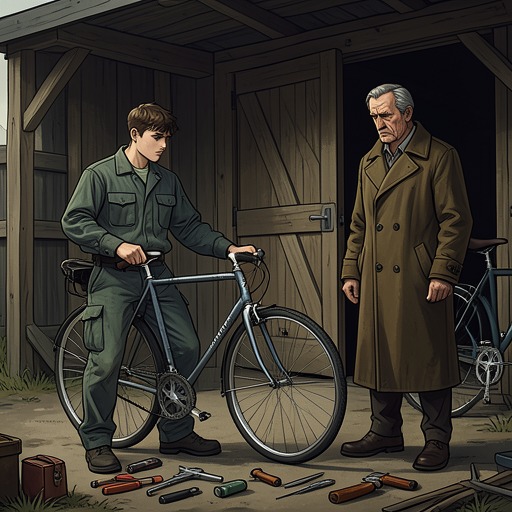
Parvaneh’s visits bring Ove into the everyday needs of her family. She asks him to remove a ladder and look at a faulty radiator, explaining that Patrick is not good at such repairs. These requests give Ove a concrete role in the household, even when he regards the interruptions as unwelcome. Later, she asks him to help her pass her driving test. By the time she drives his Saab with a learner plate attached, their relationship has included both instruction and shared routine: she is no longer merely the neighbor who needs a favor but someone Ove expects to see and talk with.
Her directness also makes her one of the people who can challenge Ove’s behavior without accepting his own account of himself. When he insists that he is not rude, Parvaneh tells him to stop being rude. He grumbles but remains at the door, still caught in his solitude and his wish to die. She does not persuade him with a speech; instead, she keeps appearing, asks for help, and brings the responsibilities of ordinary life to his attention.
The same practical insistence becomes care in moments of urgency. When Patrick has fallen while trying to open a window and the family needs to get to the hospital, Parvaneh tells Ove to drive them. At the hospital, she brings her daughters to visit her husband and explains their presence to the guards. The children’s greetings turn the visit into an uncomplicated family scene, even as the adults deal with the emergency. Parvaneh also asks Ove to help take away the ladder afterward and mentions the broken radiator, carrying their ordinary unfinished needs back into his life.
Care, Grief, and a Growing Family
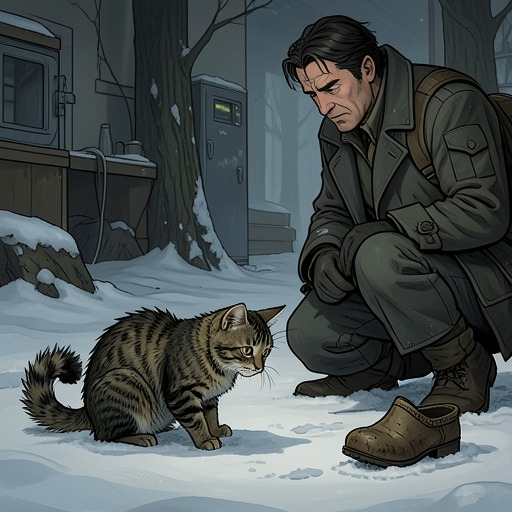
Parvaneh’s concern extends beyond her own household. When she finds a freezing stray cat in a snowdrift, she lifts it out and insists that Ove open his door. He had not intended to bring a cat into his house, but her action makes refusal difficult and gives him another living creature to care for. Their shared responsibility for the cat becomes one more connection between their homes.
Her visits also bring her face to face with the history of Ove’s home. In his kitchen, she notices the wheel marks left by repeated passage and the unusually low stove and counter. Ove rebuilt the kitchen after Sonja’s accident, adapting it to her needs after the council refused to help. The room still holds Sonja’s belongings and handwriting. Parvaneh’s attention to those details places her beside Ove’s grief without requiring him to explain it. At Sonja’s grave, he tends the flowers, admits that life has been chaotic, and later says that having something to do during the day can be pleasant. He tells Parvaneh he will see her tomorrow; she is among the people and routines that make a tomorrow possible.
As the friendship deepens, Parvaneh becomes part of a wider circle gathered around Ove, including Patrick, Jimmy, Mirsad, Adrian, and Anders. They spend evenings together and consider ways to oppose the white-shirted man. Ove protests that he has always been engaged, but the neighbors have noticed how much more involved he has become. Parvaneh’s family life is part of that change: she runs into Ove’s house without pausing for a greeting when urgently in need of the bathroom, and he holds back a complaint because Sonja had warned him about the urgency of pregnancy. His gruff attention to her needs has become familiar enough to show itself as restraint rather than a declaration of affection.
When Parvaneh tells him she is expecting a child, Ove turns to the house’s threshold and suggests sanding it down and repainting it pink, whether the baby is a girl or a boy. The comment is practical and awkward, but it imagines the new child as already belonging to the neighborhood. After a serious heart crisis leaves Ove in hospital, Parvaneh stays through the night. At half past three in the morning, a nurse brings her to his room. She manages a faint smile for the nurse, then stands beside Ove’s bed, takes his hand, and tells him she will not let him die. Four days later, she and Patrick help him home; Parvaneh is pregnant, and Patrick is on crutches. The girls have left drawings on Ove’s kitchen table, and Parvaneh returns his spare keys to the basket by the telephone.
Ove’s Death and Parvaneh’s Inheritance
Nearly four years after the trailer incident, Parvaneh wakes on a November morning and notices that the snow outside Ove’s house has not been cleared. She crosses the road in her dressing gown and slippers and uses the spare key to enter. Upstairs she finds Ove apparently asleep, his face peaceful, with the cat resting beside him and its head in his hand. The cat comes to Parvaneh, and she sits with it while the ambulance crew explains that they must take Ove’s body away. Before leaving, she whispers a message of love to Sonja and thanks her for the loan, recognizing the bond between the couple and the place Ove had kept for her within it.
On the bedside table is a large envelope addressed to Parvaneh. It contains the papers needed to manage Ove’s affairs: house plans, instruction booklets, the Saab’s service booklet, bank and insurance documents, and the lawyer’s contact information. The arrangement is practical in the same way Ove’s care has always been practical: he has collected the details of a whole life and put them in the hands of the person he trusts to use them. He leaves the Saab to Adrian and gives Parvaneh responsibility for the house and the rest of his estate. His letter directs that her children and Jimmy’s daughter receive money when they turn eighteen, assigns the remaining funds to Parvaneh, and asks her not to let Patrick manage them. It also gives instructions for feeding the cat and asks that the residential area remain free of cars.
Parvaneh’s trajectory from a neighbor insisting on entry to the recipient of Ove’s final instructions marks the scale of their change. He has made her his confidante, entrusted her with practical decisions, and treated her children as part of the future he wants protected. Her importance to him is measured not by a transformation into a less forceful person, but by the fact that he comes to rely on that force: the same neighbor who once refused to be turned away is the one he trusts to keep his home, relationships, and wishes in order.