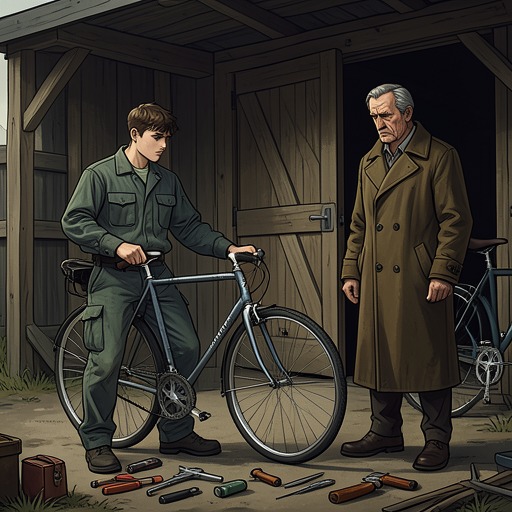
Rule requiring bicycles to be parked inside the bicycle shed
A Man Called OveThe Rule requiring bicycles to be parked inside the bicycle shed turns a simple sign into one of the clearest expressions of Ove’s daily code. He does not merely object to a bicycle left in the wrong place: he moves it into the shed, checks that the door is secure, and treats the shared rule as something neighbors should follow without needing to be reminded. Its importance lies less in any stated penalty than in the routine, visible work of keeping the residential area in order.
The rule in daily practice
After finishing his morning inspection of the trash room, Ove locks its door and tugs the handle three times. He then notices a bicycle leaning against the wall outside the bike shed, directly beneath a large sign forbidding residents from leaving bicycles there. Rather than leave the matter to the neighbor who has posted an angry handwritten complaint, Ove puts the bicycle inside the shed, locks the door, and gives the handle three pulls. He removes the complaint as well: residents may enforce the rule, but, in his view, the wall is not a notice board.
The same practice recurs when Ove finds a woman’s bicycle left under the sign. Its front tire is punctured, but he still carries it into the shed and places it neatly at the end of the row before locking up and checking the handle. A young man confronts him, and Ove directs him to tell the owner that she can collect the bicycle from inside the shed. He underscores his point by tapping the sign. The exchange shows the rule working through practical intervention and face-to-face friction rather than through an identified formal sanction.
Inspection as enforcement
For Ove, putting the bicycle away is part of a larger circuit of checks: he inspects shared spaces, locks doors, and tests their handles. When the Residents’ Association’s new steering group proposes motion-activated cameras to monitor the trash room and parking area, Ove is the sole member to vote against installation. The proposal fails because it requires unanimity. He does not trust the Internet, and he considers his daily inspection more effective than remote surveillance: it lets him see what residents are doing and whether shared spaces are being kept under control.
The bicycle rule fits this preference for direct, physical oversight. Ove responds to a visible breach by putting things back where the sign says they belong. The three pulls on the shed door make the enforcement routine concrete: it is not enough to place the bicycle inside; the boundary of the shared space must also be secured. His conduct is exacting, but the response is practical and immediate.
Signs and wider conflicts over rules
The signs also become part of Ove’s way of confronting people he believes are disregarding a rule. Later, while arguing with a Social Services official about whether Rune should be placed in a care home, Ove berates The man in the white shirt over a municipal car left in a prohibited place, using the language of signs and reading to attack him. The bicycle rule itself is not at issue in that dispute, but the episode shows how Ove carries the same insistence on visible standards into a conflict over Rune’s home and care.
That insistence is not a simple allegiance to authority. When the fire brigade refuses to act until permissions are obtained because Ove’s childhood home lies on a municipal boundary, he encounters rules and paperwork as barriers in an emergency. In another conflict, he writes repeated complaints after the council refuses to build a ramp at the school where Sonja works. The contrast clarifies the place of the bicycle rule in his outlook: Ove values rules that maintain shared order, but opposes administrative procedures when they obstruct a person’s home, access, or care.