Rune
A Man Called OveRune is Ove’s neighbor, former friend, and rival of more than thirty-five years. Once a fellow organizer of the Residents’ Association, he becomes Ove’s adversary after taking over as its chairman; later, Alzheimer’s disease confines him to his home and makes his care a struggle for Anita. The story’s decisive change is not that their old disputes are resolved, but that Ove acts when Rune and Anita need him, and discovers that their friendship has not entirely disappeared.
Identity and Background
Rune and Anita move into the row-house neighborhood on the same day as Ove and Sonja. The two couples’ early proximity becomes the basis for a lasting connection: Anita and Sonja grow close, and their friendship encourages the husbands to find common ground. Rune has a proper job and, in Ove’s view, does not talk more than necessary. His choice of cars, however, immediately gives Ove a reason to distrust his judgment. Rune first drives a Volvo and later buys a BMW, decisions Ove regards as evidence of a difference in principle as much as taste.
Their friendship begins through ordinary practical dealings rather than declarations of intimacy. Ove lends Rune tools; one afternoon, the two men talk about lawn-mower prices in a parking area and shake hands as if formalizing a business arrangement. They later sit in Ove and Sonja’s kitchen to discuss how to manage a neighborhood receiving new residents. From those consultations come shared rules and signs, along with a steering group for the Residents’ Association. Ove becomes chairman and Rune vice chairman. The work suits their mutual appetite for order and hands-on problem-solving, even when their expertise is less certain than their confidence.
Friendship, Rivalry, and the Association
In the months after the committee is formed, Rune and Ove go to the dump together, challenge badly parked cars, bargain over paint and drainpipes, and supervise a telephone-company worker installing cables. Their scrutiny of the work is more definite than their knowledge of telephone wiring. The two couples sometimes eat together, although the men spend much of the evening outside comparing their cars’ load capacity and turning radius. Their friendship is expressed through shared tasks, routines, and argument rather than emotional disclosure.
The balance changes when Rune is voted in as chairman after Ove. Ove remembers the change as a coup, while Anita describes it more mildly as a wrangle. The disagreement becomes part of their long-running feud, but the content of their arguments is broader than the leadership vote: radiators and central heating, parking spaces, trees, snow clearance, lawn mowers, and rat poison in Rune’s pond all become grounds for dispute. For more than thirty-five years the neighbors pace on their nearly identical patios and exchange meaningful looks over the fence. Ove’s hostility toward Rune is real, but so is the attachment kept alive by this durable, shared routine.
As chairman, Rune represents, in Ove’s eyes, a neighborhood losing the rules that once held it together. Ove complains of higher electricity bills, bicycles left outside the bicycle shed, and trailers driven into the residential area despite signs prohibiting it. He blames Rune’s takeover for the Association’s decline and stops attending its meetings. Yet when Rune’s illness ends their familiar exchanges, Ove admits to himself that he misses him. The cessation of their quarrels leaves an absence as well as relief.
Illness and Anita’s Care
Rune develops Alzheimer’s disease and uses a wheelchair. He stops coming out of the house, and Ove is unsure whether he still owns the BMW that once served as a recurring point of contention. Anita tells Ove that Rune has been very ill; his response is impatient, and he has trouble retaining what he has been told. His limited understanding does not mean that the disease is unimportant to him: when he sees what has happened to Rune, the old neighborly conflict meets the immediate reality of dependency and care.
The crisis becomes public when Anita says that Social Services wants to take Rune away from her and place him in a home. The process has begun after Anita applies for additional home help because she can no longer manage everything alone. Following an investigation, Social Services decides that she cannot care for Rune. Anita then tries to withdraw her request, but is told that the investigation cannot simply be stopped. Ove first hears Anita disclose that she may lose Rune while he is standing with a plastic tube in his hand; he leaves without answering. Later, the threat returns with greater urgency, and his silence gives way to action.
Ove’s Intervention and Their Renewed Connection
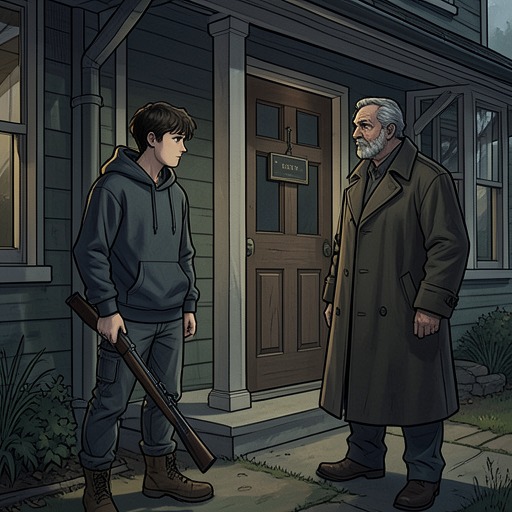
Ove’s involvement grows out of both practical concern and the history he shares with Rune. When he visits Rune’s house, the opening of the door takes several minutes. Rune appears with an empty stare, and Ove begins with a practical question about corrugated iron rather than small talk. The exchange does not restore their old relationship, but it gives Ove a reason to be there. At one point Rune briefly grins and waves, seeming to recognize Ove and what he is doing. Anita explains that Social Services has again threatened to remove him, and that officials consider her incapable of caring for her husband.
Ove’s eventual commitment is connected to Sonja as well as to Rune. He learns that Anita had not asked Sonja for help because she believed Ove and Sonja already had enough troubles. Thinking about how deeply Sonja would have been hurt by that decision, Ove understands that helping Anita is something he must do before he can die. The thought shifts his attention away from his own intended end and toward an appeal on Rune and Anita’s behalf.
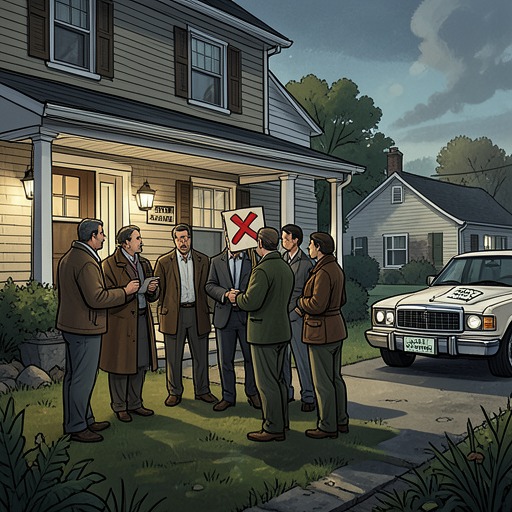
When the man in the white shirt arrives with three young men in nurse uniforms to take Rune, Anita stands in the doorway and insists that she will care for her husband. Ove steps in behind her and says that he will help; Parvaneh joins them. The intervention is not a claim that Ove can reverse Rune’s illness. It is a practical commitment to share the responsibility that the official decision has treated as Anita’s alone. Afterward, Ove spends a long time talking one-to-one with Rune in the living room. Anita hears Rune laugh several times, a brief but striking sign that he remains capable of response and connection even as his condition worsens.
Later Life and Significance
Rune does not recover. There are periods when he is almost unreachable for days, but he responds consistently when the little girl adopted by Jimmy and Mirsad runs into his and Anita’s home and reaches for Anita: a euphoric smile appears on his face. Her visits bring a recurring point of warmth into a life increasingly shaped by illness. The story does not present this response as a cure or as a return to Rune’s former abilities; its force lies in the persistence of recognition and pleasure within those limits.
Rune’s arc reframes the feud with Ove without pretending it never happened. The cars, Association disputes, and decades of looks over the fence remain part of their history, but they no longer define its full meaning. Ove’s care for Rune emerges through the same direct, practical habits that once organized their arguments: showing up, making a commitment, and speaking privately with the man he had missed. Rune’s illness exposes how much of their friendship had survived beneath resentment, while his later response to the child shows that connection continues beyond the circle of people who can remember or explain it.