Saab–Volvo rivalry
A Man Called OveThe Saab–Volvo rivalry is the decades-long contest between Ove and Rune, two neighbors whose choices of car mark both their differences and their changing circumstances. Its apparent subject is brand loyalty; its deeper force is the way cars become a language for friendship, domestic life, disappointment, and estrangement. The rivalry starts as a private joke between men who become friends, spreads into their shared neighborhood, and ends when Rune abandons Volvo for a BMW—a choice Ove recognizes as the last turn in their conflict.
From Neighbors to Rivals
Ove and Sonja and Rune and Anita moved into the newly built row-house street on the same day, when trees still surrounded the development. The wives became close, and both hoped their husbands would do the same. Ove saw little common ground: Rune drove a Volvo. Still, Rune had a proper job and did not talk more than necessary, so Ove tolerated him. The two gradually began lending tools and talking; one conversation about lawn-mower prices ended with a handshake that treated friendship almost like a business agreement.
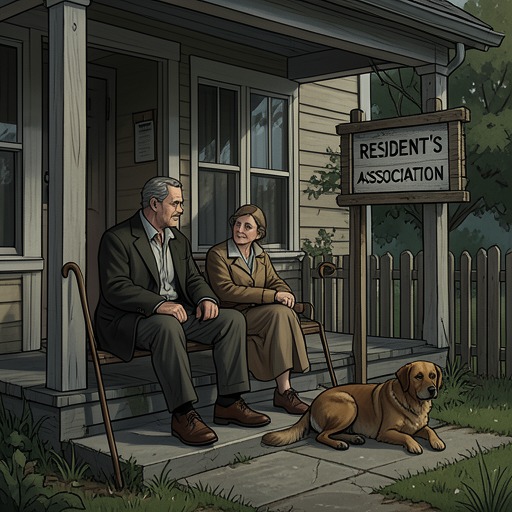
Their first cars gave the difference a durable emblem: Ove drove a Saab 96, Rune a Volvo 244. Their friendship became practical as well as personal. When new residents began arriving, they met in Ove and Sonja’s kitchen, established rules and signs for the neighborhood, and set up the Residents’ Association, with Ove as chairman and Rune as vice chairman. The same men who helped organize their community would eventually find their common ground narrowing into a series of disputes.
The Cars as a Record of Changing Lives
The sequence of purchases turned brand preference into a running measure of the men’s lives. About a year after moving in, Ove bought a Saab 95 and Rune a Volvo 245. After the accident in Spain, Ove chose the Saab 95 to make room for Sonja’s wheelchair. Rune bought a Volvo 245 that same year to accommodate a stroller. Three years later, as Sonja received a more modern wheelchair, Ove moved to a Saab 900 hatchback; Rune bought a Volvo 265 while Anita was talking about another child.
The pattern continued through successive models. Ove bought two more Saab 900s and then a Saab 9000. Rune moved through a Volvo 265 and a Volvo 745 station wagon, although no more children came. Ove later bought another Saab 9000, while Rune changed from a wagon to a sedan, the Volvo 740. Ove then acquired a Saab 9000i as Rune moved to a Volvo 760 and, later, a Volvo 760 Turbo. These choices were not merely interchangeable examples of brand allegiance: they registered needs, expectations, and plans as those changed over the years.
The cars also expose a painful difference in what the men’s households hoped for. Rune and Anita’s son grew up and left home as soon as he could. Rune’s later BMW had room for only two people and a handbag, matching the life he described to Sonja as now being just himself and Anita. He offered the change from Volvo with a halfhearted smile, while trying to swallow his tears. Ove understood that Rune had given something up. Their different family histories had become part of the meaning attached to their cars, even if neither man could readily say so.
A Rivalry That Spills into the Neighborhood
The car contest was only one strand of the antagonism. After Ove and Sonja returned from Spain, Ove laid new paving stones in his garden; Rune put up a fence, Ove built a higher one, and Rune then boasted of having built a swimming pool. Ove regarded it as a small splash pool for Rune and Anita’s newborn, and considered reporting it to the Planning Department as an illegal construction. Sonja instead sent him out to mow the lawn and calm down. The narrow strip behind the houses, later called the neutral zone by the wives, had once been Ove’s responsibility as the Residents’ Association’s grounds man. A proposal to furnish it as a common space was stopped by Ove and Rune when they were still friends.
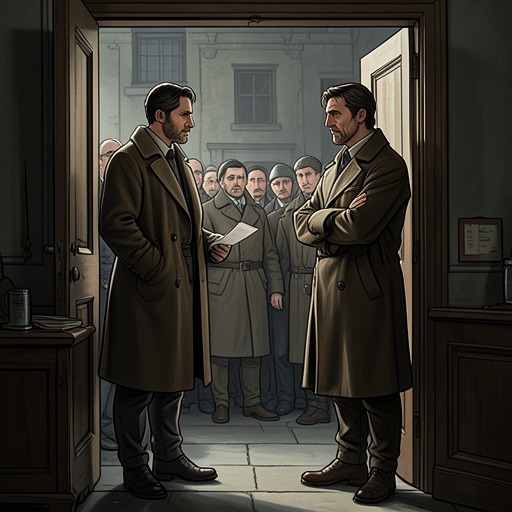
Disputes over the collective heating system added another rupture: Ove stormed out of a Residents’ Association meeting and never returned. The last battle came when Rune ordered a robotic mower from Asia and set it loose on the lawn. Sonja admired its ability to cut programmed patterns, but Ove noticed it repeatedly rumbling past the bedroom window at night. One evening he took a screwdriver outside. By the next morning, the mower had inexplicably driven into Rune’s pool. The following month Rune went to the hospital for the first time and never bought another lawn mower. Ove understood that the antagonism had ended there, though the underlying friendship had already been overtaken by memories—and, for Rune, an increasing absence of them.
The BMW and the Limits of the Explanation
The story gives the rivalry a comic clarity without claiming that cars explain everything. Sonja’s account of the men’s increasingly matched Saab and Volvo purchases culminates in the day Ove went to look at the newly launched Saab 9-3 and came home to discover that Rune had bought a BMW. Ove responded with disbelief at Rune’s break from Volvo. The change made sense to him not as an ordinary purchase but as a betrayal of the pattern through which the two men had long recognized one another.
Ove later knows that Sonja was disappointed they could not keep the peace, and that their animosity had helped prevent Sonja and Anita from becoming as close as they might have been. Yet he cannot remember how the conflict began. It had accumulated too many causes to be reduced to one incident: cars, garden boundaries, neighborhood rules, the heating system, and losses the men did not share in the same way. Their sorrow over children that never came might have drawn them together, but instead their different family lives offered another possibility for distance. The BMW is therefore both punch line and ending: it confirms the long-standing rivalry while marking Rune’s decision to step outside its old terms. The narrative treats the cars as evidence of feeling—not a complete explanation, but a visible record of attachments and changes that the men struggle to put into words.