Volvo
A Man Called OveVolvo is the badge at the center of Ove and Rune’s long rivalry: Rune drives Volvos, while Ove’s loyalty to Saab makes the two makes into opposing sides of a dispute that outlasts their friendship. In the novel, Volvo is not developed through corporate history or technical detail. Its significance lies in what the men make their cars mean: preference becomes principle, and the sequence of purchases quietly records changes in their lives.
Volvo and the neighborhood rivalry
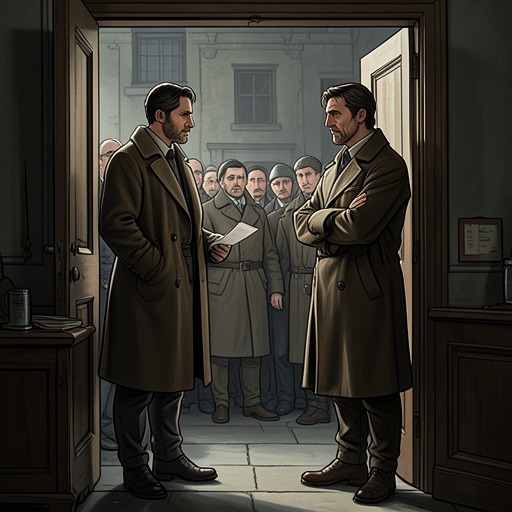
When Ove and Sonja and Rune and Anita moved into the newly built row-house street on the same day, Ove drove a Saab 96 and Rune a Volvo 244. Their wives were already friends and wanted the men to become friends too. Ove could see little they had in common, especially since Rune drove a Volvo. Still, Rune had a proper job and did not talk more than necessary; Ove eventually lent him tools. A conversation about lawn-mower prices ended with a handshake, almost as if friendship were a business arrangement.
Their practical cooperation grew into civic authority. After the two couples saw that many different people were moving into the area, they discussed how the neighborhood should be run in Ove and Sonja’s kitchen. The result was a shared framework of rules, signs explaining what was permitted, and a steering group for the Residents’ Association, with Ove as chairman and Rune as vice chairman. Their later hostility therefore develops against a history of close proximity and joint work, not simple unfamiliarity. The Volvo is the visible emblem of difference inside a relationship that once included trust and cooperation.
A changing fleet, a changing household
Sonja’s account of the rivalry gives it a comic, orderly shape: as one man changed cars, the other answered with a new model of his own. About a year after the first purchases, Ove bought a Saab 95 and Rune a Volvo 245. Three years later Ove moved to a Saab 900 hatchback, while Rune bought a Volvo 265. These were not only competing choices. After the accident, Ove needed room for Sonja’s wheelchair; Rune’s station wagon gave space for a stroller, as Anita was talking about having another child.
The pattern continued through successive purchases. Ove bought two more Saab 900s and then a Saab 9000. Rune moved through another Volvo 265 and a Volvo 745 station wagon. But no more children came. After Sonja told Ove that Anita had been to the doctor, a Volvo 740 sedan appeared in Rune’s garage a week later. Ove noticed it while washing his Saab. That evening Rune found half a bottle of whiskey outside his door, and the two men never discussed the gesture. The car sequence gives a private disappointment a public, almost wordless form: the station wagon that had allowed for a larger family gives way to a sedan, while Ove’s response acknowledges something he cannot bring himself to say.
The break in the pattern
In the shorter version Sonja gives to curious neighbors, the feud reaches its absurd high point when Ove goes to a dealer to look at the newly launched Saab 9-3 and comes home to learn that Rune has bought a BMW. Ove is furious at what he sees as an incomprehensible betrayal. The episode makes the rivalry funny precisely because it treats brand loyalty as if it were a test of character. A Volvo is not merely Rune’s practical choice in Ove’s eyes; it is part of the logic by which Ove judges him.
The fuller account gives the change a more painful context. Rune and Anita’s son grows up and leaves home as soon as he can. Rune then buys a sporty BMW, a car with room for only two people and a handbag. He tells Sonja that now it is only him and Anita, and tries to smile as he speaks. Sonja hears him struggling to hold back tears. The departure from Volvo thus arrives not just as a provocation to Ove but amid the contraction of Rune’s household and hopes. The car that Ove experiences as a breach of allegiance is also part of Rune’s own response to a life that has changed.
Meaning in the story
The novel does not settle the rivalry into a single cause. Sonja presents the cars as a straightforward explanation, but also allows that the make of a car may not explain everything. Ove himself cannot identify how the animosity began. He can, however, recognize when it ends: after Rune first goes into the hospital, Rune never buys another lawn mower, and the old conflict becomes memory for Ove and something Rune can no longer remember. The contrast is stark: Ove retains the history of their antagonism while Rune loses it.
Volvo therefore works both as a comic marker of Rune’s difference from Ove and as a recurring record of shared history. The models track practical needs, family hopes, and their disappointments; the half-bottle of whiskey makes one change legible without a conversation. By the time Rune abandons the familiar contest of makes, the reader has seen that the cars carried more than rivalry. They gave Ove and Rune a way to register one another’s choices, even when neither man could speak openly about what those choices meant.