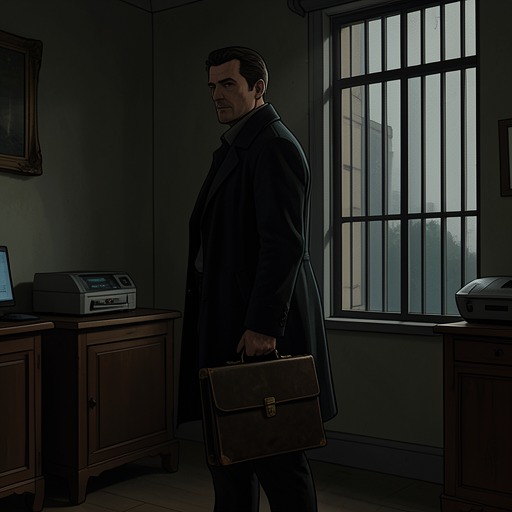
Harvey Wyndham
A Man in FullHarvey Wyndham is a Bahamian real-estate broker and former Harvard Business School classmate of Ray Peepgass. His career makes him a natural partner for Peepgass’s proposed Croker Concourse syndicate: the firm Harvey runs can perform the brokerage work, while a new company formed by Peepgass can remain a silent partner. The proposal also gives Harvey’s established local business a central role in a much larger speculative transaction, though the evidence presents it as a plan, not a completed deal.
Background and Early Ambitions
Harvey and Peepgass became friends at Harvard Business School, where both had imagined entrepreneurial success, corporate leadership, or wealth through investment banking. Their later careers fell short of those ambitions. At Cambridge, they saved what they could from modest family remittances and treated themselves to a lobster dinner at Durgin Park, an indulgence that seemed to them almost extravagantly fine. Their friendship grew from shared circumstances and similar temperaments, not from a contest over professional triumph.
Harvey’s father had built a successful real-estate business in the Bahamas during the 1960s, when newly wealthy Americans began discovering the islands and their clear waters. The firm’s name, Arthur Wyndham & Son Realty, had been adopted in the early 1960s partly to delight Harvey, then only six or seven, and partly to suggest a history the business had not yet acquired. His father doted on him but did not pressure him to remain in the Bahamas or inherit the firm. Harvey instead discovered for himself that he was unlikely to set the American business world alight.
Return to the Bahamas and Business
Within eight years, Harvey had drifted back to the Bahamas with his Harvard MBA. He became the son implied by the firm’s name, but the return was not simply a family obligation imposed on him. He proved an able salesman of island real estate to status-conscious American, British, and German buyers. Five years before his father’s death, the older man turned the business over to him.
That career contrasts with the grander ambitions Harvey and Peepgass had once entertained. Harvey did not become a celebrated American entrepreneur; instead, he made a viable business in a place where his manners and low-key charm suited the work. The narrative presents the result as a real, if quieter, success: he has a functioning brokerage firm and a market of affluent international clients.
Partnership with Ray Peepgass
When Peepgass arranges to meet him in the Bahamas, the two first catch up on former classmates and marriages. Harvey then presses him about the mysterious purpose of the visit. Peepgass explains that he has formed Colonial Real Properties, Ltd. in Nassau and proposes cooperation rather than competition. Harvey’s local brokerage is to serve as the visible professional intermediary, while Peepgass’s company participates as a discreet partner.
The proposed work concerns Croker Concourse, which Peepgass believes PlannersBanc may be willing to unload for about $50 million rather than advertise the troubled asset to its shareholders. He sketches three sources of fees for Harvey’s firm: a 6 percent commission of $3 million on the initial purchase; a further 6 percent, or $7.2 million, if the syndicate resells the building for its projected value of $120 million in two to three years; and about $300,000 in fees for arranging new leases. Peepgass estimates the total at $10.5 million. The building is then less than half leased, making new tenants part of the proposed brokerage work as well as the resale strategy.
Narrative Role and Significance
Harvey’s importance lies in the practical position he occupies between Peepgass’s financial scheme and the Bahamian property market. Peepgass works for the bank and is not a real-estate broker, so he needs someone who can legitimately broker the purchase, later sale, and leases. Harvey’s firm supplies that professional capacity, while the proposed silent partnership would allow Peepgass to participate without openly acting as the broker.
The arrangement also reflects the divergence between the two former classmates. Harvey has accepted a measured, local career and made it work; Peepgass is trying to break out of his role at PlannersBanc by assembling a transaction that could produce substantial fees. Harvey is therefore more than an old friend receiving a business pitch: his brokerage is the essential proposed instrument of Peepgass’s plan. The available account ends with Peepgass laying out the partnership, without establishing whether Harvey accepts or whether the acquisition proceeds.