The “Gotcha back” Political Slogan
A Man in FullThe “Gotcha back” Political Slogan is a call of public allegiance that Andre Fleet’s supporters transform into a unifying chant at a campaign rally. The phrase promises not merely approval but protection: a follower declares that Fleet has support at his back. Its warmth and force are sharpened by the political world Wes Jordan explains to Roger, where votes are mobilized through money, local organization, and intermediaries. The slogan makes solidarity audible and visible; the campaign machinery beneath it is largely transactional.
Meaning and Public Performance
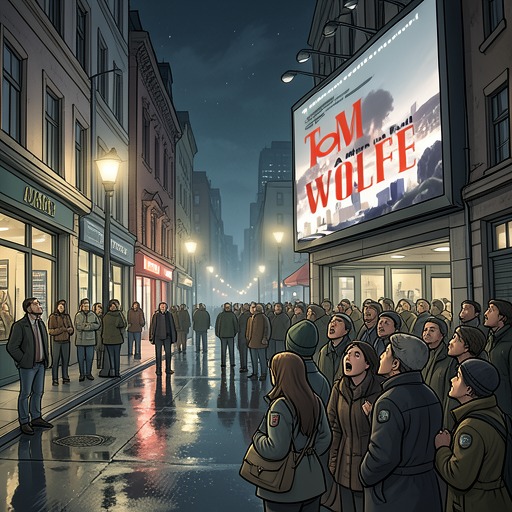
At Fleet’s rally, the phrase spreads from scattered cries into a chant shared by hundreds. Roger Too White understands it as a street expression meaning that a supporter stands behind someone and will protect him against attacks from the rear. The wording turns political support into a physical image: a candidate is not alone, because other people have taken up a position behind him.
Fleet’s movement through the crowd gives the words a staged, personal form. He reaches toward people along the rows and down the aisle, while the audience answers with the refrain. When he reaches the pulpit, the chant resumes; after his speech, he thrusts out his arms and the crowd again responds. The phrase therefore works as more than a campaign catchword. Through repetition, it becomes a shared performance in which Fleet appears to receive the crowd’s backing and the crowd publicly identifies itself with him.
Roger Too White as Witness
The chant’s effect is also measured by Roger Too White’s discomfort. Seated in an aisle, he anticipates that Fleet will approach and sees that the people in aisle seats have been touching the candidate. Roger is Wes Jordan’s supporter and agent, and he worries that refusing to join the greeting will draw attention to him, his clothes, and the newspaper he carries. He stays seated with his hands in his lap as the chant grows around him.
When Fleet reaches the pulpit, the audience’s response continues through the ceremony and speech. Roger eventually rises with the crowd, but the gesture does not make him feel at home: he stands frozen, conspicuous in his own estimation, while others rise to magnify their approval of Fleet. The scene sets the rally’s collective certainty against Roger’s divided position. The slogan can make allegiance look effortless and unanimous, even as one observer remains caught between his political commitments and the pressure to display them.
The Campaign Machinery Behind the Chant
Wes Jordan’s account of city campaigning gives the slogan a harder political context. He tells Roger that a candidate cannot win a citywide election on merits alone and needs both money and organization, especially people who know each neighborhood and can judge who can deliver votes. Campaigns, he says, receive offers of checks tied to written commitments to special-interest agendas. Wes recalls rejecting a $20,000 check and then being denounced in a local weekly; as campaign expenses mount, he says, candidates begin to reconsider the money they once turned away.
The same dependence on organization appears in Wes’s description of get-out-the-vote operations. In the closing days of a campaign, intermediaries claim they can deliver votes from particular neighborhoods. A candidate must rely on local knowledge to assess those claims, and the money is passed in cash through someone other than the candidate. Wes describes the arrangement as illegal and without recourse once payment is made. He says a serious candidate should have half a million dollars set aside for cash distributed to voters, and that a million would increase the chances of victory by 50 percent; he identifies Andre Fleet as the candidate guaranteed that million. In this account, the public language of having someone’s back coexists with a system in which political support may be brokered through money and neighborhood networks.
The Atlanta Way and the Slogan’s Tension
Wes connects this machinery to what he calls the Atlanta Way. He describes Atlanta politics through the image of a baseball: a small, hard core surrounded by layers of string. In his explanation, the core is the 280,000 Black residents of South Atlanta, whose votes control the city; around them are three million white residents of North Atlanta and the surrounding counties. He illustrates the resulting political accommodation with the airport expansion under Maynard: business interests accepted a requirement that 30 percent of the project go to minority contractors because the remaining project was still worth pursuing. Maynard later took pride in the creation of 25 Black millionaires.
That account helps clarify the slogan’s tension without reducing it to a cynical trick. Gotcha back presents political allegiance as personal loyalty and mutual protection, while Wes’s account shows how support in citywide politics is organized through bargaining, money, and intermediaries. At the rally, the phrase gathers people into a visible chorus; in the wider political explanation, winning depends on the less visible work of securing and mobilizing votes. The contrast makes the chant both a genuine expression of collective backing and a public emblem of the political organization that seeks to turn backing into power.