
Identity and the Names People Inherit
A ManThe novel tests whether names, legal records, physical resemblance, and shared memories can reliably determine who a person is.
increasing Bearing strength in each event
 decreasing
Bearing strength in each eventdecreasingA Name on the Marriage Record

A Legible Identity
Documents promise certainty
X uses Daisuké Taniguchi’s name across marriage, work, and official records. To Rié and the town, the name appears to identify a whole person.
The mismatch emerges
Kyoichi’s recognition proves that administrative consistency does not guarantee personal identity.
A Child Asks About Doubles
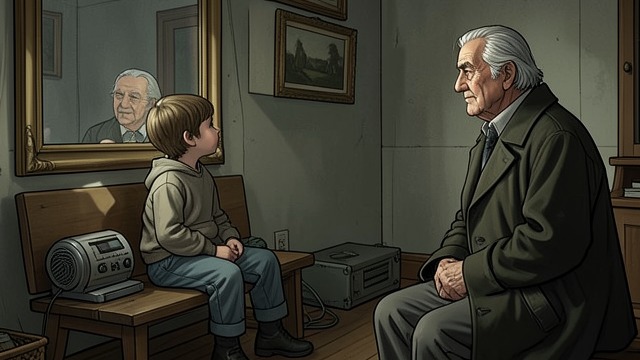
Memory as a Test
Sota’s thought experiment
Sota asks how his father would distinguish him from a perfect double. Kido answers through shared memories.
A question without certainty
Their exchange suggests that identity may depend on relationships and experience as much as appearance or a name.
The Register Changes Again

Names Can Be Traded
A chain of identities
Hara and Daisuké each adopt names belonging to other people; Omiura’s business makes the exchanges possible.
Legal selfhood exposed
The family register can make a new identity official, but cannot guarantee that the person living under it is the person named.
Yuto’s Name Holds a Father

A Surname as Attachment
Yuto resists the change
Yuto wants to keep Taniguchi because the name belongs to the father he loved, even after its legal basis collapses.
Relation beyond paperwork
His attachment shows that a name can remain emotionally true even when the records that authorized it were mistaken.
A Real Name, Not a Complete Answer

Rié Calls Him Makoto
A name recovered
Rié learns that the man she loved was Makoto Hara and begins to consider calling him by that name.
Identity remains relational
The new name does not replace the years he lived as Daisuké. His identity includes the past he borrowed and the love built in it.
During Rié’s second marriage
Late 2013
During Kido’s investigation
Fall 2013
After Kido’s report
