Akira Kido
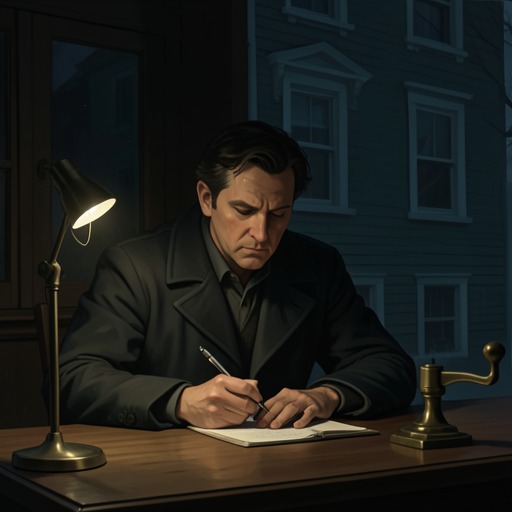
A ManAkira Kido is a lawyer whose patient work with clients draws him into questions that legal records cannot settle: who lived under a name, whose life the state recognizes, and what remains when a person dies. His investigation of the man Rié knew as Daisuké Taniguchi becomes a practical effort to correct her family register and a personal reckoning with death, identity, and the stories through which people understand themselves.
Identity and Background
Kido is a lawyer born in 1975, the same year as the novelist who first meets him. In that encounter, he initially gives the novelist a false name and background, then admits that his real name is Akira Kido and asks that the deception be kept from the bartender. The brief episode establishes both his willingness to conceal his identity and his capacity to acknowledge the lie once challenged. He appears not as a dramatic or forceful figure but as a composed professional whose personal self-understanding is less settled than his manner suggests.
His background helps explain why identity concealment does not strike him as inherently incomprehensible. Kido is third-generation Zainichi, and his family had settled in Japan before the end of World War II. He became a naturalized Japanese citizen while in high school. He knows that some Korean residents in Japan have adopted Japanese names or hidden their heritage, and can understand why someone might conceal a name. What confounds him in Rié’s case is the opposite, stranger possibility: that a person could impersonate someone who actually existed and have that identity accepted by the state.
Kido lives in Yokohama and works as a lawyer, handling both private family matters and civil litigation. His professional identity is grounded in procedure and careful argument, but the cases he encounters repeatedly expose the distance between a legally legible person and a life as it was actually lived. His own uncertainties about the path he chose make that tension personal. As a teenager he had wondered what kind of person he was and what he wanted to become; following his father’s advice, he drifted into law. Doubts about whether it was the right vocation never entirely disappeared, even as he continued to hope that the person he was meant to be might emerge through the profession.
Rié’s Case and the Work of Legal Repair
Kido’s relationship with Rié began in 2004, when he represented her in her divorce. She then used her first husband’s surname, Yoneda. After a year of mediation, she returned to her maiden name, Takemoto, and Kido’s work was finished. They remained out of contact until she emailed him years later, now under the surname Taniguchi. At first he did not recognize her; once he did, he was glad to think she had remarried.
The circumstances behind that name soon overturned his initial understanding. Rié told him that her husband, “Daisuké Taniguchi,” had died, and that the dead man had proved to be someone else. The person who had lived with her and fathered their child had used the name of a real man, whose family-register information showed him to exist. The impersonator’s identity had been accepted not only in ordinary encounters but in official transactions: his marriage and death had been recorded, he had held a driver’s license and health insurance, and he had paid into the pension system. Yet the real Daisuké’s brother, Kyoichi Taniguchi, had seen a photograph and insisted that the deceased was not his sibling.
Kido first tried to understand the case through the records and through the surviving family. After meeting Kyoichi, he decided to help with inheritance questions and determine how the registers of Rié and the Taniguchi family were connected. The police response gave Rié little practical help: an officer concentrated on taking a missing-person report for the real Daisuké, and, after two weeks without news, the station said it had found no matching missing person and could not investigate further at that time. With her account of the case unresolved, Rié turned to the lawyer who had been a steady support during her earlier divorce.
When Kido came to Miyazaki, his first proposal was to disentangle Rié’s register from the Taniguchi records. If the dead man was not Daisuké, he reasoned, there was no reason for Rié to continue using that surname. She agreed, although the name still carried feeling because it was associated with her late husband; after meeting Kyoichi, she had also felt uneasy about presenting herself under the name of a stranger. Kido reassured her that she did not have to repay the life-insurance proceeds: the impersonator had been the contracting party and had paid the premiums.
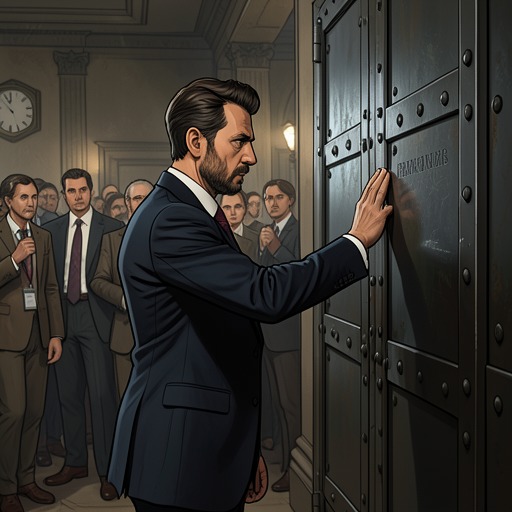
The legal remedy required two revisions at the Miyazaki Family Court. Kido petitioned to reverse the record marking Daisuké as dead, so the man would again be listed as alive and the police would not be left with a missing-person report for someone officially dead. He also sought to remove Daisuké’s name from Rié’s register and restore her maiden name, Takemoto. The marriage would thereby be annulled on grounds of error, erasing the second marriage from her family register; as a consequence, Hana, the child Rié had with the impersonator, would be legally classified as born outside marriage.
The court required Rié to appear in person and requested DNA evidence that the deceased was not the real Daisuké. Kido collected material from the dead man’s personal effects, including hair from his clothes, nail clippings, an electric razor, and a toothbrush, and took the samples back to Yokohama. The details show how the case’s most intimate question—who Rié had married—had to be approached through documents, court procedure, and physical evidence. Kido’s work could amend the state’s account of the marriage, but the correction also produced a consequential change in Hana’s legal status.
The Limits of Records and Recognition
Kido’s inquiry expands beyond the immediate register problem when a colleague, Nakakita, tells him about people affected by the 2011 tsunami whose existence had not been recorded by the government because they lacked family registers. Some people had lost records after wartime destruction and failed to report the loss; in the newer disaster, archival copies and digitization offered better safeguards, but they did not eliminate gaps in registration.
The issue Nakakita describes is connected to the Civil Code’s three-hundred-day rule: a child born within three hundred days of a divorce was legally presumed to be the former husband’s child. Women who had left abusive marriages and had children soon afterward with new partners could refrain from filing a birth notification rather than register the child under the former husband’s identity. The result could be a child without a family register, although the child met the conditions for Japanese citizenship. In a disaster, those unregistered people could be absent from the government’s count of victims as well as from its record of births. Their lives could be real to families and communities while remaining missing from the state’s official account.
This information gives Kido a new way to consider the impersonation. Until then, he had imagined that the real Daisuké might be alive and living under the other man’s identity. Now he considers whether the impersonator could instead have been unregistered, and whether Daisuké might have taken the place of someone absent from public records. That possibility makes Kyoichi’s suspicion of murder difficult to resolve through ordinary identification: if Daisuké had assumed the identity of someone whom the state did not know existed, even a recovered body might be treated as unidentified. Friends’ testimony, DNA, photographs, and personal effects could suggest that the dead person had existed, but none of those clues automatically made the person visible to official systems.
For Kido, the case demonstrates both the reach and the limits of legal action. He can seek amendments, assemble evidence, and ask a court to correct a family register; he cannot make the record answer every question about who a person was or what happened to him. The law can provide a route to repair, but it also assigns statuses with consequences, as in Hana’s changed classification. Across the case, administrative identity is neither a mere label nor a complete account of a life: it can govern family standing and official recognition while failing to capture lived relationships.
Mortality and Existential Anxiety
The earthquake’s aftermath intensifies Kido’s attention to death. On a train home to Yokohama, he gives up his seat to a visibly pregnant woman when other passengers seem not to notice her. The moment leads him to recall a conversation at his firm about the increasing prevalence of middle-aged depression. He had jokingly proposed that the lawyers gather evidence of their own decency in case they later fell into self-loathing. As twilight fades in the train windows and his reflection becomes distinct, his thoughts turn back to Rié’s predicament.
His anxiety becomes explicit when he imagines his own death and his son, Sota, struggling to understand it. Kido cannot imagine being there to explain death to the child; he recognizes that, once dead, he could neither teach nor feel anything. The thought of consciousness ending while time continues without him gives a name to the unease that has persisted since the earthquake: existential anxiety. The more than fifteen thousand people killed in the tsunami sharpen his awareness that the living world carries on beyond the perception of those who died. This recognition makes him unusually attentive to the small details of life, not because death has become abstractly resolved, but because its finality has become difficult to ignore.
That fear connects to his earlier questions about vocation and identity. As a teenager, Kido had asked who he was in order to find a way to live; the answer he reached was not certainty but a profession chosen on his father’s advice, with the hope that the person he was meant to be would take shape over time. In adulthood, the same uncertainty returns under harsher pressure. His legal work offers forms of action and responsibility, but it cannot guarantee that his choices have settled the question of who he is or protect him from death.
Relationships, Work, and Change
Kido’s professional manner is marked by composure and care, but his work brings him into contact with losses he cannot reduce to procedure. In a civil suit concerning death from overwork, he helps secure a settlement on February 15: the accused restaurant chain and its directors must pay a total of 82 million yen and implement eight preventive measures. After a press conference with the bereaved parents, who carry a photograph of their dead son, Kido joins them for dinner. They talk for nearly three hours, mostly about ordinary matters rather than the trial, and at parting they clasp his hand with both of theirs to express their gratitude.
The outcome is gratifying, and Kido recognizes that he completed the case without allowing its tragedy to compromise his professional judgment. Yet he cannot feel uncomplicated happiness on the parents’ behalf when he imagines them growing old. The successful settlement secures concrete remedies and prevention measures, but it cannot restore their son or remove the loss around which the case was built. This contrast echoes the problem in Rié’s case: law can change what happens next without reversing what has already happened.
Kido’s private relationships also shape the way he responds to others. When he speaks with Misuzu, her account of love as something renewed over time affects him deeply. He answers that love may remain the same love while changing, or may persist precisely because it changes. The exchange is not a declaration that he will pursue her. He is drawn to her, but he restrains himself, understands that she is trying to get over someone else, and tells himself to take that statement at face value. He wants instead to make amends with his wife, Kaori. His response turns the idea of renewal toward responsibility: attachment is not proven by remaining unchanged, but by what a person chooses to do as circumstances change.
Kido’s investigation into Makoto Hara’s life finally brings his legal and personal concerns together. Seeking to imagine Hara at work with a chainsaw, he thinks about the fifty years required for a cryptomeria to mature and about the generations who planted and would later cut the trees. Against that long span, he imagines Hara’s more immediate wish: to finish work, return to Rié and the children, and lie exhausted beside them after putting the children to bed. Kido’s reflection does not claim access to Hara’s thoughts; it distinguishes the vast time of the forest from the ordinary happiness Hara may have sought within one working day.
For a moment, Kido loses his sense of himself in the reverie. When he opens his eyes, he sees a logger and briefly mistakes him for Hara. He wonders what he would have said, and wishes he could tell Hara that he understood: after his second suicide attempt, Hara had begun life again in order to remain alive. The imagined encounter cannot happen, and Kido cannot retrieve Hara’s experience as fact. But the wish to speak to him marks a change in the investigation’s meaning. The search is no longer only about identifying the dead man or resolving the records; it has become an effort to recognize the struggle of a person whose life was built under another identity and ended in a logging accident.
Narrative Role and Significance
Kido links several of the novel’s central concerns through a profession that deals in names, claims, and recognized relationships. His work for Rié makes him confront the fact that an identity can be officially accepted and still be false, while a person can be real to those who knew him and absent from the state’s records. The court’s power to revise registers is necessary, but it does not restore the past or spare a child from the consequences of a changed legal classification.
His own trajectory prevents those questions from remaining purely procedural. Kido’s early false introduction, his history as a naturalized third-generation Zainichi person, his inherited choice of career, and his fear that death will end consciousness all place him within the same uncertainty he investigates. He is not simply a solver of identity puzzles: he must consider how a self persists through changing circumstances, what responsibility survives when certainty is unavailable, and what it means to recognize another person without claiming to know the whole of that person’s life.
By the time he imagines speaking to Hara in the rain, Kido’s investigation has become an exercise in attention rather than possession. He cannot undo Hara’s death or fully reconstruct his private experience. He can, however, treat the life behind the borrowed name as more than a discrepancy in a register. That distinction—between establishing a record and acknowledging a life—defines Kido’s importance to the novel.