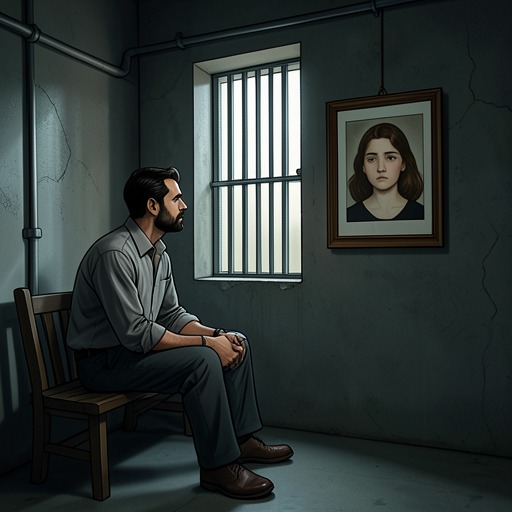
An eye for an eye principle
A ManThe An eye for an eye principle is presented as a restraint on retaliation, not as permission to duplicate an injury. In a discussion of punishment, Sugino uses that distinction to challenge the claim that the dead must be avenged by denying condemned prisoners every remaining moment of life.
The Principle as a Limit
Sugino explains that Japan’s approach to punishment is not absolute retribution but proportional retribution. The familiar idea of lex talionis, commonly expressed as an eye for an eye, is, in his account, a precept for keeping retaliation from escalating beyond the harm originally done. Because retaliation tends to be driven by emotion, the principle sets a boundary against its excess rather than endorsing an exact repetition of violence.
He illustrates the modern change in punishment through the example of blindness. If a victim is blinded, the perpetrator is not blinded in turn; the offender remains able to see, even though the victim has lost the visual beauty of the world. Modern penology instead assigns a punishment that restricts freedom in proportion to the crime. The shift is from punishment inflicted on the body to punishment imposed through the loss of liberty.
The Argument over Execution
Sugino contends that the death penalty falls wholly outside that principle. If the dead victim has been deprived of all freedom, he argues, then applying the same logic to a death-row prisoner would mean allowing the prisoner no capacity to think or feel. The argument exposes the distance between proportionate punishment, which limits liberty, and a demand for vengeance that would treat continued life itself as an intolerable privilege.
Kawamura embraces that demand: he says condemned prisoners should be executed immediately, because every second before execution is an extravagant luxury compared with the lives of those who were murdered. Sugino answers that the death penalty is a form of corporal punishment and should not be recognized as an exception. His position keeps the eye-for-an-eye maxim within the role he assigns it—as a check on retaliatory feeling, not a principle that licenses execution.
Punishment and the Victims’ Families
Sugino also supports the condemned person’s right to artistic creation, which he describes as one of the most basic activities of human life. His defense of that right does not close the public debate: he regards the question as one society must resolve and says he would be profoundly interested in an exhibition of artwork made by victims’ surviving family members. He places the onus for holding such an exhibition on advocates for victims, while insisting that citizens should see both exhibitions and make up their own minds.
That proposal preserves a tension in the principle’s application. The condemned retain freedoms that the dead can no longer exercise, while victims’ families also need a public means of expression; neither fact, in Sugino’s account, converts vengeance into a sufficient rule for punishment. The debate therefore turns not on denying the victims’ suffering, but on how society can acknowledge it without letting emotional retaliation exceed the bounds that proportional punishment is meant to impose.