Art as an advertisement for existence
A ManArt as an advertisement for existence describes art as a public declaration that something—and someone—has been here. The idea moves beyond commercial promotion: artistic images can make visible lives and feelings that would otherwise be disregarded, and in the condemned prisoners’ work Kido considers, that act of visibility becomes an appeal against erasure.
From publicity to artistic representation
Kido associates an artist’s work with graphic design, whose practical purpose is to make people aware of an event, product, or other subject. A poster borrows the force of the sublime to announce its subject; sometimes the representation itself rises into the realm of art. Kido reverses the familiar relationship between art and promotion: rather than asking only how publicity acquires artistic quality, he considers how art can acquire a promotional quality by making its subject known.
The idea extends beyond capitalism and mass consumer society. A sunflower in a flowerpot, a horse crossing a prairie, loneliness, war, hatred, loving someone, or being loved by no one can each be understood as something artistic representation brings before an audience. Art advertises these realities not necessarily to sell them, but to prevent them from passing unseen.
The condemned artists’ work
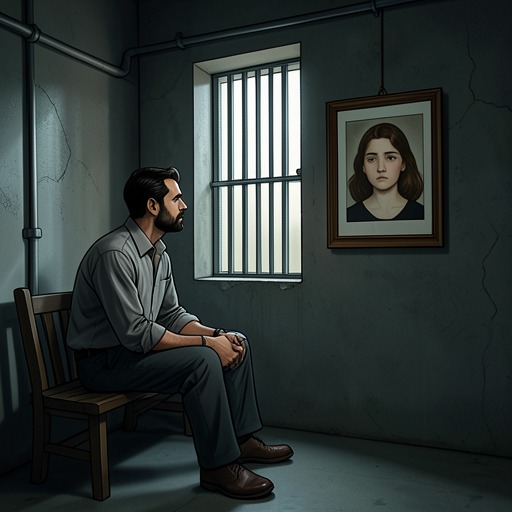
At the exhibition of work by people sentenced to death, Kido considers what the artists might be trying to make visible. He is cautious about settling too quickly on a single interpretation. Many do not directly deny committing their crimes; instead, their work conveys an urgent defense of the kind of person they are, rather than a defense of particular actions. In Kido’s reading, the distinction matters because the state is moving toward extinguishing them, and the art addresses the threatened existence of the person, not merely the verdict.
Some prisoners make cute pictures that seem at odds with the crimes for which they were convicted. Kido reads those images as attempts to anchor evidence of the self somewhere outside the body that will soon be destroyed. The drawings point toward a side of the artist that others might not have suspected—a part of a person facing annihilation alongside the rest. The image thus becomes a claim that the condemned person cannot be reduced without remainder to the crime or to the state’s judgment.
A fragile claim to existence
Kido’s reflection does not establish that the pictures prove innocence, nor does it erase the crimes. Its force lies in the narrower, more difficult proposition that a person’s existence and inner life may exceed the public identity assigned to them. The prisoners’ art advertises that remainder: not an acquittal, but the presence of a self that would otherwise be lost with its maker.
The concept also clarifies why representation matters even when it cannot rescue its subject. A poster can announce what might otherwise be ignored; a drawing can leave a trace of a person beyond the life that produced it. In this sense, art’s publicity is directed not only toward viewers but against disappearance: it asks that a life, a feeling, or a disavowed part of a person be recognized before it is gone.