Kido and Kaori discuss their marital crisis
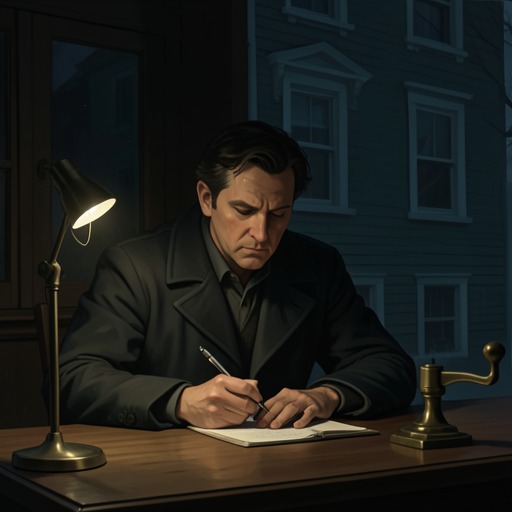
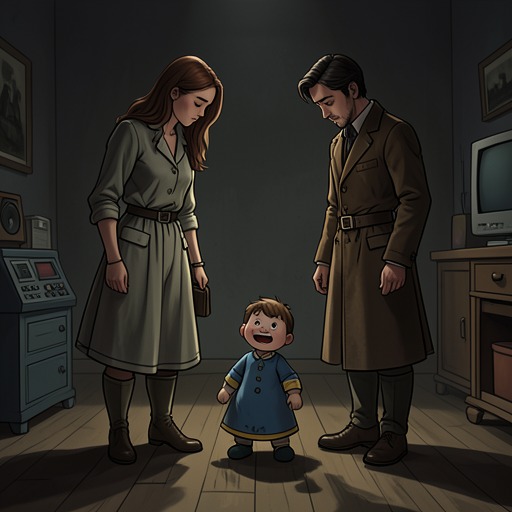
A ManKido and Kaori discuss their marital crisis at a moment when silence threatens to become a decision made for them. Their conversation turns on Kido’s Zainichi identity, the protection of their son Sota, and whether their troubled marriage can be repaired. It yields no instant reconciliation: instead, Kido finally says that he does not want the marriage to end, and both begin to consider what help and effort might make a different future possible.
Background: Identity and Family Strain
Kaori tells Kido that she understands his ethnicity and married him knowing who he was, though she had to persuade her family, who did not all approve. Her concern is not a rejection of her husband but the danger posed by anti-Korean hostility. After seeing hateful rhetoric on television, she insists that they must protect Sota and reminds Kido that they had agreed to tell their son about his background when he was older. The question of disclosure thus becomes a question of family responsibility: what to tell Sota, when to tell him, and how to prepare him for prejudice without making his father’s identity seem shameful.
Kido agrees that the television should have been turned off immediately. Yet the exchange exposes how little the couple has managed to say plainly to each other. Kaori has been carrying concerns about Sota and the hostility he may face; Kido recognizes the urgency of talking but, at first, cannot find words. The discussion takes place against an existing estrangement, and even an ordinary disagreement carries the possibility that the marriage may be nearing its end.
The Conversation Turns
As Kaori watches Kido’s prolonged silence, he fears that she may make up her mind before he speaks. He blurts out that the situation is agonizing and says they need to discuss how to improve it because he does not want their marriage to end. A faint smile crosses Kaori’s face, though she asks where the declaration is coming from. The exchange marks a shift from treating their distance as an unspoken condition to naming the possibility of divorce—and Kido’s wish to prevent it.
Kido proposes counseling for both of them. He acknowledges that their relationship is no longer working and that a conversation might be more productive after they have each spoken with a counselor. Kaori replies that she is fine, but the suggestion places their conflict outside the narrow frame of who is right in a particular argument. It recognizes that the marriage itself needs attention, rather than assuming one more explanation from Kido will repair it.
Kido then admits how much he wants them to get along. He says it was difficult to say so, that he cannot bear the thought of Kaori giving up on him, and that he has been searching for a way to make her love him. He has been thinking about this with more urgency in their twelfth year of marriage than when they first dated. He ends the admission in a deliberately melodramatic tone, laughing at himself; Kaori joins him. Their joking does not erase the distress, but it restores a form of shared ease that Kido can scarcely remember experiencing with her.
Counseling and a Tentative Agreement
Kido remains concerned that Kaori might interpret his words as a sign that he could harm himself, recalling the accident that ended Makoto Hara’s boxing career and the fear on her face. After a pause, he brings the discussion to a practical conclusion: they will go to therapy separately. Kaori tells him not to become too fixed on the investigation he is conducting and asks him to remain cheerful at home; Kido replies that the investigation is nearly over and again invites her to speak with a therapist—or with him—if she needs to get something off her chest. The immediate outcome is an imperfect but explicit plan, not a claim that counseling or conversation has already solved the crisis.
Kido follows through on his own appointment, visiting a psychologist near his workplace. His professional curiosity turns the session into a lively discussion of the psychologist’s questioning technique, and although the psychologist welcomes him back, Kido never returns. Kaori is relieved that he went, but repeatedly postpones going herself. Kido does not force her. Instead, he observes that she scolds Sota to tears much less often and senses that she is trying to rehabilitate their home life. He wants to reciprocate by cooperating with her.
What Changes Afterward
Kido’s later understanding of Kaori is shaped by recognizing the psychological burden she bears in the wake of the earthquake and the spread of xenophobia. He feels guilty for having been insensitive to what she was enduring, and grateful for her efforts to improve things at home. The significance of the conversation therefore extends beyond its immediate promise of therapy: Kido begins to see that the strain is not simply an obstacle to his own need for reassurance, but part of Kaori’s lived experience and her effort to protect their son.
The narrative presents repair as an ongoing practice rather than a dramatic settlement. Kaori does not immediately attend counseling, Kido does not continue his sessions, and neither detail is offered as proof that the underlying tensions have vanished. What changes is Kido’s response: he stops pressing the issue with her, notices the care already taking the form of altered behavior, and tries to meet that effort with cooperation. Their conversation matters because it makes possible a more attentive way of living together, even without guaranteeing that the crisis is over.