Kita Chuo
A ManKita-Senju is the northeastern Tokyo setting of Kido’s search into Makoto Hara’s boxing past. More than a point on a map, it is where Hara’s athletic promise and private distress come into focus: Kido visits the boxing club Hara once attended, then hears from a former running companion about the morning Hara broke down as the championship fight approached.
Setting and association with Hara
After learning that Hara had belonged to a boxing club in Kita-Senju, Kido became curious about the place. The discovery arose from a feature article about Hara’s life: after leaving an orphanage, Hara had joined a local club, turned professional, and won the East Japan Rookie King bantamweight title in 1997. He later withdrew from the All Japan Rookie King Championship Match and disappeared from the boxing scene. Kita-Senju thus enters the account through the contrast between a public sporting achievement and the collapse that followed it.
Kido’s visit
In the new year, after work had eased, Kido took the train to Kita-Senju to visit the club. Although he had watched televised boxing since childhood and followed major fights online during the combat-sports boom of the late 1990s, this was his first time entering an actual boxing club. Walking beneath the winter sky along Showakai, a stretch of local shops, he recalled the boxing manga he had loved as a boy, including Champion Joe and Genki, the Boy Champ.
From Showakai, Kido continued into a narrow residential street with few pedestrians. The setting did not seem an obvious home for a boxing gym, and he checked his map repeatedly before finding the likely sign and building. Inside, three young people—one warming up in the ring and two on the floor—called toward the office at the back, summoning the club president. Kosuge, a man in a black training suit, came out to meet Kido, who had arranged the visit by email.
The remembered run
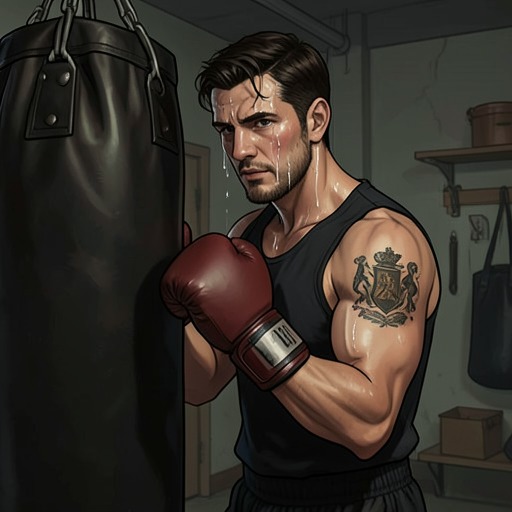
The neighborhood also holds a more intimate memory of Hara. Yanagisawa recalled that he and Hara used to run together in the mornings around the area. As Hara faced the decision about whether to take part in the fight, Yanagisawa invited him out for roadwork. They ran as usual until they reached a local park, where Hara suddenly fell behind, stopped, dropped to his knees, and collapsed onto his stomach. He rubbed his face into the dirt and wept aloud in the frost-cold morning.
Kido imagined the scene with a tightness in his chest and realized he was fairly sure he had passed that very park on his way from the station. Yanagisawa had told Hara he did not have to fight and had no obligation to speak with the victims’ family; doing so, he warned, might only make them uncomfortable. The account gives the local park a role distinct from the club: it is where Hara’s crisis becomes visible to another person, and where someone offers him permission to refuse.
Narrative significance
Kita-Senju connects Kido’s investigation to Hara’s embodied history. The journey begins with a report of titles and career milestones, but leads through familiar streets and a remembered run to an episode of overwhelming distress. In this way, the district is both the setting of Hara’s boxing life and the ground on which its limits are recalled. Kido’s visit turns the pursuit of a career fact into an encounter with testimony about the person who could not continue.