Makoto Hara–Kenkichi Kobayashi father–son relationship
A ManMakoto Hara and Kenkichi Kobayashi’s father–son relationship is defined by a brutal inheritance Hara refuses to accept as destiny: the abuse he endured as a child, Kobayashi’s murder of three people, and Hara’s lifelong fear that he might repeat his father’s crimes. The relationship remains morally unresolved. Hara hates his father and grieves for a boy Kobayashi killed, yet the resemblance between their lives and even their art makes the question of inheritance difficult to dismiss. Through Kido’s efforts to understand Hara, their estrangement becomes a test of whether a child can be held apart from a parent’s violence.
Identity and family background
Kobayashi’s son was born in 1975. After his parents divorced, he took his mother’s maiden name and became Makoto Hara. The change of surname marked an early separation from his father, but it could not erase the family history that would later become public knowledge. Kido, born the same year, recognizes that Hara was a child of his own generation when the consequences of Kobayashi’s crimes began to shape his life.
Kobayashi’s own childhood involved poverty and violence from his father. As a teenager he left school, later found work at a factory, cut ties with his parents, and lived alone. At twenty-one, he married; three years later, his wife gave birth to Hara. Kobayashi then physically abused both his wife and their son. For years, however, the family could appear ordinary to outsiders. The contrast between that outward appearance and the violence at home becomes part of the relationship’s lasting damage: the harm was real even when it did not register publicly as a serious problem.
Violence, separation, and Hara’s childhood
In 1985, after gambling debts left him in financial trouble, Kobayashi went to the home of an acquaintance who ran a construction company to demand money. When refused, he returned later that night, killed the acquaintance and his wife and child, and set fire to the house. Hara’s father was arrested a week afterward. The victims included a boy who had belonged to the same children’s club as Hara and played softball with him. Hara had often visited the family’s home, where their sports equipment was kept; it later became the scene of the crime.
The murders made the family’s private rupture public. News coverage brought reporters to the area, and Hara’s mother moved away with him. They stayed with her sister and brother-in-law, who were initially kind, but the situation strained the household. Hara’s aunt became depressed while caught between her sister and her husband, and eventually Hara and his mother had to leave. His mother later left him, and he spent the remainder of his childhood in an orphanage, where he was bullied. As a minor without a residence certificate, he later left the orphanage, briefly enrolled in night school, and then lived as a vagrant for two or three years.
Kobayashi was executed in 1993, when Hara was eighteen. Hara never visited him in prison, although letters arrived. Their separation was therefore not a clean break: the father remained present through the crimes, the public attention, and correspondence Hara found inadequate, even in the absence of visits or reconciliation.
Guilt, anger, and the father’s letters
Hara’s anger focused on the victims and on the meaning of being born to Kobayashi. Sugino recalls that Hara was generally quiet, but when he spoke about his father he asked why he had to be born to a monster and became visibly shaken. He was especially unable to come to terms with the murder of his friend. That grief gives his estrangement a dimension beyond personal injury: Hara could not regard the crime as only something his father had done to their family, because it had destroyed another family and killed someone Hara knew.
In Kobayashi’s letters, Hara saw apologies to the victims that rang hollow. The letters described his father’s guilt and regret, but, as Hara understood them, ultimately dwelt on Kobayashi’s own suffering. Kobayashi also asked his son not to forget their happy memories together. The appeal sits uneasily beside Hara’s account of abuse and the murders: the father invokes a shared past, while the son cannot separate any potentially happy memories from the harm and loss that came to define their relationship. Hara did not visit Kobayashi in prison, and Sugino could not say whether Hara had ever wished his father were alive.
The fear of resemblance
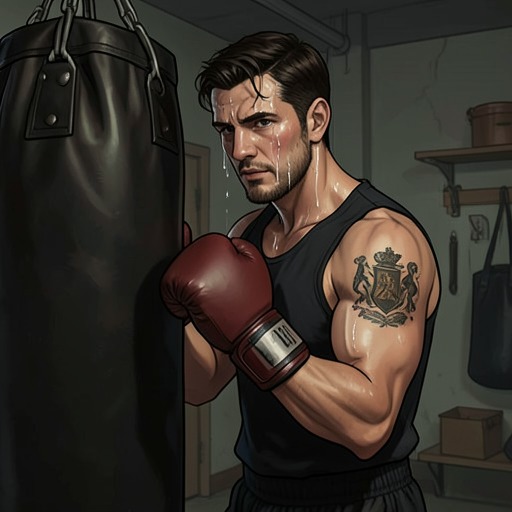
The relationship’s effects persist in Hara’s fear that resemblance might become repetition. Kyoichi argues that the child of a murderer could take after his parent, and Kido, while resisting that conclusion, recognizes why it might seem plausible. Hara’s childhood home had been wretched; he also shared physical similarities with Kobayashi, to Hara’s distress. Most unsettling to Kido, the landscapes the two men painted were nearly identical: Hara’s work, which seemed to express a pure heart, resembled paintings Kobayashi made on death row.
Kido’s reflection complicates the idea that Hara was simply free of his father’s influence. Hara took upon himself the task of balancing the continuing grief of the victims’ family against the apparent absence of suffering in the perpetrators’ family. He lived between the past and the future, feeling obliged to suffer for his father’s crimes while fearing he might commit similar ones. This was not evidence that Hara was destined to become like Kobayashi; it was the burden Hara placed on himself, intensified by others who regarded him as a possible threat.
Narrative significance
Kido’s attachment to Hara grows from an effort to understand how a person becomes capable of violence and whether family history can explain without determining. He considers Kobayashi’s own experience of childhood violence, then confronts the uncomfortable possibility that the same logic could be used to cast suspicion on Hara. Kido ultimately holds to his sense that Hara was not that kind of person. He imagines that, had people recognized this from the outset, Hara might never have felt compelled to exchange his family register and might still have been able to live as Makoto Hara.
The father–son relationship thus connects private abuse to public judgment without making either one a complete explanation of Hara. Kobayashi’s crimes cannot be undone by remorse, and Hara’s suffering does not make him responsible for them. Yet the similarity between their lives and paintings keeps the question of inheritance open as a source of fear, not a verdict. In Kido’s account, recognizing Hara as an individual is itself consequential: the refusal to reduce a son to his father may have offered him the possibility of remaining himself.