Mimic dies in logging accident
A ManThe death of the man who lived as Daisuké Taniguchi turns a forestry accident into a crisis of identity: the husband Rié mourns is legally recorded under another man’s name, and his sudden death leaves their family and his past unresolved.
Background and Work
At thirty-five, the man later known to Kido as Makoto Hara began a new career in forestry despite having no experience in the industry. He found work at Ito Lumber, moved to Town S, and spent four years earning the company president’s admiration through diligence. The work tied him to a community where he remained unusually difficult to know: he spoke little to coworkers, had no notable friends, and Rié and her family were among the few townspeople who learned anything about his past.
Within a year of arriving, he married Rié, the trusted only daughter of the local stationery-shop proprietors, and moved into her family home. Their daughter Hana was three when he died; Rié’s elder son Yuto was twelve. The marriage and family life gave the reticent newcomer a place in town, but the identity under which he had entered that life was not his own.
The Accident
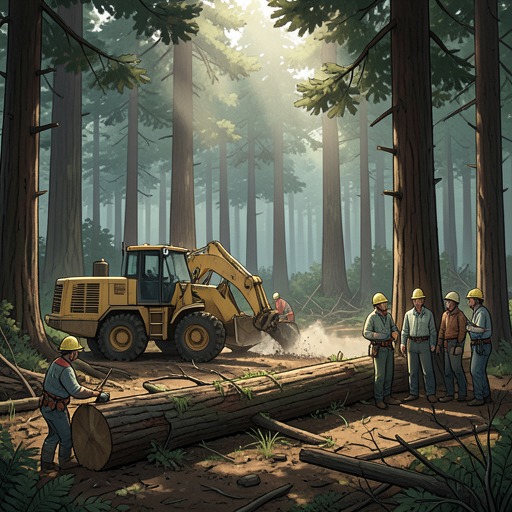
At thirty-nine, he was crushed by a cryptomeria tree he had felled in the mountains. Rié hurried to the hospital after receiving the news, but he was already dead. His death came after four years at Ito Lumber and ended a working life that had begun with a deliberate late change of course.
The accident occurred within an industry where danger was ordinary but not therefore harmless. When Kido later visited a similar logging site, Ito described occupational accidents as common, citing risks from logging machinery as well as snakes and wasps. He said that the fatal job had been at a site with poor conditions, one he had accepted for a client he felt unable to refuse; he still blamed himself and prayed before the household altar each morning. His account places the death within both the physical hazards of forestry and the decisions surrounding a particular job.
A Death Under a Borrowed Name
The death certificate and public records identified the deceased as Daisuké Taniguchi. His identity had been accepted by officials when his marriage and death were entered into the family register; he had also used a driver’s license and health-insurance card, paid pension contributions, and given an account of growing up in Gunma that appeared consistent. Yet Daisuké’s brother, seeing the dead man’s photograph, had insisted that the man Rié married was not his brother.
For Kido, who took on the work of settling the estate, this was not simply a case of a man hiding behind a fictitious name. The real Daisuké Taniguchi existed, and the dead husband had occupied his legally verified identity. Kido privately came to think of the deceased as Hara, while recognizing that people in Town S continued to know him as Daisuké. The accident thus left behind a paradox: the person who had died was recorded under a name belonging to someone else.
Family and Aftermath
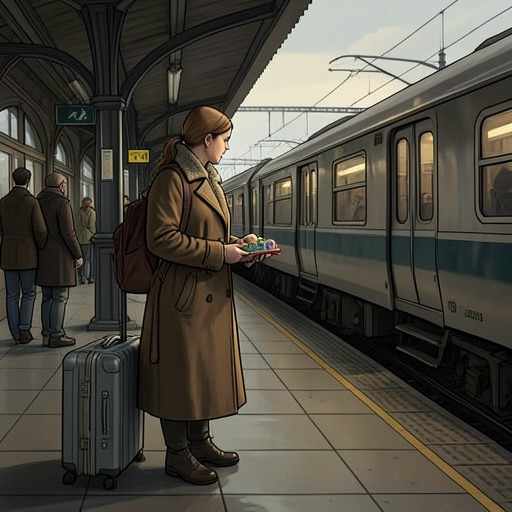
Before his death, the man had asked Rié never to contact or associate with his family in Gunma, even if he died. She honored that request until the first anniversary, then wrote to them after consulting her mother and friends. She wanted guidance about his grave; she still had no place to entomb his ashes. The delay and the practical question of burial made visible how much the abrupt death had left unfinished.
Rié also wondered whether she should have urged him to reconcile with his family. She could not change the fact that he had died before that possibility was resolved, nor could she identify him by a true name she did not know. When she asked herself whose death he had died, she confronted the distance between the name in the register and the husband she had loved. Kido’s designation X did not feel to her like a name for her husband; it made him sound like a stranger even as she struggled to keep hold of who he had been.
Significance
The fatal accident is the hinge between a lived identity and its legal unmaking. While the man was alive, his marriage, work, and public records allowed him to live as Daisuké Taniguchi; after his death, the mismatch between that identity and the real Daisuké became a matter that could be investigated. His death cannot be exchanged or corrected like a register entry: it belongs to the individual who suffered it, even when the name attached to it belongs to another.
The forestry setting gives the event a material dimension as well as a narrative one. Ito described trees as spending roughly fifty years growing on the mountain and another fifty serving as building material; the work joined forest, labor, and human use across a century-long span. Against that scale, the worker’s life ended in an instant, and the company president’s continuing self-reproach could not restore either the man or the unfinished relationships he left behind.