Nature, nurture, and criminal responsibility
A ManNature, nurture, and criminal responsibility is a central ethical problem in Kido’s reflections on crime and punishment. The novel places individual accountability beside the forces that shape a person: inherited vulnerability, childhood violence, social exclusion, and the opportunities or misfortunes that direct a life. Kido refuses to treat those forces as an excuse for murder, but also rejects the comforting idea that a person’s choices can be judged apart from the conditions that formed them.
Kobayashi’s History and the Conditions of Violence
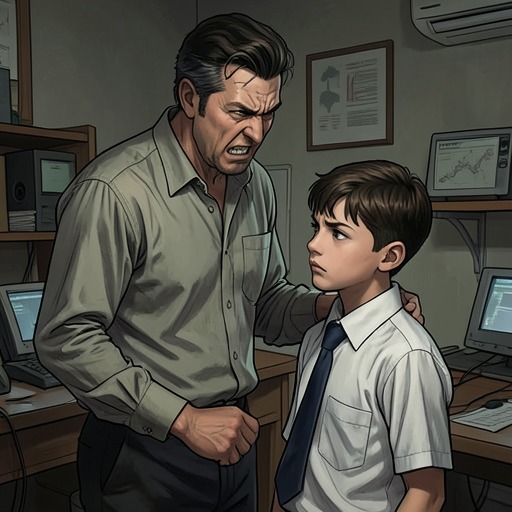
Kido’s thinking begins with Kenkichi Kobayashi, whose childhood and later crimes make the relationship between environment and responsibility difficult to ignore. Born in Yokkaichi in 1951, Kobayashi grew up amid poverty and his father’s violence. He became delinquent as a teenager, left high school, and eventually found factory work and lived apart from his parents. At twenty-one he married; three years later, his only child, Makoto, was born. Kobayashi physically abused both his wife and son. From outside, however, the household could still appear typical until Makoto was five, a contrast that underscores how serious harm can remain obscured within an outwardly ordinary family.
In the summer of 1985, gambling debts brought Kobayashi to the home of an acquaintance who ran a construction company. After being refused money, he returned that night to rob the house, killed the acquaintance and his family, and set a fire to conceal the crime. Kido regards the murders as Kobayashi’s responsibility, but he cannot consider them without the history of violence and deprivation that preceded them. The conditions that helped form Kobayashi were not extraordinary exceptions to human experience; their very banality makes it harder to dismiss them as irrelevant.
Makoto Hara and the Burden of Inheritance
Makoto’s life makes the question more intimate. After the murders became national news, Makoto’s mother moved away with him. He was later recorded as living in an orphanage in Maebashi, and little was publicly known about his activities for years. As a child, he faced bullying after his father’s identity became known at his first transferred school. At the middle school he attended after the orphanage, his classmates did not know who he was, but the isolation and bullying continued. He briefly enrolled in night school, left, and spent the following years without a stable home or residence certificate.
Makoto later pursued boxing and reached the East Japan Rookie King title in 1997, but withdrew from the All Japan Rookie King Championship Match and disappeared before the final. He then spent nearly a decade working as a day laborer, moving on when coworkers learned he was the son of a murderer. Beginning in 2006, he was repeatedly reported for shoplifting; after a suspended sentence and a later prison term, he offended again after release. A weekly magazine treated his history as a case study in whether a convict’s child might inherit criminal tendencies, even as it acknowledged his psychological problems and the hardship of his life.
The violence Makoto feared was not simply an abstract idea about heredity. He was distressed by the possibility that his father’s traits might be present in him and feared losing control of his own actions. He described boxing as a way to master impulses he worried might become violent. His fear of resemblance turned family inheritance into a judgment about whether he deserved to exist, while the stigma attached to his father’s crimes repeatedly narrowed his prospects. His story therefore exposes the danger of treating a child as the continuation of a parent’s criminality: the label itself can become part of the environment that shapes the child’s life.
Kido’s Moral Position
Kido considers both inherited and acquired influences without reducing Kobayashi’s murders to either one. He accepts that Kobayashi’s early environment contributed substantially to his deterioration, while insisting that this does not absolve him of responsibility. For Kido, the existence of causal pressures and the existence of accountability are not mutually exclusive. The mistake lies in treating responsibility as proof that circumstances did not matter, or treating circumstances as proof that responsibility disappears.
That distinction leads Kido beyond individual psychology to the state. In his view, the state had failed to remedy the misfortune of one of its citizens, then executed him for violating the legal order it maintained. Capital punishment, in this account, does not repair the earlier failure; it allows the state to present punishment as justice while leaving the conditions that helped produce the offender unaddressed. Kido fears a cycle in which social neglect continues and the state responds to its consequences by executing more people.
Children, Causation, and the Limits of Individual Choice
Kido’s thoughts extend to children who have not committed crimes. While watching five-year-olds play, he imagines that one of them might someday kill someone, through desperation or ignorance, and asks who would bear responsibility. The thought recalls Kobayashi at five: perhaps an apparently ordinary child, though the available reports suggest that his pain and trauma may already have been visible. Kido also thinks of the ten-year-old perpetrators in the James Bulger case. The legal boundary between childhood and adulthood may determine who is culpable under the Juvenile Act, but it does not erase the accumulated effects of childhood when a person reaches the age of legal responsibility.
Kido shares Nakakita’s view that character develops through an interaction of genetic and environmental factors, and that the opposition between nature and nurture is misleading. Individual effort remains worthy of recognition, but Kido questions whether effort can be separated from the good fortune of meeting people and events that make a different path possible. The novel thus complicates accounts that assign the whole burden of a life to personal will: what appears to be self-determination may also depend on circumstances that were never under the person’s control.
Hara, Family Resemblance, and the Cost of Judgment
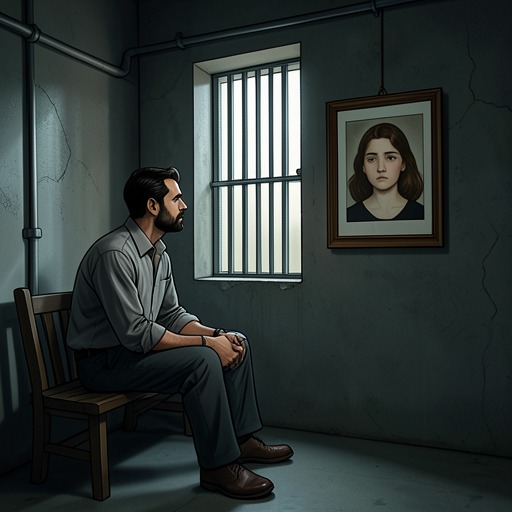
Kyoichi’s suspicion that Hara might be prone to crime forces Kido to test his own argument. If Kobayashi’s violence can be understood partly through the violence of his childhood, then Hara’s similarly damaged home environment cannot be ignored; nor can the perceived resemblance between father and son. Kido recognizes the painful irony that Hara’s paintings resembled the work his father produced on death row. Yet resemblance, artistic or physical, does not establish that the son shares the father’s guilt. Hara himself feared that he might reproduce his father’s violence more intensely than anyone else did.
Kido ultimately returns to his conviction that Hara was not a dangerous person. He imagines that, had the people who encountered Hara believed this from the beginning, Hara might never have felt compelled to exchange his family register and could have continued living as Makoto Hara. This ending does not settle the abstract question of how much character is inherited or chosen. Instead, it gives the question a concrete consequence: social judgments about a person’s nature can help create the conditions under which that person must abandon a name and a past. The novel’s account holds accountability and compassion together, asking readers to judge acts without mistaking inherited stigma or social failure for proof of an unchangeable criminal nature.