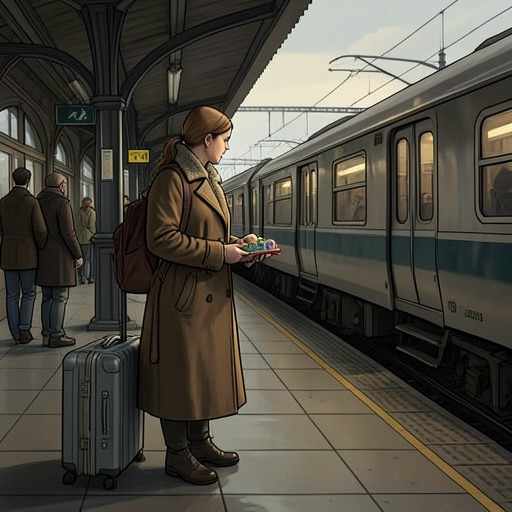
Rié Takemoto
A ManRié Takemoto’s life is marked by losses that arrive in succession, but her decisive crisis begins when she learns that the man she knew as her husband was not Daisuké Taniguchi. She had trusted and loved him as a particular person; the revelation leaves her unable to settle either his name or the meaning of his death. Her story joins intimate bereavement to the unsettling question of whether a life can be separated from the identity under which it was lived.
Identity and Background
Raised in Town S, Rié is the only daughter of the proprietors of a stationery shop established in her family since her grandfather’s generation. The shop is familiar to everyone in town, and Rié herself is regarded as somewhat eccentric but sensible and trustworthy. That reputation later shapes how neighbors respond to her marriage: although her choice surprises them, they assume she must have carefully judged the man she married.
After graduating from high school, Rié leaves her family home to attend university in Kanagawa Prefecture. She finds steady work there and, at twenty-five, marries an assistant at an architecture firm. They have two sons, Yuto and Ryo. Her life as a wife and mother is interrupted first by Ryo’s illness and death, and later by the exposure of the false identity of the man who becomes her second husband.
Bereavement and Return to Town S
When Ryo is two, he is diagnosed with a brain tumor. He dies six months later, the first deep sorrow Rié has experienced. Rié and her first husband disagree over the child’s medical treatment; the dispute leaves a hurt she cannot put behind her. When her husband insists that they move forward as a family, she can only refuse. Their divorce mediation proceeds through argument after argument and takes eleven months to conclude. With help from a capable lawyer, Rié secures custody of Yuto, a point her husband had contested.
The divorce brings another rupture: a bitter postcard from her former in-laws, with whom she had previously been on good terms, denounces her as “inhuman.” Rié then returns to Town S after her father’s death. The sequence of bereavements and separation helps explain why the later loss of her second husband cannot be treated as an isolated tragedy. It renews a pattern in which grief unsettles not only her attachments but also the shape of the life she thought she had built.
Friendship and Marriage
Rié’s relationship with the man she knows as Daisuké begins with a request that is disarmingly direct: he asks her to be his friend. She agrees, bewildered. The word lands differently from ordinary social familiarity; although she has childhood friends in Town S and many Facebook friends, she feels that no one has asked her so plainly before. The sketchbooks she has seen make her lower her guard, even as she remains unsure what he means by friendship.
When Daisuké tells her about his family, Rié listens without interrupting. He explains that he had wanted to save his father’s life, but became frightened as he learned more about the procedure. After his father died, he felt something in him had broken beyond repair; he cut off contact with his family, left town, and says he does not intend to see them again. Rié imagines the path that brought him to a remote town, into hazardous forestry work, and eventually to asking for her friendship.
Moved by his disclosure, Rié answers with a secret of comparable weight. She tells him about Ryo’s death, the disagreement over treatment that led to her divorce, and her return to Town S after her father died. Daisuké listens, then reaches across the restaurant table and gently shelters her hand with his own. His palm is blistered from chainsaw work. Rié finds its warmth comforting and recognizes that she is happy; she also thinks that, had he not taken the initiative, she might have reached for him herself. The exchange makes their closeness a form of mutual disclosure: each offers the other a painful past rather than a polished account of an uncomplicated life.
The False Name and Its Consequences
The marriage appears to confirm the townspeople’s confidence in Rié’s judgment. Daisuké has been accepted locally, and his marriage to the familiar, trusted daughter of the stationery-shop proprietors quiets curiosity about his past. That confidence collapses when Kyoichi examines an album assembled from photographs taken by the man claiming to be Daisuké. The final page contains an old family photograph of Kyoichi with his parents; he remembers that the real Daisuké was absent because he had taken the picture. Kyoichi tells Rié that the man in her family photographs was an impostor.
Rié’s question—who, then, was her husband?—opens a gap that the available evidence cannot immediately close. When Kido proposes sorting out the link between her family register and the Taniguchi family register, she agrees that she has no reason to continue using the married name if her husband was not Daisuké Taniguchi. The name still carries sentiment because it belongs to the husband she mourns, but after meeting Kyoichi she also feels guilty introducing herself as a Taniguchi, as though she were claiming the name of a stranger.
The practical consequences of the deception do not erase the emotional ones. Rié worries about the life-insurance payout taken out under the name Daisuké Taniguchi. Kido explains that the man she calls her husband was the contracting party from the beginning and had paid the premiums, so she may keep the money; no change to the subscriber’s name is required. The explanation settles the immediate question of repayment, but it cannot tell Rié what name to use for the dead man she loved.
Grief, Naming, and Meaning
Rié’s bereavement becomes a question of identity through the thought that a person cannot die in someone else’s place. She had genuinely wished to die for Ryo, but only Ryo could die his own death; the death awaiting her would still be hers alone. Against that earlier loss, the discovery about her husband makes the official record feel newly strange. The family-register census says that a man named Daisuké Taniguchi died, yet Rié believes that this death should have belonged to the real Daisuké. She cannot stop asking who actually died, or whose death her husband died.
This is not abstract speculation detached from her daily life. Rié has not made a habit of philosophizing, but thinking becomes necessary if she is to continue living without being overwhelmed as she was when Ryo died. Kido uses the label X for her late husband; Rié refuses to adopt it, even for convenience. To her, assigning a person a code without his permission insults his human dignity. The label also makes conversation feel as if it concerns a stranger, though the person being discussed was her husband.
Because she does not know his real name, Rié has no replacement that can resolve the contradiction. She can no longer confidently call him Daisuké Taniguchi, yet she cannot accept a code that strips him of personhood. As he recedes in memory, the failure of naming becomes part of the grief itself: the man remains someone she loved, but the identity by which she knew him has been exposed as borrowed. Rié’s struggle holds together the book’s sharpest contrast—legal names and registers can be corrected, while the singular person and singular death behind them cannot simply be exchanged or restored.