Rié–Yuto mother–son relationship
A ManRié and Yuto’s mother–son relationship is a bond repeatedly unsettled by death and changes of identity, then slowly repaired through honesty and attention. Yuto’s insistence on keeping the Taniguchi surname, his questions about the father he loved, and his turn toward books and poetry force Rié to see that he has been grieving in ways she had not known how to reach. Their relationship develops when she stops treating his silence as evidence that he is unaffected and begins to listen to what his words, choices, and reading disclose.
Family, loss, and divided loyalties
Before the central mystery of Yuto’s father comes into focus, the narrative places his family story against another family’s unresolved expectations. Daisuké Taniguchi, the younger son, works diligently at his parents’ inn after his elder brother’s failed restaurant leaves him deeply in debt. The parents agree to pay the debt on the condition that the elder son take over the inn, naming him managing director and Daisuké vice president, although Daisuké knows he will carry the business in practice. He worries that the arrangement will sour his relationship with his brother; his love for him is not wholly returned. When their father develops advanced liver cancer, Daisuké is the only suitable live donor. The operation carries risks even for the donor, and the family’s wish for the father to live weighs on him, but he ultimately consents freely. His father thanks him, and his brother promises him the entire inheritance. This earlier pattern of unequal family expectation and hard-won affection gives added weight to the care Yuto later remembers receiving from his own father.
Rié’s first marriage ends after the death of her young son Ryo. Her husband tries to rally her and Yuto to move forward together, but Rié asks for a divorce—not because she considers him responsible for Ryo’s death, but because she cannot accept sharing her future with him. During mediation, her husband dwells on his own suffering, denounces Rié’s judgment, and asks Kido to persuade her to return. Kido sees how his self-importance has hurt Rié and made their child’s remaining time more painful. The divorce takes a year of mediation; eventually, after Kido uncovers that the husband is seeing someone else, he agrees to the divorce and to Rié having custody of Yuto. The boy’s family life is therefore formed in the wake of bereavement and separation, before another loss makes the meaning of fatherhood still more complicated.
Names, belonging, and the father’s secret
Yuto’s surname changes as his family circumstances change: he is born a Yoneda, becomes a Takemoto after Rié’s divorce, and takes the Taniguchi name when she marries again. When Rié tells him she plans to return to her maiden name, Yuto does not simply accept the decision. He has grown taller than his mother, but still struggles to say what is troubling him, scratching his head, rubbing his face, and biting his lip before explaining that he wants to remain Taniguchi. His classmates, older students, and younger students all know him by that name; returning to Takemoto would mean repeatedly correcting people, and the name feels to him like his grandparents’ rather than his own.
His objection is also a way of defending his father’s place in the family. Yuto asks when Rié will make a grave, points out that his father’s ashes have been kept in an urn, and complains that they hardly speak about him. He asks to remain Yuto Taniguchi even if Rié becomes Takemoto, because he fears that his father’s family has already turned away from him and that they, too, might forget him. Rié recognizes that her announcement about the surname had seemed to pass over him because he had only nodded. In fact, his apparent indifference had concealed an insistence: he wants a continuing connection to the man who raised him.
The problem becomes more painful because the father Yuto remembers was not actually Daisuké Taniguchi. At Burial Mound Park, when another anniversary of his father’s death has passed without a grave being made, Yuto confronts Rié in a controlled voice. She admits there is something she has kept from him and tells him that his father used another person’s name. The story he had heard about a home in Ikaho Onsen, a quarrel with the family, and flight from home belongs to the real Daisuké, not to the man who brought Yuto up. Yuto asks whether his father lied and what he had done; Rié can only say that she does not know yet. She explains that she went to the police and hired a lawyer, and that Kido has made some progress, though the man’s identity remains unknown. The revelation does not erase Yuto’s attachment. It makes the attachment harder to name, while leaving both mother and son with unanswered questions.
Grief expressed through care and silence
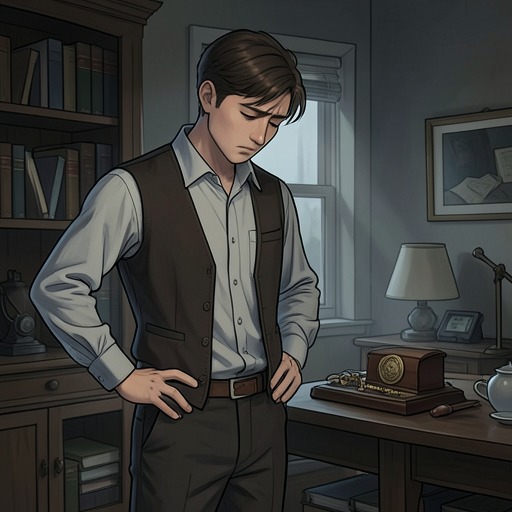
After further losses, Rié begins to understand how little Yuto’s quietness tells her about the depth of his grief. At a flower field, she watches him keep an eye on Hana while standing apart in a gray hoodie, hands pushed into its pockets. He has lost Ryo, his grandfather, and the man he regarded as his father. Rié recognizes that she, too, has been carrying grief without expressing it, and suspects that Yuto is doing the same as he tends the goldfish, watches over his little sister, and reads. She wishes the father who died were there to advise Yuto, even as she knows the boy’s attachment to him was particularly strong because Yuto was old enough to know him as a father.
Yuto’s care for others is not merely an inward feeling. Seeing his grandmother look at an aquarium in the shed, he proposes goldfish and offers to look after them. Rié is moved by this small act of consideration, which recalls her late husband’s description of Yuto as thoughtful. The detail makes their relationship visible through action: Yuto notices another person’s sadness and finds a practical way to respond, even when he does not readily explain his own.
Their communication nevertheless remains uneven. Rié can tell that Yuto’s turned back is a rebuke for her failure to explain why she has avoided dealing with his second father’s death, but she is afraid that raising the subject will hurt him further. At another spring visit to the trees in Burial Mound Park, Yuto recalls that he and his father used to compare their trees’ blossoms. His tree once lost to his father’s; the following year it won, and Yuto had wanted to tell his father at the grave. This year Rié has not brought the family to see the flowers. Yuto’s restrained reminder that the death anniversary has passed again makes clear that his grief has a calendar and rituals of its own, even while his mother has struggled to face them.
Reading, writing, and a changing understanding
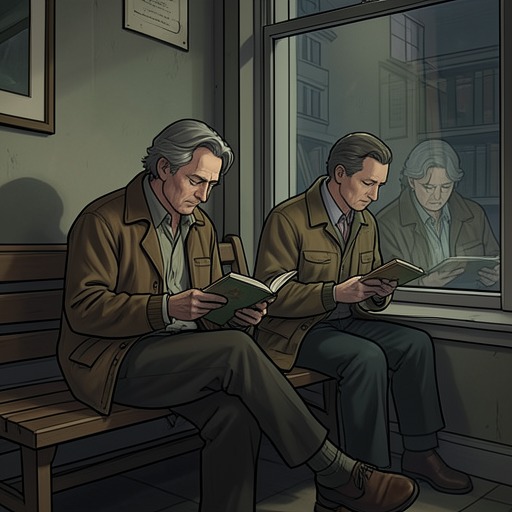
Yuto’s books give Rié a route toward feelings he has not stated directly. After he recommends Ryunosuke Akutagawa’s “Asakusa Park,” she reads it despite finding its surreal images difficult to understand. The story follows a boy separated from his father in Tokyo; the boy mistakes a masked stranger for his father, and the stranger eventually becomes his father. Rié cannot settle on the story’s overall meaning, but cries when she imagines Yuto reading it. She wonders whether he had sensed something about his own father before she disclosed the truth. More important, she realizes that his choice to share the story may have been an indirect effort to let her see his loneliness. Although they see each other every day, a book has helped her approach an interior life she had not been able to reach through ordinary conversation.
Yuto also turns the image of a cicada shell into a poem. In his explanation, he describes seeing an abandoned shell on a cherry tree in Burial Mound Park, listening to cicadas in the branches, and imagining how the shell might hear the voice of the body that had lived inside it for seven years. A crack in the shell reminds him of a violin’s soundboard, and the shell becomes a resonating instrument. Rié connects the tree to the one her husband had chosen, and imagines Yuto alone beneath it. The poem does not explicitly mention the deaths of his brother or father, and Rié cannot be certain whether its scene was experienced as described or partly imagined. What she can recognize is that Yuto has found, without her instruction, a way to use literature to endure life’s ordeals.
In their later conversation about why his father had been kind to him, Yuto offers his own interpretation: his father did for him what he had wanted his own father to do for him. Rié agrees, but adds that he was also kind because he cared about Yuto. The exchange allows inherited hurt and personal affection to coexist rather than reducing the father’s care to a single explanation. Across the relationship, Yuto’s questions and creative work make him an active interpreter of his family’s history, while Rié’s growing willingness to listen lets her respond to the person he is, not only to the child she fears she might hurt. Their bond is not restored by resolving every mystery; it deepens through the effort to face loss and uncertainty together.