Rie agreed to let Yuto keep the Taniguchi surname
A ManRié’s promise that Yuto may keep the Taniguchi surname turns a legal change into a conversation about grief, family memory, and a child’s need for continuity. As Rié prepares to return to Takemoto, the name she had before her second marriage, Yuto makes clear that he does not experience the change as a simple correction of records: to him, losing Taniguchi risks losing his father all over again.
The family history held in a surname
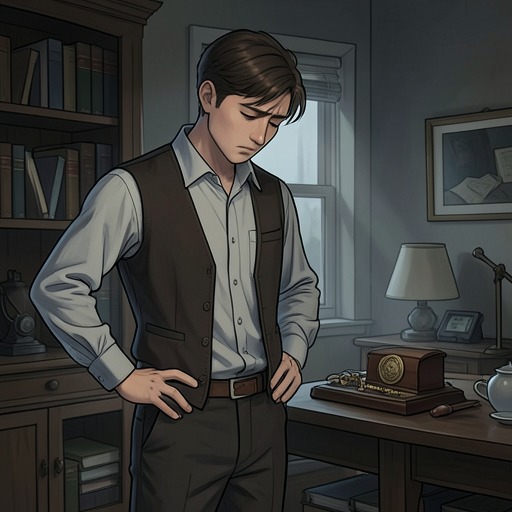
Yuto asks to retain the name after Rié has announced that she will switch back to Takemoto. His quietness had concealed how much the decision troubled him. He scratches his head, brushes his hands over his face, bites his lip, and struggles to find the words before asking whether they can stay Taniguchi. Rié recognizes that his earlier apparent indifference was not acceptance; she had told him about her decision without explaining it and had failed to notice what his silence contained.
His objection is rooted in the sequence of names that has marked changes in the family. At birth, he was a Yoneda; after Rié’s divorce, he became a Takemoto; when he began elementary school, he became a Taniguchi. By middle school, classmates and students older and younger than him know him as Taniguchi. Returning to Takemoto would mean repeatedly correcting people, but the difficulty is more than practical: he associates that surname with his maternal grandparents, not with the life he has lived among his friends. Rié’s familiarity with Takemoto does not make it feel like his own.
The possibility that Rié might marry again makes the prospect of another name change feel even less bearable. Yuto jokes with an exaggerated, fed-up smile that he does not want a last name at all if it is going to keep changing. The joke gives a visible shape to his frustration, but beneath it is a deeper objection: his identity seems subject to decisions made by adults, while the names that organize his life keep shifting.
A name as a bond with his father
Yuto connects the surname directly to the father he remembers. He asks whether Rié has already forgotten his father, then challenges her about the ashes that have remained in an urn without a grave being made. He also notices that she hardly talks about him anymore. Rié has no ready answer. The question turns her plan to resume Takemoto into something Yuto fears may accompany a broader erasure of his father from the family’s present.
He asks Rié to let him remain Yuto Taniguchi when she changes back to Takemoto. His concern is that his father’s family already turned away from him; if Yuto also loses the name, the family may forget him too. The surname thus carries a responsibility that Rié had not fully understood: for Yuto, keeping Taniguchi is one way to refuse the idea that his father can be discarded along with the legal identity that has come under scrutiny.
When Rié asks what sort of person Yuto thought his father was, the exchange opens onto a more complicated grief. Yuto breaks down crying, and Rié strokes his back, her own eyes filling with tears. He explains that ceasing to be Taniguchi would make his father feel no longer like his father. In the family arrangement he fears, his first father would become only an “old dad,” his second father only the husband from Rié’s second marriage, and Hana would have a different father from his. The fear is not simply that he will lose a surname; it is that the family’s relationships will be relabeled until they no longer feel intact.
Rié’s answer and its limits
Rié tells Yuto that he can keep Taniguchi. She explains that events have occurred and that, for legal reasons, she had to return to Takemoto, and she apologizes for not having been clear. Her promise separates Yuto’s choice of surname from her own legal status: she can resume her maiden name without requiring him to relinquish the name he has lived under and associates with his father.
The answer does not resolve the larger uncertainty. Rié recognizes that she must tell Yuto what has happened sooner rather than later, even though she had hoped to wait until the truth became clear. She does not know how he will react when he learns about his beloved father’s lies. The agreement therefore offers immediate reassurance while exposing the limits of what Rié can yet explain: she can affirm Yuto’s attachment, but she cannot make the history behind it simple or complete.
The conversation’s turn
The exchange moves from a seemingly administrative change of surname to an intimate disclosure of what the change means to a child. Yuto’s appeal makes Rié see that she has mistaken silence for understanding; his tears make visible the grief concealed inside his argument about names. Her promise responds to that grief without pretending that the legal complications or the truth about his father have disappeared.
Yuto later explains that he had already sensed Rié was hiding something. Her recent outing with Kido and furtive telephone conversations had led him to suspect she might marry for a third time. That suspicion shows how the uncertainty around the surname has widened in his imagination: each change threatens another rearrangement of who belongs to whom. Rié’s promise to let him remain Taniguchi establishes one point of continuity, even as the conversation makes clear that the family story still needs to be told.