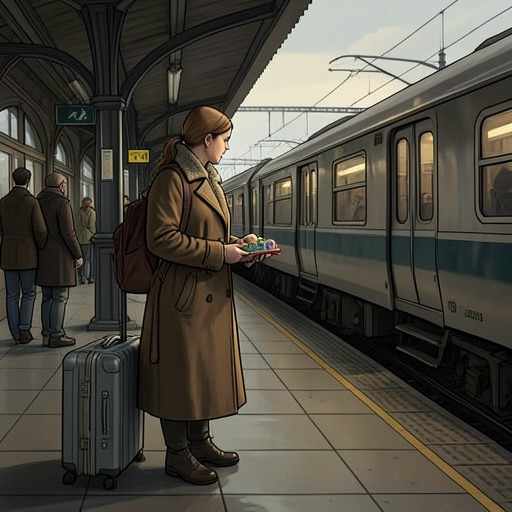
Rihei's divorce from her first husband
A ManRié’s divorce from her first husband turns the loss of their young son into a decisive break in family life: the couple are both stricken by grief, but cannot agree on how to live with it or with each other. The separation leaves Rié with custody of Yuto, yet its long, painful negotiations show that the end of the marriage is not a simple judgment of blame.
Background and the loss of Ryo
Rié married an assistant at an architecture firm at twenty-five, after leaving Town S for university in Kanagawa Prefecture and finding steady work. The couple had two sons, Yuto and Ryo. At two, Ryo was diagnosed with a brain tumor. His parents sought another hospital, but the diagnosis was unchanged; he died four months later, only seven months after the first hospital visit. Three of those months had been spent enduring treatment that proved pointless.
The medical decisions became inseparable from the parents’ grief. Rié and her husband fought over Ryo’s treatment, and she could not put aside the hurt she felt in the process. Both were overcome with remorse, but their sorrow did not draw them back together: her husband wanted the family to carry on, while Rié rejected that future.
The decision to separate
Rié’s refusal was not a claim that her husband had caused Ryo’s death. She agonized over the belief that she herself was at fault. What she could not accept was sharing the rest of her life with someone like her husband. The distinction matters: the marriage ended not through a settled verdict about responsibility for the child’s death, but because the crisis exposed an incompatibility Rié could not overcome.
Her husband insisted that they move forward as a family, but she was firm in wanting a divorce. In the earlier account of their separation, his insistence that they forge onward met with Rié’s silent refusal. The couple’s different responses to the same loss made reconciliation impossible even as both remained burdened by remorse.
Mediation and custody
Kido, acting as Rié’s lawyer, sympathized with her but explained that the reason she gave would not, on its own, constitute conclusive legal grounds for divorce. He also felt for her husband. Seeking a doctor’s perspective from his brother-in-law, Kido heard that the decision facing a layperson had been difficult, the doctor’s explanation flawed, and Rié’s anger hard to understand. Kido nevertheless took the case because he sensed in Rié a complex but pure humanity reaching toward a deeper compassion in him.
When Kido met the husband, the man spoke at length about his own suffering. He called Rié stupid and mad for assigning responsibility to him, appealed to Kido as a fellow rational person, wept over the loss of his child, declared his love for Rié, and asked the lawyer to persuade her to return. He did not seem like a bad person, but Kido saw how his self-importance had wounded Rié, prolonged the young child’s agony during the little time remaining, and now threatened to ruin the husband’s own life.
The mediation lasted about a year, with the account elsewhere specifying that it took eleven months to reach agreement. Kido let the husband voice his complaints while trying to make clear that Rié’s love would not return. The man began treating Kido almost reverently, repeating the lawyer’s explanations in his own words and taking comfort in the feeling that he understood them. His effort to establish himself as respectable struck Kido as desperate.
After ten months, the husband grew impatient with the negotiations, though Kido noticed that he was in an unusually good mood. With some compunction, Kido hired a detective. He then showed the husband a photograph of him with a new woman and advised that the time had come to conclude the negotiations. The husband consented to the divorce with surprisingly little rancor and, crucially, agreed to give Rié custody of Yuto, a point on which he had previously refused to yield.
Aftermath and significance
The divorce secured Rié’s custody of her surviving son, but it did not undo the grief or the injuries sustained during the marriage’s final crisis. Rié’s in-laws, with whom she had previously been on good terms, sent her a bitter postcard denouncing her as inhuman. As the separation’s immediate aftermath was settling, Rié’s father died suddenly, and she returned with Yuto to her family home in Town S.
The divorce is therefore both a legal settlement and a rupture in the life that had followed Ryo’s death. The outcome gives Rié the custody she fought for, while resisting an easy division between a guilty husband and an innocent wife: Kido recognizes the husband’s grief and the difficulty of the medical decision, yet also witnesses the damage caused by his need to center his own suffering. Rié’s decision rests on a more intimate limit—she cannot imagine continuing her future with him.