Sunny Bar
A ManSunny is the Arakicho bar where Kido meets Misuzu during his search for Daisuké Taniguchi. Its intimate, music-filled interior frames a consequential exchange: Misuzu gives Kido three photographs of her former lover, images that offer a clearer likeness of Daisuké than the scant family photograph Kido had seen before—and confirm that he did not look like X.
Setting and Interior
Sunny occupies the second floor of a building crowded with small businesses. Its name appears in stylized yellow lettering suggestive of sunshine, an incongruous brightness for a bar that operates only at night. The sign’s name comes from a hit song by Bobby Hebb.
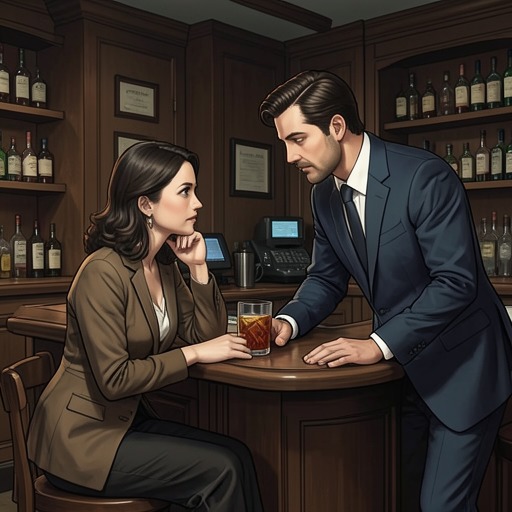
Inside, the softly lit room has a counter with six stools and two low tables with sofas. When Kido arrives shortly after eight, an old Ray Charles live album is playing. Soul-music memorabilia covers the walls, including a Marvin Gaye LP and a photograph of a child Stevie Wonder. The sofas are already occupied; at the counter, a regular drinks Guinness while practicing coin tricks. These details establish the bar as a compact, lived-in place rather than a neutral meeting room.
Kido’s Meeting with Misuzu
Kido comes to Sunny to meet Misuzu. She is behind the counter when he enters, studying him as if checking whether he is the person she expects. Their conversation concerns Daisuké, whom Misuzu had dated more than a decade earlier. She says that the man Kido is trying to identify does not resemble Daisuké and uses her hand, held above her head at roughly the height of Kido’s glass, to indicate that Daisuké had been somewhat taller than Kido.
Misuzu has brought a brown envelope of photographs in case they might help. She passes it to Kido and explains that the pictures date from the time they were together. The envelope contains three images, all more recent than the material Kyoichi Taniguchi had provided. Kyoichi’s photograph had been a family picture in which Daisuké appeared only as a tiny profile; he had no adult photographs, having fallen out with his brother, and had few childhood pictures from before digital cameras were ubiquitous.
Photographs and the Investigation
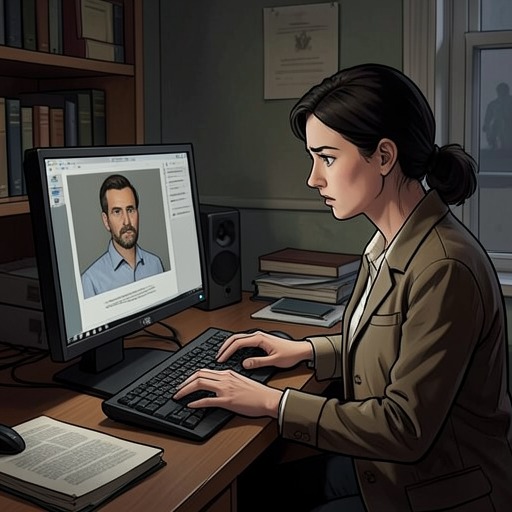
In Misuzu’s photographs, Daisuké faces the camera with a stiff, bashful expression: the look of someone shy about being photographed by a lover. The images make him more individually legible than the distant profile in Kyoichi’s family picture, while also emphasizing the intimacy of the circumstances in which they were taken. Kido recognizes that Daisuké does not resemble X, an important distinction in an investigation built around uncertain identity.
Misuzu allows Kido to keep the photographs if they prove useful. She has not been in contact with Daisuké for over a decade and does not know what has become of him. Sunny thus serves not only as the setting for their meeting but as the point where an old relationship supplies new evidence, even as Misuzu’s knowledge reaches its limit.