The longing for an ordinary life
A ManThe longing for an ordinary life is the central desire attributed to Makoto Hara in an account of his early boxing career and difficult childhood. It gives his wish to become a professional fighter an unexpected direction: he does not seek distinction or glory, but hopes to live as an unremarkable person. The phrase “normal person,” which Kido writes down and then studies until it loses its meaning, becomes a measure of how much suffering can lie behind an apparently modest ambition.
The Meaning of “Normal”
Hara’s longing is not presented as a general preference for an uncomplicated life. The account stresses that his experience makes the desire unusually intense and gives it a personal weight that familiar objections to the idea of “normal” cannot dismiss. Kido recognizes this distinction as he listens: for Hara, ordinariness is not a slogan or a cliché, but a life he has been denied the ease of imagining.
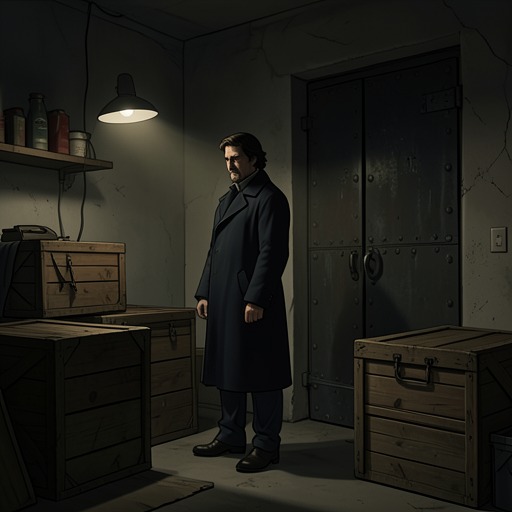
That difference shapes the scene’s reflective pause. Kido writes “normal person” in his notebook and looks at the words in silence. He accepts the force Hara has placed in them rather than treating normality as an empty ideal. Only after staring at the phrase until it seems to lose its meaning does he return to questioning Yanagisawa. The small act of writing turns Hara’s private desire into something Kido must reckon with, while the pause shows how difficult it is to hold the word “normal” steady against the life it is meant to describe.
A Childhood That Made Belonging Difficult
Yanagisawa recounts that, after an unspecified incident, Hara and his mother lived with his aunt and uncle. Their welcome did not last: the uncle eventually became fed up with the situation, while the aunt, caught between her younger sister and her husband, fell into a kind of depression. Hara and his mother had to leave. His mother later abandoned him, and he spent the period until graduating middle school in an orphanage.
Changing his name from Kobayashi to Hara did not immediately spare him from being identified. The first school he transferred to was close enough that people soon worked out who he was. His father had killed a boy not much older than Hara, and the victim’s friends hated Hara and blamed him for his father’s crime. At the middle school he attended after leaving the orphanage, no one knew who he was, but he had already become introverted and was bullied for that. The movement from being recognized and blamed to being unknown but isolated helps explain why an ordinary place among other people, rather than fame, could become so important to him.
Boxing, Recognition, and the Wish to Blend In
When Hara was about to make his professional debut, he asked Yanagisawa for advice about choosing a ring name. Yanagisawa encouraged him to pick something striking, reasoning that boxing needed fighters who could attract an audience. Hara disagreed: he wanted a conventional name that would let him blend in. The choice makes his ambition legible before he explains it. Even at the threshold of public recognition, he prefers not to stand apart.
Yanagisawa learned the reason later, after Hara became the rookie king of east Japan. Hara’s father’s crime had left him carrying the burden of being associated with a parent’s actions, and Yanagisawa tried to reassure him that a parent and child were not the same person: Hara had his own life to lead and could still pursue success. The encouragement affirmed Hara’s right to be judged as himself, but it did not settle what recognition meant to him.
Success as a Conflict, Not a Resolution
Yanagisawa recalls that Hara took up boxing because he was tired of being an outsider. Yet when the chance to shine arrived, Hara feared not only criticism over his past but also whether he deserved the glory. He felt indebted to the friend who had been killed. In this account, achievement cannot simply erase exclusion: the public honor of becoming a promising fighter presses against guilt, inherited stigma, and an obligation to someone who cannot share the victory.
The coach or club president wanted Hara to become champion, hoping that success could help him turn his life around and regain confidence. Hara, however, did not want to be a champion. He wanted to be an ordinary person and live a quiet, boring life that attracted no notice. He was also torn because he understood how hard the president was trying to help him. His wish is therefore not a rejection of care or effort; it is a conflict between the future others hope to secure for him and the modest life he most wants for himself.
A Desire That Resists the Triumph Narrative
The contrast between Hara’s rise in boxing and his desire for anonymity complicates a familiar story of adversity overcome through achievement. The source does not present the title of rookie king as a cure for his past, nor does it claim that Hara resolves the tension between recognition and belonging. Instead, Yanagisawa’s recollection places his success beside his wish to disappear into ordinary life, and beside his sense of obligation to his murdered friend.
Kido’s response makes that wish consequential beyond Hara’s own account. He records the words “normal person,” then pauses over them, refusing to let a ready-made argument about the limitations of normality flatten Hara’s particular experience. The scene gives the idea its emotional force through the gap between what others want Hara to become and what he says he wants: not a champion whose hardship becomes a public triumph, but someone allowed to live quietly without being defined by his father, his past, or the attention success brings.