Treatment and death of Ryo's brain tumor
A ManRyo’s brain tumor and death are the first devastating loss in Rié’s family and the event that permanently alters her relationship with her first husband. A promising initial diagnosis led the parents to pursue treatment that left Ryo suffering, yet could not save him. In its aftermath, Rié’s grief became inseparable from regret over the decisions made for him, while the death also shaped the questions of identity, memory, and family that she and Yuto would face later.
Diagnosis and the promise of recovery
As Ryo approached his second birthday, he became ill, and his bedwetting and intense thirst eventually led to an examination by the family’s usual pediatrician. The doctor referred him immediately to a larger hospital. An MRI showed a tumor in the basal ganglia, diagnosed as a typical germinoma; the symptoms were attributed to diabetes insipidus accompanying the condition. The doctors presented treatment as a route to full recovery, and the diagnosis’s hopeful implications became central to the parents’ decisions.
The diagnosis was frightening, but the prognosis initially offered a reason to hope: for germinoma, the stated five-year survival rate with radiation and chemotherapy was 98 percent. A surgical biopsy, ordinarily performed at this stage, was canceled after Rié’s husband objected. The doctor had explained that the procedure carried risk for such a young child and that, if the tumor was not a germinoma, the likeliest alternative would be a malignant growth in an inoperable location. Rié wanted the biopsy; her husband argued that exposing Ryo to danger merely to identify an untreatable illness made no sense. Unable to settle the argument about risk, Rié let herself be persuaded.
The certainty of the word “recovery” concealed how much remained unknown. Rié later regretted trusting it so completely, while recognizing that the doctor had sounded confident and had not fully explained the possibility of glioblastoma. The gap between the initial diagnosis and the later one makes the parents’ choice more than a simple contest between courage and error: they were deciding under uncertainty, but the burdens of that decision fell most directly on Ryo’s small body.
Treatment and death
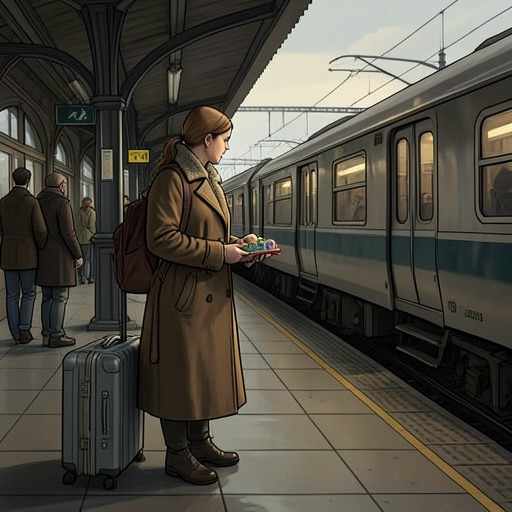
Rié left her bank job and stayed beside Ryo through three months in the hospital, bringing a folding cot to his ward. Her husband supported radiation and chemotherapy as the rational course, but Rié was the parent who remained at the bedside through the treatment. Ryo endured relentless vomiting and severe inflammation in his mouth; even swallowing saliva hurt enough to make him cry. As he grew thinner, Rié struggled to sleep or eat and lost a fifth of her own body weight over the same three months.
Despite that suffering, Rié continued to make Ryo undergo treatment because she still believed he could recover. She held and comforted him as he thrashed in misery. In her memory, the child’s gentle obedience became as vivid as his pain: with his hair gone and his face swollen, he would sit at the edge of the bed, hands in his lap, and answer the doctor’s encouragement with a dutiful “Yes, sir.” His father had taught him to reply that way. The scene would recur to Rié after Ryo’s death, making the treatment’s cost feel not only physical but bound up with the child’s trusting submission to adult authority.
After three months, the tumor had grown rather than shrunk. A new MRI led the doctor to identify it as glioblastoma and tell the parents that Ryo had less than a year to live. The doctor advised them to stay close to home and enjoy the time that remained with their son. Rié took Ryo to another hospital, but the diagnosis was the same. He died four months later: he had lived only seven months after the first hospital visit and had spent three of them undergoing treatment that could not help him.
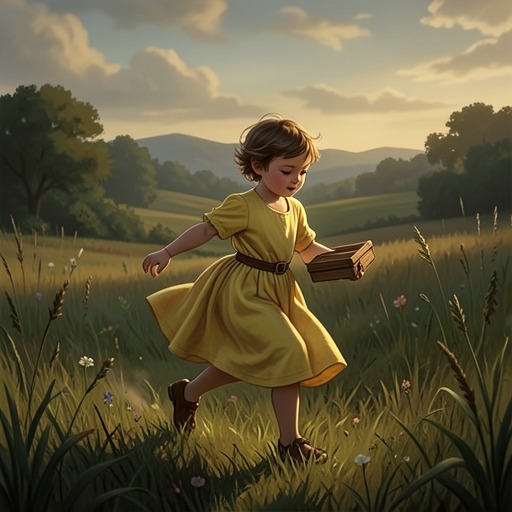
The discovery that recovery would not come brought Rié to a physical and emotional breaking point. She imagined the days that remained being used differently: giving Ryo favorite foods, taking him to the zoo he loved, indulging his wishes, and letting him experience the joy of living. Instead, she had helped make him endure a punishing treatment because she believed it would save him. When that belief collapsed, she felt unable to breathe; her body swung between heat and cold, and she could do nothing but cry. She later understood the frenzy of that moment as an attempt to lose all feeling in the face of his death.
Grief, guilt, and the parents’ separation
Both parents were overcome by remorse, but they responded to the loss differently. Rié’s husband urged her and Yuto to move forward as a family. Rié refused—not because she believed that he alone had caused Ryo’s death, but because she could not bear to build a future with him after what had happened. She also turned blame on herself, tormented by the thought that she had helped subject Ryo to pointless suffering. Grief therefore fractured the marriage without resolving into a verdict on either parent.
Their disagreement over Ryo’s treatment had begun before the diagnosis was certain and continued to haunt Rié after his death. Her husband had opposed the biopsy on the grounds that it could expose Ryo to danger without changing the outcome if the tumor proved incurable; she had wanted to know what they were facing. Later, the treatment itself became another source of regret. The sequence left Rié with no clean way to separate what the adults had chosen from what they had hoped, or to imagine that a different decision would certainly have saved him.
Ryo’s death was Rié’s first profound sorrow. Her divorce from her first husband followed a long and bitter process, including disputes over custody of Yuto; she eventually secured custody. The grief did not end with the separation. Soon afterward, Rié’s father died, and, years later, her young husband also died. Thinking of those losses together, she understood that Ryo had been the first of three beloved family members taken from her one after another. The death thus stands at the beginning of a wider history of bereavement, not as an isolated episode that time simply closes.
Yuto, memory, and the meaning of death
For Yuto, Ryo’s death came when he was too young to grasp fully what death meant. As he grew older, he had to form his own understanding of the brother he had lost, even as he endured the later deaths of his grandfather and the man he had regarded as his father. Rié eventually recognized that he, like her, had been carrying grief largely without expressing it. His quiet care for the family—including looking after goldfish and watching over his little sister—became part of the way he lived with those losses.
The family names he had borne made the history of loss visible in everyday life. Yuto told Rié he did not want to give up the Taniguchi surname: he had first been a Yoneda, then a Takemoto after her divorce, and later a Taniguchi. At school, friends and older and younger students knew him by the latter name, while returning to Takemoto would mean repeatedly correcting people. He also connected the name to the father he had loved, worrying that if Rié reverted to Takemoto, the family might forget him. His request was not merely about convenience; it joined his own sense of belonging to his wish to preserve the memory of a parent.
Rié’s later reflections on Ryo’s death sharpened into a question about whose death a person can die. She had genuinely wished to die in her child’s place, but came to recognize that she could not: Ryo alone could die his own death, and the death awaiting her would be her own. That recognition sits beside the family’s later uncertainty over the identity of the man recorded as her husband, extending the novel’s concern with names and lives that can be exchanged while death remains individual. Ryo’s death is therefore both a particular childhood tragedy and the first experience through which Rié confronts the irreducible separateness of another person’s life.
The loss also becomes legible between mother and son through what Yuto reads and writes. Rié discovered that he had been moved by a story about a boy separated from his father even before she told him the truth about the man he had thought was his father. She could not determine whether the story had been coincidence or whether Yuto had intuited something, but imagining his response made her recognize how much pain he had kept to himself. Later, Yuto described imagining the voice of a cicada that had emerged from its shell after seven years underground. He did not mention Ryo or his father, yet Rié understood that literature gave him a way to approach loss that she could not have prescribed for him. Ryo’s death thus continues to shape the family not only through sorrow, but through the different means by which mother and son learn to witness one another’s grief.