Two suicide attempts of Makoto Hara
A ManMakoto Hara’s two suicide attempts define a decisive break in his life and reframe the identity he later assumed. The second attempt, disclosed after Hara’s death, reveals to Kido that the man he had pursued as a possible threat had also been struggling to find a reason to live; Kido’s eventual recognition of that struggle comes not through a meeting, but through an imagined one.
The Attempts and Their Disclosure
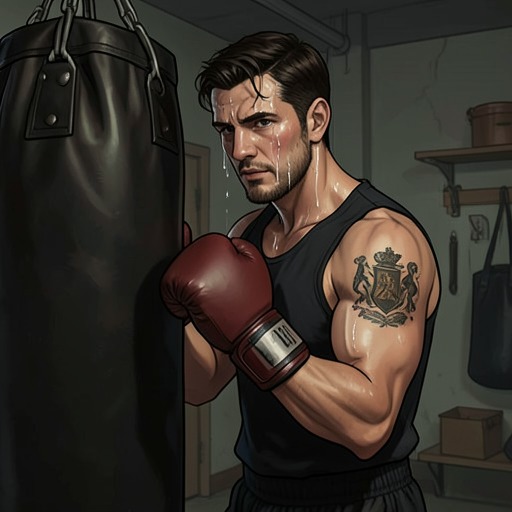
Hara had told Daisuké that he had made two suicide attempts. The information emerges in a conversation in which Daisuké recalls meeting Hara under the name Yoshihiko Sonézaki. Asked whether Hara had spoken about his earlier life, Daisuké confirms that Hara had described his career as a boxer and the two attempts. The exchange is brief, but the number changes what Kido knows: he had understood Hara’s fall from an apartment as a suicide attempt, yet had never suspected there had been another.
The first attempt had already been difficult for Kido to name. He had only seemed to accept that Hara’s fall from the apartment was intentional, and that recognition had not led him to imagine a second attempt. The additional disclosure makes Hara’s despair less like a single episode that can be contained in the past and more like a crisis that returned. The account does not specify when the second attempt occurred or describe its circumstances; its force lies in the fact that Hara had told Daisuké, while Kido learns of it only later.
A Life Rebegun
In the rain at the logging site, Kido imagines Hara gripping a chainsaw through the working days of his later life. He considers the long growth of the cryptomeria trees: the fifty years it took for one to mature, the generations who planted the trees Hara cut, and those who would eventually harvest the trees Hara planted. Against that vast span, Kido imagines that Hara’s immediate thoughts were more ordinary: finishing work, returning to Rié and the children, and lying exhausted beside them after putting them to bed.
That domestic picture does not cancel Hara’s earlier suffering. Kido thinks that Hara’s past ordeals may have made the happiness of those evenings more immediate and powerful. The second suicide attempt becomes a hinge in this understanding: Hara began his life anew after it, not as a return to the person he had been, but as an effort to stay alive. The account offers no claim that the new life erased the old one. Instead, the family and work Kido imagines become evidence of a happiness formed in the presence of everything Hara had endured.
Kido’s Belated Recognition
The disclosure also alters Kido’s recollection of his investigation. For more than a year after taking Rié’s case, he had worried that Hara might have killed Daisuké. Watching Daisuké answer calmly about Hara’s life, Kido is confronted with the distance between his suspicion and the pain Hara had privately described. The revelation does not retroactively make that fear irrational; it gives Kido a second, previously hidden account of the man at the center of it.
Later, absorbed in thought at the logging site, Kido loses track of time in the rain. When he opens his eyes, he briefly mistakes a logger walking toward him for Hara. He wishes he could tell Hara that he understands: Hara had begun again after his second attempt because he wanted to be alive. The recognition arrives through a moment of mistaken identity, and Kido cannot deliver the words to the person they concern.
An Unfinished Meeting
Kido imagines what he would have said. In that inward scene, Hara stops, turns toward him, and smiles softly as Kido says that he had been looking everywhere and had been worried. The imagined encounter gives shape to a meeting that never happened: Kido feels that he has finally come face-to-face with the man he had been chasing from behind, then realizes how much he wishes they could have met.
The attempts therefore matter both as events in Hara’s life and as withheld knowledge that changes Kido’s reading of him. What Kido had pursued as a question of danger and identity becomes, belatedly, a recognition of Hara’s struggle to continue living. Yet understanding cannot restore the chance to speak. The rain-soaked vision offers Kido a form of imagined contact, while leaving the real meeting—and the words he wanted to say—permanently out of reach.