X (Second husband of Rie)
A ManX, Rié’s second husband, is the stranger who lives as Daisuké Taniguchi and builds a family with Rié under that borrowed identity. His life holds together an unsettling contradiction: he is remembered through intimate acts of care and the drawings he left behind, yet the man whose name he used is, to his own brother, unmistakably someone else. His death in a logging accident comes before the truth is established, so the revelation forces Rié to confront not only who her husband was, but how much of their shared life remains real when its legal foundation was false.
Identity and Introduction
For years, X is known to Rié and their children as Daisuké Taniguchi. The name is not an invention attached to an imaginary person: the real Daisuké exists, and government records identify Rié’s deceased husband as him. Kido eventually distinguishes the two, deciding to call Rié’s husband X: a different man who impersonated Daisuké Taniguchi. That choice of label marks the gap between the identity X presented to the world and the person the investigation has yet to identify.
The deception reaches far beyond an assumed name in conversation. X’s identity was accepted when officials updated the family register after his marriage notification and again after his death notification. He drove with a license, received medical care using a health insurance card, and made pension contributions. The public record consistently certified him as Daisuké Taniguchi, and his account of growing up in Gunma did not appear to contain discrepancies. The conundrum for Kido is therefore not simply that someone concealed his name, but that a real, documented man lived inside another real person’s identity.
Life with Rié and the Children
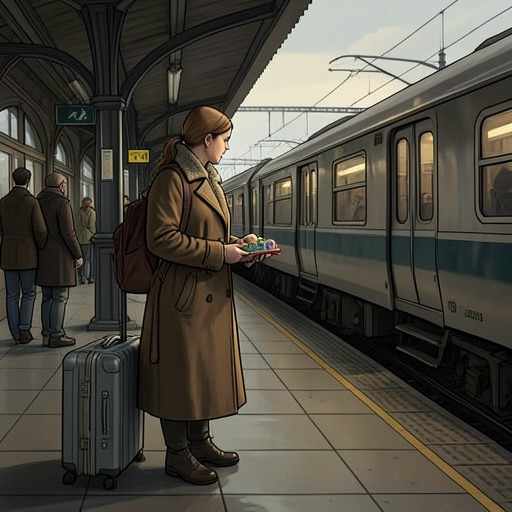
X marries Rié and moves into her family home. Their household includes Yuto, who is twelve when X dies, and their daughter Hana, then three. X thus occupies an everyday family role as well as a legal one: he is the husband whose sudden death leaves Rié with two children and a life organized around a person whose name was not his own.
That ordinary intimacy is what makes the later recognition so disturbing. When Kyoichi Taniguchi comes to see Rié, he looks through an album X assembled from printouts of his digital photographs. Page after page shows the man who claimed to be Daisuké alongside Rié, Yuto, and Hana. The album documents a family life, but it cannot establish that the man in the photographs was who he said he was.
The Exposure of the Impersonation
The decisive recognition comes at the album’s last page. There, Kyoichi sees an old photograph of himself with his parents at the family home. He remembers why Daisuké is absent from it: Daisuké was the one taking the photograph. The image gives Kyoichi a direct point of comparison between the brother he remembers and the man Rié married.
Kyoichi first struggles to take in what he has seen, then tells Rié that the man in her house was not his brother and that somebody had impersonated Daisuké. His certainty is not a response to a changed appearance or the passage of time; he says the man is someone else entirely. Rié, who had asked whether her husband simply looked different from when he was young, is left asking who he was. Kyoichi has no answer, and suggests that they go to the police because the case seems like a scam. The revelation establishes the impersonation, but does not by itself disclose X’s original name or the reasons behind the deception.
Death and the Unfinished Past
X’s risky work in the mountains had led him and Rié to discuss the possibility that something might happen to him. He had been explicit about one consequence: even if he died, Rié was not to contact his family in Gunma or associate with them. She honored that request until the first anniversary of his death. After consulting her mother and friends, she wrote to his family, principally to ask what should be done about his grave; she still had nowhere to entomb his ashes.
The letter opens the route by which his claimed identity is questioned. When Rié receives the news of the mountain accident, she hurries to the hospital, but X is already dead. His prior instruction leaves his relationship to the Taniguchi family closed off at the very moment when their knowledge might have helped clarify who he was. Rié later regrets not pressing him to make amends with them. His death, too abrupt for the unresolved matters between them to be repaired, makes the secrecy feel like one more unfinished part of their life together.
Objects, Memory, and Significance
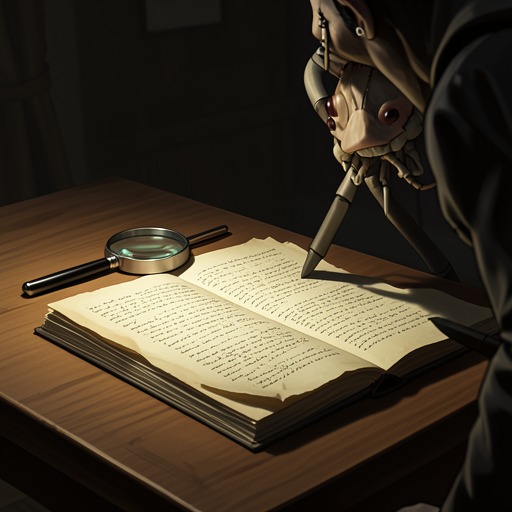
When Kido visits Rié, she is gathering X’s belongings and tells him more about their first meeting and what X was like. Kido examines the pages of X’s sketchbook collection and photographs the drawings, along with other personal effects, for possible use in the investigation. The images make no legal case by themselves, but they offer another kind of evidence: a record of what X chose to draw and leave behind.
Rié recognizes the person she loved in those drawings. She agrees with Kido’s impression of a boy who became an adult without growing up, while insisting that the work is not polished enough to show off. To her, its importance lies elsewhere: the sketches are a mirror of X’s heart and mind, and express someone pure, serious, and giving, not the sort of person she thought capable of lying or deceiving anyone. That judgment sits in painful contrast with the impersonation, without resolving it. X remains at once the devoted family presence preserved in photographs and drawings and the stranger whose real identity his wife never knew.
The character’s central significance lies in that unresolved division between lived intimacy and public identity. X’s marriage and parenthood are not erased by the exposure of his borrowed name, but neither can the deception be treated as incidental: it shaped the legal records of his family and determined which relatives Rié was permitted to approach after his death. The surviving album and sketches preserve the details of a shared life; Kyoichi’s recognition shows that those details cannot make X Daisuké Taniguchi. The story leaves the emotional reality of the marriage in tension with the false identity through which it was formed.