Yuto
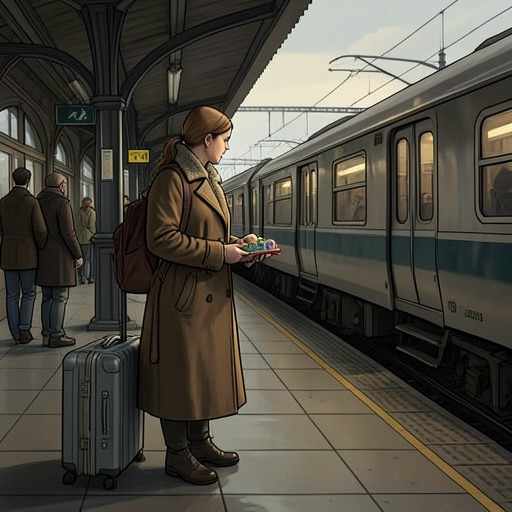
A ManYuto is Rié’s elder son, and his childhood is marked by both repeated bereavement and repeated changes of family name. He grows up thinking of Makoto Hara as his father; when he eventually learns that Hara had lived under another man’s identity, the revelation unsettles the name Yuto has carried as well as his understanding of the care he received. Yet Yuto does not reduce that care to the deception behind it. His quiet, persistent attachment to his father gives the story one of its clearest accounts of how love can survive the exposure of a false identity.
Identity and Background
Rié names her first son Yuto while married to her first husband, and his earliest family name is Yoneda. After Rié’s divorce, he becomes a Takemoto; after her second marriage, he is known as a Taniguchi. The sequence is not abstract to him: each name belongs to a different stage of the family life he has inhabited, and by middle school Taniguchi is the name his friends and the other students at school know.
Yuto loses his younger brother, Ryo, when Ryo dies of a brain tumor at two years old. The adults’ grief and the later deaths in the family give Yuto a history of loss that he does not readily put into words. As Rié sees it, he is still a boy trying to hold himself together while missing his brother, his grandfather, and the man he has always called Dad. The story presents his reserve not as an absence of feeling but as one way he carries it.
Grief and Family Life
When Rié worries over a headache or a cold, Yuto reminds her that he is not Ryo: his brother was his brother, and he is himself. The distinction is a firm, compassionate attempt to stop her fear for one child from becoming fear that he will repeat another child’s fate. Rié acknowledges that her anxiety will not simply disappear, and Yuto’s response shows that he can understand its origins without accepting that it defines him.
Yuto’s attachment to his second father becomes especially visible after Hara’s death. He tells Rié that he is no longer sad in the same way, partly because his grandmother has been kind to him, but that he still comes home with questions he wants to ask his father and misses him. The admission breaks through his restraint: he begins to cry, and Rié strokes his back as she cries with him. His grief is not resolved by the passage of time; it changes form, from the immediate pain of loss to the continuing absence of someone he still wants to consult.
His relationship with his grandmother is also a source of comfort and reciprocal care. He respects her, listens to her in ways he may not listen to Rié, and shares in her attention after the family’s misfortunes. When they discover an old aquarium in the shed, Yuto cleans it with a garden hose, researches the gravel, air pumps, and other supplies online, buys them with his grandmother, and installs the aquarium himself. He keeps caring for the goldfish even after his second father dies. The practical work creates a bond between grandmother and grandson that Rié is glad to find already flourishing without her having to mediate it.
Names and the Demand to Remember
When Rié announces that she intends to return to her maiden name, Yuto initially seems indifferent, but his silence conceals a decision: he does not want to change his own name again. He explains that the family has already been Yoneda, Takemoto, and Taniguchi, and that everyone at school now knows him as Taniguchi. Having to correct people repeatedly and become Takemoto again would feel wrong to him; it would be his mother’s familiar name, but to him it belongs to his grandparents.
His objection is also an act of loyalty to the father he has lost. Yuto asks Rié whether she will let him remain Yuto Taniguchi when she changes her own name. His father’s family, he says, turned their backs on him; Yuto does not want the family that remains to forget him too. He connects the name to a more concrete unfinished obligation: his father’s ashes are still in an urn, and no grave has been made. By bringing up both the name and the unburied ashes, he forces Rié to face how grief and uncertainty have left her husband’s memory suspended.
At Burial Mound Park, Yuto again points out that another anniversary of his father’s death has passed without a grave. Rié recognizes that he will no longer accept a vague answer and tells him she has been keeping something from him. When she explains that the man he knew as his father was not truly Daisuké Taniguchi, Yuto asks what his own name, Yuto Taniguchi, means. Rié tells him that Taniguchi was a name his father used for a time—the name of someone they do not know. What had seemed to be a familiar family name is now bound to an identity they cannot claim as the original man’s.
Reading, Writing, and the Revelation
Yuto increasingly withdraws to read, choosing classic literature and returning especially often to Ryunosuke Akutagawa. Rié, who has never been much of a reader, is struck both by his appetite for books and by his refusal to explain at length what he finds in them. She tries to understand the Akutagawa story “Asakusa Park” after Yuto tells her about it. Its boy loses his father in Tokyo, searches for him, mistakes a masked stranger for him, and eventually finds that the stranger has become his father. Rié cannot settle the story’s meaning, but its image of a boy crying for a father moves her to tears as she imagines Yuto identifying with the boy’s loneliness. She wonders whether he read it before the disclosure by coincidence or whether he sensed something he could not yet name.
His literary interest becomes a form of expression that the family does not immediately see. Yuto writes steadily in a notebook, but Rié resists looking through it because she does not want to damage his trust. She discovers instead that a haiku he submitted for summer homework won first prize in the middle-school category of a national newspaper competition. Yuto has said nothing about the award; Rié finds the commemorative plaque in a corner of his room, beside the poem: “In his cast-off shell / How rich the singing echoes”. The quiet achievement reveals a voice and a private inner life that his reticence had kept from her.
Three days after Rié meets with Kido, she asks Yuto to talk after his bath and gives him the papers about the man he called Dad. Yuto takes them to his room and remains there for about an hour. When he returns, he hands the pages back brusquely and says he has read them. His first response is not a demand for further explanation but an effort to make sense of Hara’s kindness: he thinks his father did for him what he had wanted his own father to do for him. Rié agrees, while adding that Hara also acted out of love for Yuto himself. Yuto’s interpretation recognizes the inheritance of pain behind Hara’s tenderness without allowing that inheritance to displace their relationship.
Change and Narrative Significance
After learning the truth, Yuto asks whether they will tell Hana. When Rié asks what he thinks, he judges that his little sister would not understand it yet. The exchange shows him taking part in decisions about how the family will live with the revelation, rather than remaining only its recipient. It also preserves a distinction between the children’s different ages and relationships to the past: Yuto can begin to absorb the truth, while Hana is still too young to make sense of it.
Yuto’s arc turns on the gap between a name’s history and the lived bonds attached to it. He wants to keep Taniguchi because it is the name by which his community knows him and the name that, for him, connects his father to the family. Learning that the name was borrowed does not erase the years in which Hara cared for him. Nor does it undo the fact that Yuto misses him and still wants to ask him questions. Through Yuto, the story holds identity and affection in tension: a family name can be unsettled by the truth, while the love carried under it remains real.