
Hemingway’s Paris Apprenticeship
A Moveable FeastThis flow traces how Ernest Hemingway turns an impoverished Paris life into a sustained apprenticeship in observation, work, and artistic independence.
increasing Bearing strength in each event
 decreasing
Bearing strength in each eventdecreasingArrival in the Quarter

Arrival in the Quarter
A Poor Beginning
Ernest Hemingway makes a home with Hadley Richardson in modest rooms on Rue Cardinal Lemoine. Limited money sharpens his attention to streets, cafés, weather, and the ordinary routines around him.
A Working City
Paris is not merely a setting: it supplies the conditions and material for a young writer’s daily practice.
Learning the Streets

Learning the Streets
Routes and Habits
Ernest Hemingway learns which walks lead to the river, bookstalls, gardens, and inexpensive cafés. The city becomes legible through repeated movement rather than through a visitor’s itinerary.
Attention as Practice
This familiarity gives his writing a store of concrete detail and lets him work in public while remaining inwardly absorbed.
A Café Workroom
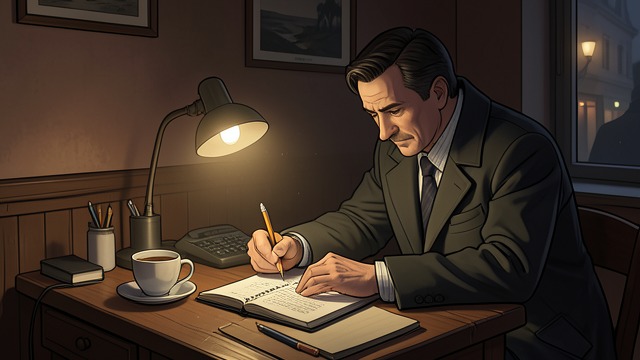
A Café Workroom
Making a Place to Work
Ernest Hemingway uses warm cafés as substitutes for a private, well-equipped study. A notebook, sharpened pencil, drink, and table are enough to begin.
Work and the World
The public room supplies human detail without requiring him to join every conversation. His creative life depends on both disciplined solitude and close observation.
A Wider Apprenticeship
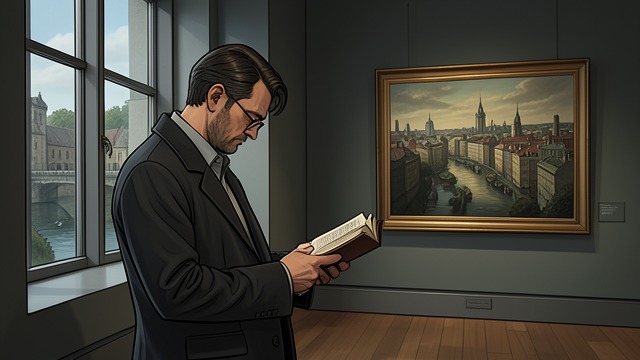
A Wider Apprenticeship
Reading and Looking
Ernest Hemingway reads through Sylvia Beach’s lending library and studies paintings at the Musée du Luxembourg. Books and pictures offer models of construction, clarity, and form.
Learning Without Imitation
The encounter broadens his standards, but he must discover how those lessons apply to his own prose. Paris makes artistic education available even when money is scarce.
The Portable Feast
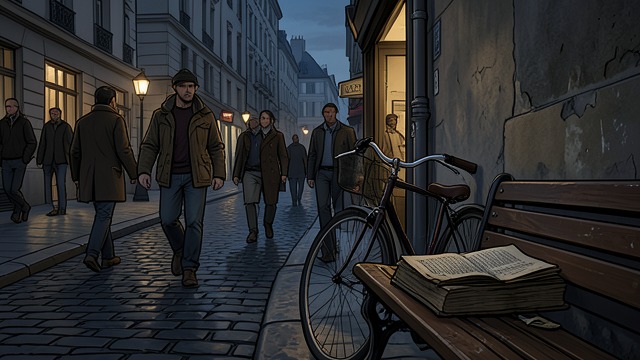
The Portable Feast
A City Carried Away
Ernest Hemingway remembers Paris as a place whose meaning travels with the people who have lived there. Its streets and seasons remain available through memory after circumstances change.
A Qualified Celebration
The final recollection honors happiness and artistic possibility without pretending they lasted unchanged. Paris becomes a durable inner resource rather than a promise of permanent ease.
early in Paris, 1921–1926
after settling near Place de la Contrescarpe
during the early years of his Paris writing
after Ernest Hemingway gives up journalism
in the book’s concluding recollection of Paris
