
From Betting to Bicycle Racing
A Moveable FeastThis flow follows Hemingway’s movement away from gambling and toward the spectacle and physical craft of bicycle racing.
increasing Bearing strength in each event
 decreasing
Bearing strength in each eventdecreasingAn Alternative Suggested
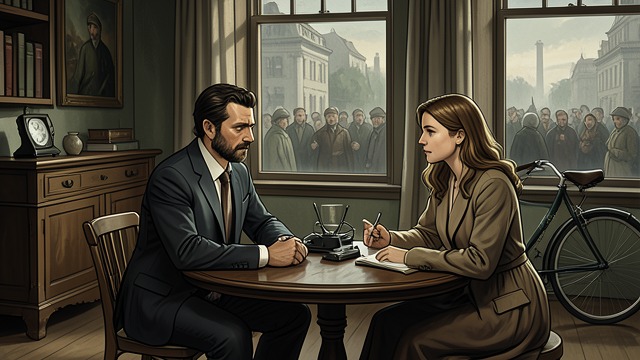
An Alternative Suggested
Mike Ward’s Advice
At lunch, Mike Ward tells Ernest Hemingway that bicycle racing offers more than a wager. He suggests watching the sport for its own sake rather than using it to seek a gambling thrill.
A Different Attention
Hemingway is interested but does not immediately make the change. The suggestion opens a new possibility without pretending that every old habit disappears at once.
A Sport Without a Bet
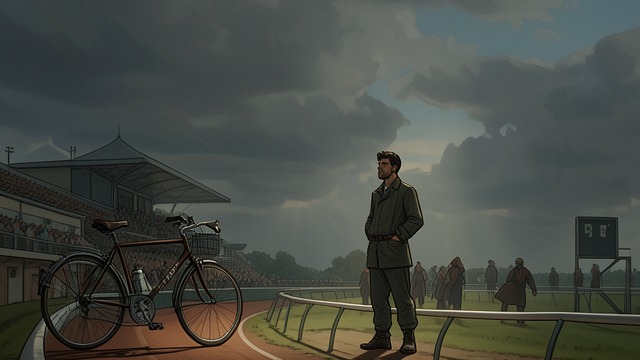
A Sport Without a Bet
Watching Rather Than Wagering
The appeal of bicycle racing rests on riders, tactics, speed, and danger. Hemingway imagines attending without needing money on the outcome.
Recovering the Event
The change would let the race itself, rather than its possible profit, command attention. It represents a return to sport as an experience rather than a scheme.
The Indoor Track
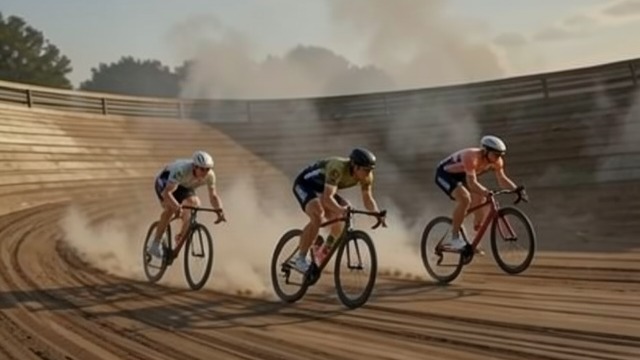
The Indoor Track
Speed in the Bowl
Hemingway recalls the smoky afternoon light, the high wooden banking, and the tires’ whir against the track. Riders climb and dive in close pursuit, each body integrated with a machine.
Tactics Made Visible
Sprints, match races, and long events turn patience and timing into physical drama. The velodrome gives him a complex subject that cannot be reduced to odds.
The Demi-Fond Duel
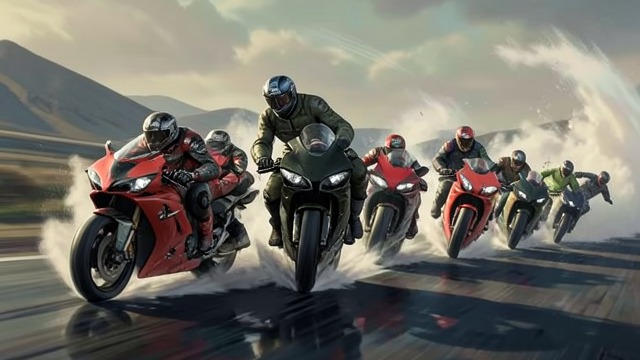
The Demi-Fond Duel
Riding in the Slipstream
In demi-fond racing, a rider follows a motor-paced trainer to escape the worst of the air resistance. The motorcycles and racers move in a dangerous, tightly coordinated formation.
Breaking the Shelter
When a rider falls away from the pace, the wall of air strikes him. Hemingway remembers the event as a contest of endurance in which a small change can turn shelter into exposure.
The Unwritten Race
The Unwritten Race
A Subject That Resists
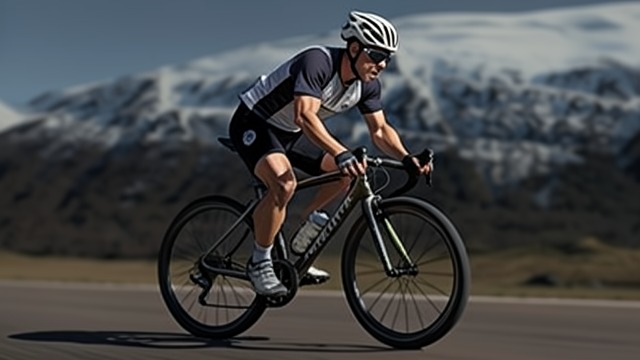
Ernest Hemingway lists many kinds of bicycle racing but admits he has never written a story as good as the races themselves. Their technical vocabulary and layered tactics make them difficult to capture.
Work Still Ahead
He imagines that the sport may yet become a subject for him. The unfinished ambition echoes his broader belief that a writer’s knowledge is not the same as a successful work.
at lunch after Hemingway quits horse racing
after Hemingway’s first conversations about cycling
during later visits to the Vélodrome d’Hiver
during a motor-paced race in Paris
in Hemingway’s later reflection on cycling
