Île de la Cité
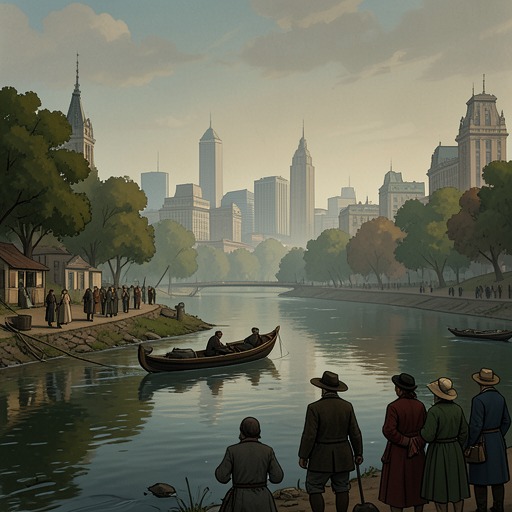
A Moveable FeastÎle de la Cité is part of the river landscape the narrator explores on foot: seen across the Seine from the quays, it gives shape to a route through central Paris and, at its downstream point, offers a small waterside park where fishing is practiced with skill and patience. The island is not simply scenery. Its bridges, banks, and changing currents make the river legible as a place of work, food, and everyday observation.
Setting and approaches
From the top of Rue Cardinal Lemoine, the shortest walk to the river runs steeply downhill. After crossing the busy traffic at the beginning of Boulevard Saint-Germain, the walker reaches a bleak, windy bank beside the Halle aux Vins, a tax-bonded wine warehouse whose severe exterior suggests a military depot or prison camp. The alternative is to turn left and follow the quays: along the length of Île Saint-Louis, Notre-Dame and Île de la Cité come into view across the water. This sequence makes the island part of a changing panorama, encountered through movement rather than as an isolated destination.
The park below Pont Neuf
At the head of Île de la Cité, below Pont Neuf and near the statue of Henri Quatre, the island narrows to a point likened to a ship’s sharp bow. A small park occupies the water’s edge beneath large, spreading chestnut trees. A stairway leads down to it, and the currents and backwaters of the Seine create productive fishing spots beneath the bridge. Because the best positions shift with the river’s height, the place is defined by changing water as much as by its fixed landmarks.
Fishing and river life
The narrator watches fishermen use long, jointed cane poles, fine leaders, light tackle, quill floats, and carefully baited stretches of water. They catch fish regularly, sometimes in excellent numbers; the small goujon are described as plump and sweet-fleshed, fried whole and eaten bones and all. They could be eaten at an open-air restaurant over the river at Bas Meudon, or closer by in a friture on Île Saint-Louis.
The men fishing between Île Saint-Louis and Place du Verte Galente are not the idle, unsuccessful figures imagined by travel writers. Many are pensioners or workers making use of a day or half-day off. The narrator sometimes buys wine, bread, and sausage, sits in the sun with a book, and watches them. Although the fishing interests him, he does not take it up: he lacks the tackle, would rather save money to fish in Spain, and cannot know when work or travel will call him away.
Place in the narrative
The island’s significance emerges through this attentive routine. Walking the quays helps the narrator think through work; watching people who understand what they are doing offers a counterpoint to the uncertainty of his own schedule. The river is neither an abstract landmark nor merely a picturesque view: its currents determine where people fish, what they bring home, and what can be eaten. Around Île de la Cité, the narrator’s urban wandering connects landscape to practical knowledge and makes ordinary river life part of his experience of Paris.