27 rue de Fleurus
A Moveable Feast27 rue de Fleurus is the Paris studio apartment of Gertrude Stein and a recurring place of warmth, looking, conversation, and literary exchange in Ernest Hemingway’s recollection. Its great paintings and generous hospitality made it a refuge from the cold and a formative vantage point on modern art; later, the intimacy of repeated visits gave way to practical collaboration and a strange parting.
Setting and Refuge
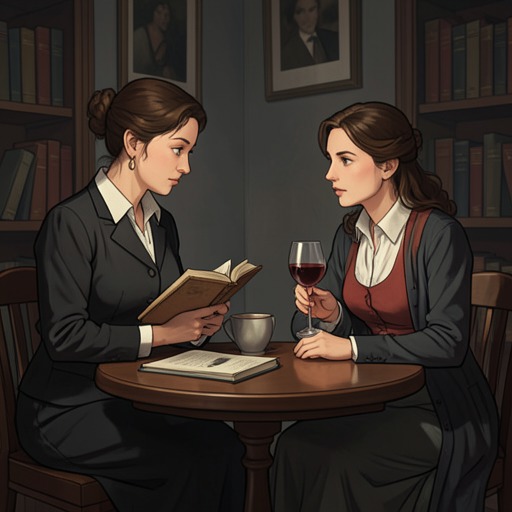
The apartment was remembered first as a striking interior. Hemingway and Hadley Richardson found a large studio filled with paintings, made comfortable by a big fireplace. Stein and her companion served food, tea, and fruit eaux-de-vie poured from cut-glass carafes into small glasses. The room’s warmth and hospitality mattered alongside its art: the studio felt like one of the finest rooms in a museum, but it was also a lived-in place where visitors were fed and welcomed.
That domestic welcome stood out against the cold, impoverished conditions of Hemingway’s Paris. In winter, the city’s streets turned wet and dark, and the cost and uncertainty of heating his top-floor room could make even buying fuel seem risky. Against that hardship, 27 rue de Fleurus offered warmth, food, pictures, and company. The contrast helps explain why the apartment became a regular destination rather than merely a place to view art.
First Visits and the Paintings
Hemingway and Hadley first called on Stein together. Stein’s companion attended to the food and drink, worked on needlepoint, and conversed with Hadley; she explained that she made a practice of talking to wives. Hemingway and Hadley felt that wives were tolerated, yet they liked Stein and her companion and were invited to return. Their impression of the visit combined social unease with pleasure in the paintings, cakes, and eau-de-vie. Stein and her companion treated them, Hemingway felt, like well-mannered and promising children, as though their being young and in love were something time would eventually correct.
The address also became a point in Hemingway’s regular walks. He went through the Jardin du Luxembourg to the Musée du Luxembourg to look at Cézanne, Manet, Monet, and other Impressionists. He was learning from Cézanne that simple, true sentences alone could not give stories the dimensions he wanted, though he could not yet explain what he was learning. If the museum’s light had gone, he would walk through the gardens and stop at Stein’s studio. The movement from looking at paintings to visiting their collector links the apartment to his attempt to understand how visual art might enlarge the possibilities of prose.
A Regular Meeting Place
Later, Stein invited Hemingway to come to the studio any time after five during winter. He accepted, and the visits became habitual: Stein offered him eau-de-vie, encouraged him to refill his glass, and talked while he looked at the pictures. The studio’s appeal lay in this combination of sustained looking and conversation. Stein discussed modern pictures and painters, often concentrating more on the painters as people than on their work, and she spoke about her own writing.
Hemingway saw the scale of that work in the many manuscript volumes Stein had produced, which her companion typed each day. Daily writing made Stein happy, but, as he came to know her better, he understood that continued production was not enough: publication and recognition were important to sustaining her happiness. At the time of their first acquaintance, this need had not yet become acute. Stein had published three stories that were intelligible to a broad readership, including “Melanctha,” which Hemingway considered very good; experimental work had appeared in book form and received favorable attention from critics who knew or had met her.
Conversation, Work, and Distance
The studio’s conversations reflected both its intimacy and its limits. When Hemingway returned from reporting trips for a Canadian newspaper and news services, Stein wanted the amusing details and the gallows humor. She wanted the gay side of events, not their painful or genuinely bad aspects. Hemingway supplied the comic stories and kept the other experiences to himself, writing about them alone. The apartment was therefore a place where he could recount one version of the world while reserving other material for his own work.
His visits also sat within a disciplined routine. After writing, he needed to read, exercise, and stop thinking about the work until the next day, so that he would not exhaust what he planned to continue. He describes leaving the work with something still in reserve, like a well that refills overnight. The walk to Stein’s studio could provide conversation and reading-room-like distraction without requiring him to keep turning over the unfinished writing. Its social warmth formed part of the larger rhythm of work, rest, and observation that shaped his life in Paris.
Collaboration and the Address in Memory
The relationship associated with 27 rue de Fleurus eventually became more than a pattern of informal visits. Hemingway helped Stein get her long book started as a serial with Ford Madox Ford, helped type the manuscript, and read proof. He recalls that they had become very good friends and that the closeness seemed to promise still greater friendship. In his account, the ending was strange: the earlier welcome and his sense that he had the run of the place sit beside a later goodbye and the fact that he and Hadley had other plans and places they wanted to go.
A photograph caption in the book identifies Stein in her Paris apartment at 27 rue de Fleurus, fixing the address as both an actual studio and an image of Hemingway’s early Paris. The apartment gathers several strands of that memory: the paintings through which he was learning, the hospitality that softened poverty, Stein’s daily labor and desire for recognition, and a friendship that moved from invitation to practical assistance and eventual separation. Its significance rests not on a single event but on its repeated role as a place where artistic attention and personal relationship met.