Cats
A Moveable FeastCats appear in this episode through F. Puss, the family’s much-loved cat, whose watchfulness made him an unexpected caregiver to the infant Bumby. In a poor household without baby-sitters, the cat’s presence was not merely companionable: he stayed beside the child and guarded him while the adults were out.
A Caregiver in the Household
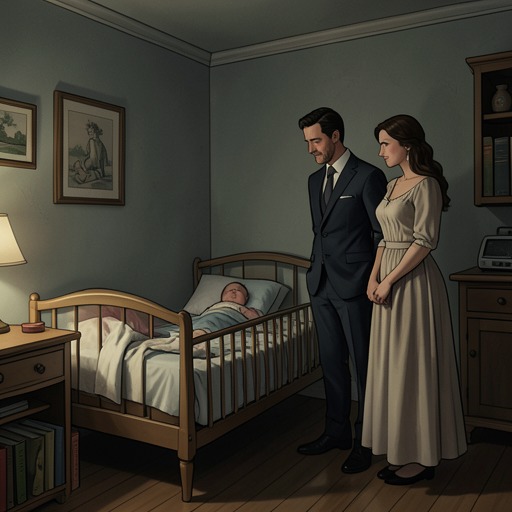
The narrator describes the adults’ routines in cold Paris: he could write in a café as it gradually warmed, while his wife practiced piano in a cold place, wearing enough sweaters to stay warm, and returned home to nurse Bumby. Taking a baby to a café in winter seemed wrong, and Marie, the housekeeper, could be away. When that happened, Bumby remained in his tall cage bed with F. Puss beside him.
The cat watched the door and would let no one approach the baby while the adults were gone. The narrator therefore regarded F. Puss as sufficient protection in the absence of a sitter. This practical role rests on the cat’s described behavior, not simply on the family’s affection for him: he stayed with Bumby and guarded the entrance.
Care, Risk, and Winter Poverty
Some people warned that leaving a cat with a baby was dangerous, fearing that the animal might harm the child. The account sets those suspicions against the household’s experience: F. Puss lay beside Bumby and kept watch. The contrast does not erase the adults’ responsibility for the baby; it shows how their limited circumstances made the cat’s dependable presence meaningful.
The family’s poverty had deepened after the narrator gave up journalism on returning from Canada, and he could not sell stories. Paris in winter became too difficult with a baby, even though Bumby had already crossed the North Atlantic at three months old on a small Cunarder during a twelve-day January passage from New York via Halifax. He had not cried on the voyage and had laughed while secured in a bunk during heavy weather, but the family’s Paris was still too cold for him. They went to Schruns in Austria; the account does not say whether F. Puss went with them.
Narrative Significance
F. Puss occupies more than a decorative place in the family scene. His quiet guarding answers a concrete need created by cold, poverty, and the lack of a sitter, while the adults’ departure from Paris marks the limits of what that care could solve. The cat can keep watch over Bumby at home, but cannot make the winter climate suitable for the child. The episode thus gives the animal a practical role in the household without suggesting that his care removed the pressures that ultimately drove the family away.